Held Ntsiki M, Houtkooper Riekelt H
Laboratory Genetic Metabolic Diseases, Academic Medical Center, Amsterdam, the Netherlands.
Bioessays. 2015 Aug;37(8):867-76. doi: 10.1002/bies.201500013. Epub 2015 May 26.
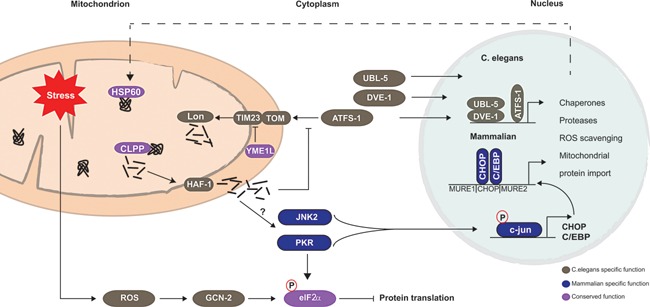
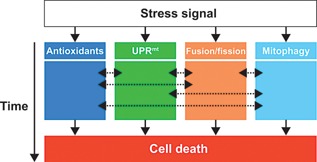
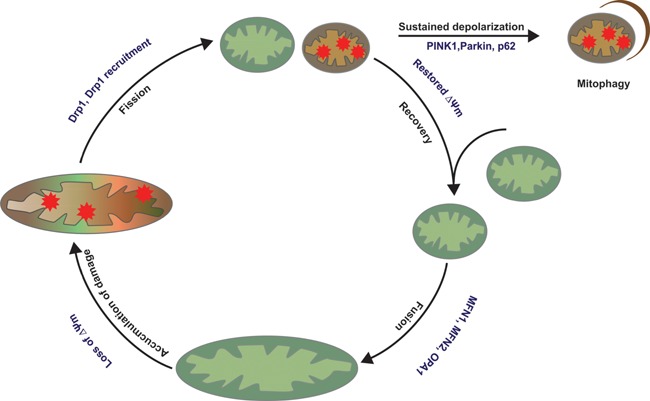
Mitochondrial function is key for maintaining cellular health, while mitochondrial failure is associated with various pathologies, including inherited metabolic disorders and age-related diseases. In order to maintain mitochondrial quality, several pathways of mitochondrial quality control have evolved. These systems monitor mitochondrial integrity through antioxidants, DNA repair systems, and chaperones and proteases involved in the mitochondrial unfolded protein response. Additional regulation of mitochondrial function involves dynamic exchange of components through mitochondrial fusion and fission. Sustained stress induces a selective autophagy - termed mitophagy - and ultimately leads to apoptosis. Together, these systems form a network that acts on the molecular, organellar, and cellular level. In this review, we highlight how these systems are regulated in an integrated context- and time-dependent network of mitochondrial quality control that is implicated in healthy aging.
线粒体功能是维持细胞健康的关键,而线粒体功能衰竭与多种病理状况相关,包括遗传性代谢紊乱和年龄相关疾病。为了维持线粒体质量,已经进化出了几种线粒体质量控制途径。这些系统通过抗氧化剂、DNA修复系统以及参与线粒体未折叠蛋白反应的伴侣蛋白和蛋白酶来监测线粒体的完整性。线粒体功能的额外调节涉及通过线粒体融合和裂变进行的成分动态交换。持续的应激会诱导一种选择性自噬——称为线粒体自噬——并最终导致细胞凋亡。这些系统共同形成了一个在分子、细胞器和细胞水平上发挥作用的网络。在本综述中,我们强调了这些系统在与健康衰老相关的线粒体质量控制的综合背景和时间依赖性网络中是如何被调节的。