Avlas Orna, Bragg Arieh, Fuks Avi, Nicholson James D, Farkash Ariel, Porat Eyal, Aravot Dan, Levy-Drummer Rachel S, Cohen Cyrille, Shainberg Asher, Arad Michael, Hochhauser Edith
The Mina & Everard Goodman Faculty of Life Sciences, Bar-Ilan University, Ramat Gan, Israel.
The Cardiac Research Laboratory of the Department of Cardiothoracic Surgery, Felsenstein Medical Research Center, Rabin Medical Center, Tel Aviv University, Petah Tikva, Israel.
PLoS One. 2015 Jun 1;10(6):e0120175. doi: 10.1371/journal.pone.0120175. eCollection 2015.
Toll-like receptor 4 (TLR4) is an innate immune receptor expressed in immune cells and the heart. Activation of the immune system following myocardial ischemia causes the release of proinflammatory mediators that may negatively influence heart function.
The aim of this study is to determine whether TLR4 is activated in peripheral monocytes and heart tissue taken from patients with varying degrees of myocardial dysfunction caused by coronary artery diseases and scheduled for coronary artery bypass graft (CABG) surgery before 12 months following operation.
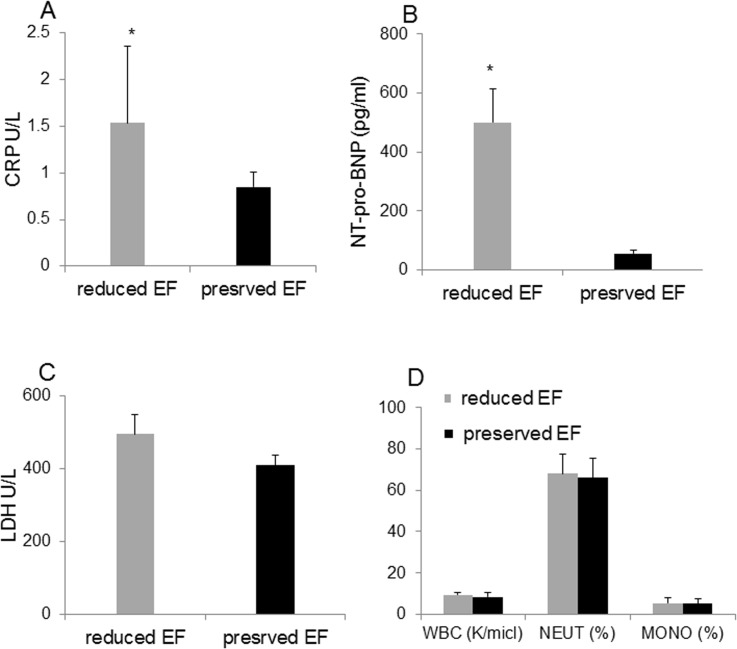
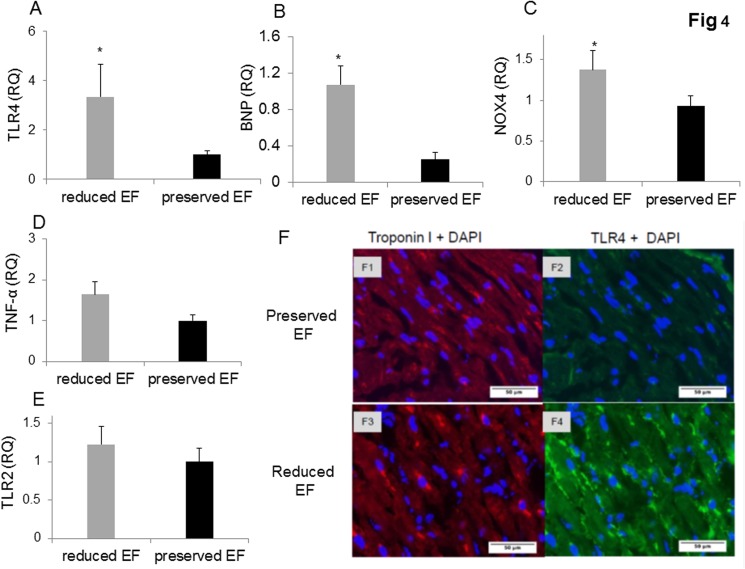
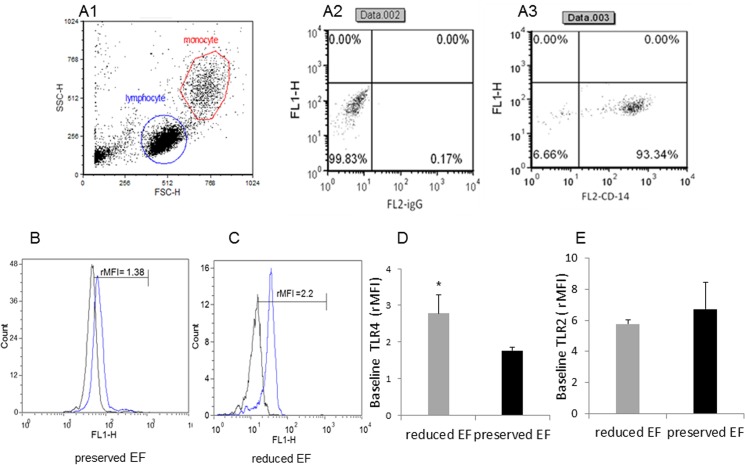
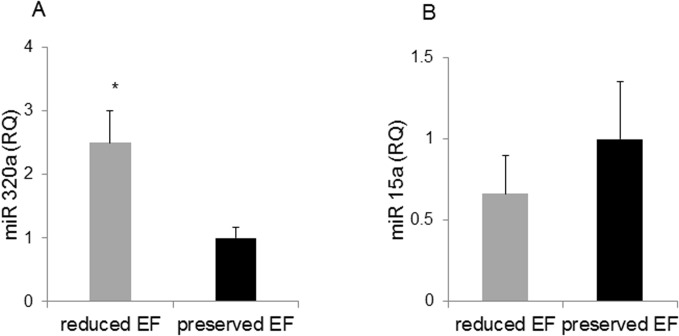
Patients (n = 44) undergoing CABG surgery having left ventricular ejection fraction ≤ 45% ('reduced EF', n = 20) were compared to patients with preserved EF >45% ('preserved EF' group, n = 24). 'Reduced EF' patients exhibited increased TLR4 expression in monocytes (2.78±0.49 vs. 1.76±0.07 rMFI, p = 0.03). Plasma levels of C-reactive protein, microRNA miR-320a, brain natriuretic peptide (pro BNP) and NADPH oxidase (NOX4) were also significantly different between the 'preserved EF' and 'reduced EF'groups. Elevated TLR4 gene expression levels in the right auricle correlated with those of EF (p<0.008), NOX4 (p<0.008) and miR320, (p<0.04). In contrast, no differences were observed in peripheral monocyte TLR2 expression. After CABG surgery, monocyte TLR4 expression decreased in all patients, reaching statistical significance in the 'reduced EF' group.
TLR4 is activated in peripheral monocytes and heart tissue obtained from patients with ischemic heart disease and reduced left ventricular function. Coronary revascularization decreases TLR4 expression. We therefore propose that TLR4 plays a pathogenic role and may serve as an additional marker of ischemic myocardial dysfunction.
Toll样受体4(TLR4)是一种在免疫细胞和心脏中表达的先天性免疫受体。心肌缺血后免疫系统的激活会导致促炎介质的释放,这可能会对心脏功能产生负面影响。
本研究的目的是确定在因冠状动脉疾病导致不同程度心肌功能障碍且计划在术后12个月内进行冠状动脉旁路移植术(CABG)的患者的外周单核细胞和心脏组织中TLR4是否被激活。
将接受CABG手术且左心室射血分数≤45%(“射血分数降低”组,n = 20)的患者与射血分数保留>45%的患者(“射血分数保留”组,n = 24)进行比较。“射血分数降低”组患者的单核细胞中TLR4表达增加(相对平均荧光强度分别为2.78±0.49和1.76±0.07,p = 0.03)。“射血分数保留”组和“射血分数降低”组之间的血浆C反应蛋白、微小RNA miR-320a、脑钠肽(pro BNP)和烟酰胺腺嘌呤二核苷酸磷酸氧化酶(NOX4)水平也存在显著差异。右心耳中TLR4基因表达水平的升高与射血分数(p<0.008)、NOX4(p<0.008)和miR320(p<0.04)的升高相关。相比之下,外周单核细胞TLR2表达未观察到差异。CABG手术后,所有患者的单核细胞TLR4表达均下降,在“射血分数降低”组达到统计学意义。
在缺血性心脏病和左心室功能降低患者的外周单核细胞和心脏组织中,TLR4被激活。冠状动脉血运重建会降低TLR4表达。因此,我们认为TLR4起致病作用,可能作为缺血性心肌功能障碍的额外标志物。