De-Simone Francesca Isabella, Sariyer Rahsan, Otalora Yolanda-Lopez, Yarandi Shadan, Craigie Michael, Gordon Jennifer, Sariyer Ilker Kudret
Department of Neuroscience, Center for Neurovirology, Temple University School of Medicine, 3500 North Broad Street, 7th Floor, Philadelphia, PA, 19140, United States of America.
PLoS One. 2015 Jun 10;10(6):e0129694. doi: 10.1371/journal.pone.0129694. eCollection 2015.
Patients undergoing immune modulatory therapies for the treatment of autoimmune diseases such as multiple sclerosis, and individuals with an impaired-immune system, most notably AIDS patients, are in the high risk group of developing progressive multifocal leukoencephalopathy (PML), an often lethal disease of the brain characterized by lytic infection of oligodendrocytes in the central nervous system (CNS) with JC virus (JCV). The immune system plays an important regulatory role in controlling JCV reactivation from latent sites by limiting viral gene expression and replication. However, little is known regarding the molecular mechanisms responsible for this regulation.
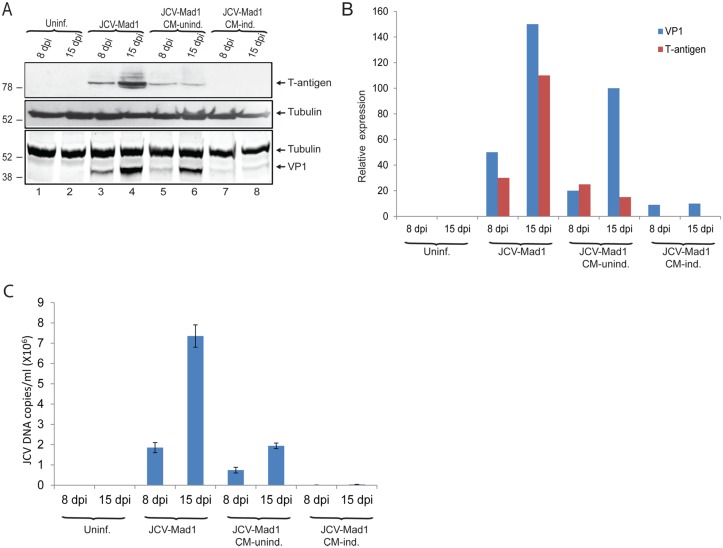
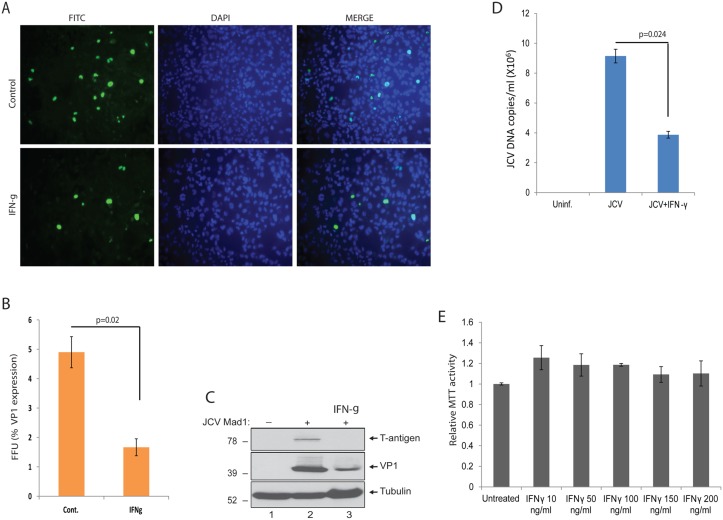
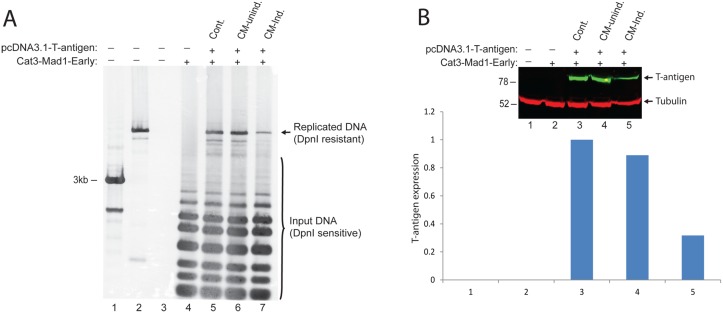
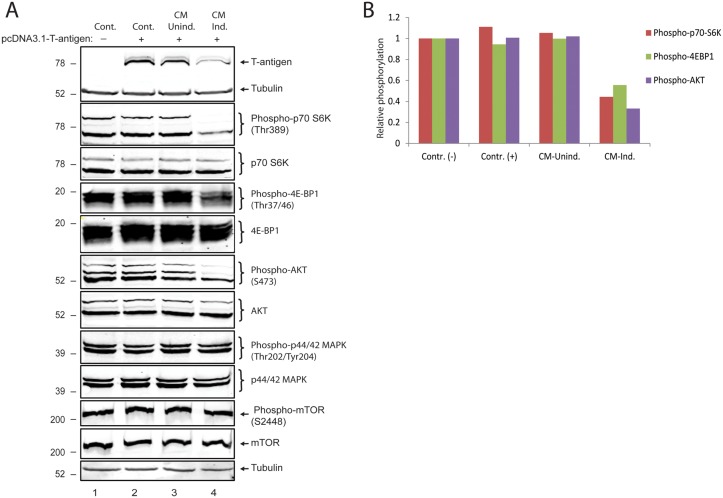
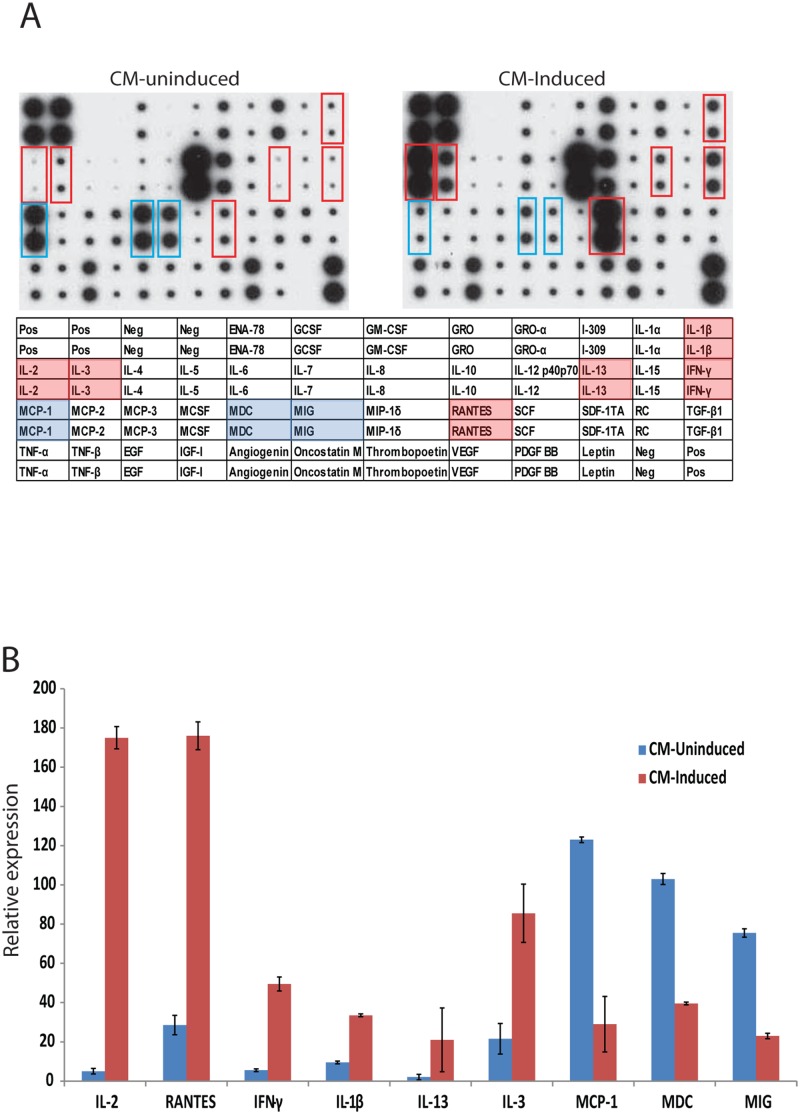
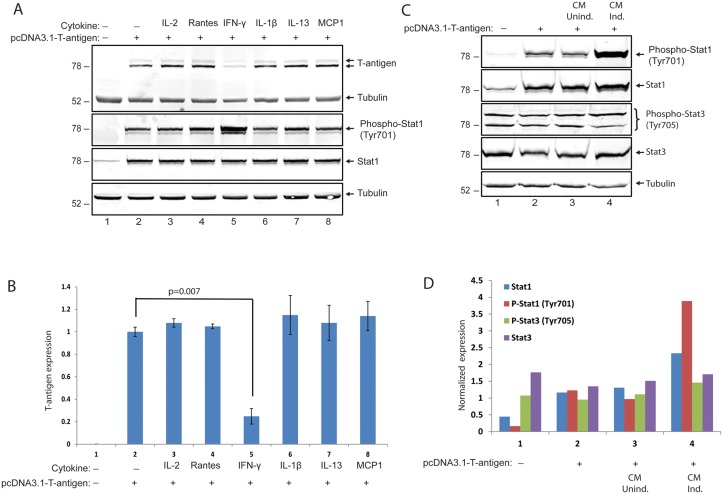
Here, we investigated the impact of soluble immune mediators secreted by activated PBMCs on viral replication and gene expression by cell culture models and molecular virology techniques. Our data revealed that viral gene expression and viral replication were suppressed by soluble immune mediators. Further studies demonstrated that soluble immune mediators secreted by activated PBMCs inhibit viral replication induced by T-antigen, the major viral regulatory protein, by suppressing its expression in glial cells. This unexpected suppression of T-antigen was mainly associated with the suppression of translational initiation. Cytokine/chemokine array studies using conditioned media from activated PBMCs revealed several candidate cytokines with possible roles in this regulation. Among them, only IFN-γ showed a robust inhibition of T-antigen expression. While potential roles for IFN-β, and to a lesser extent IFN-α have been described for JCV, IFN-γ has not been previously implicated. Further analysis of IFN-γ signaling pathway revealed a novel role of Jak1 signaling in control of viral T-antigen expression. Furthermore, IFN-γ suppressed JCV replication and viral propagation in primary human fetal glial cells, and showed a strong anti-JCV activity.
Our results suggest a novel role for IFN-γ in the regulation of JCV gene expression via downregulation of the major viral regulatory protein, T-antigen, and provide a new avenue of research to understand molecular mechanisms for downregulation of viral reactivation that may lead to development of novel strategies for the treatment of PML.
接受免疫调节疗法治疗自身免疫性疾病(如多发性硬化症)的患者,以及免疫系统受损的个体,尤其是艾滋病患者,属于发生进行性多灶性白质脑病(PML)的高危人群。PML是一种常见的致命性脑部疾病,其特征是中枢神经系统(CNS)中的少突胶质细胞被JC病毒(JCV)进行溶解性感染。免疫系统在通过限制病毒基因表达和复制来控制JCV从潜伏部位重新激活方面发挥着重要的调节作用。然而,对于负责这种调节的分子机制知之甚少。
在此,我们通过细胞培养模型和分子病毒学技术研究了活化的外周血单核细胞(PBMC)分泌的可溶性免疫介质对病毒复制和基因表达的影响。我们的数据显示,可溶性免疫介质可抑制病毒基因表达和病毒复制。进一步研究表明,活化的PBMC分泌的可溶性免疫介质通过抑制主要病毒调节蛋白T抗原在神经胶质细胞中的表达,来抑制由T抗原诱导的病毒复制。T抗原这种意外的抑制主要与翻译起始的抑制有关。使用活化PBMC的条件培养基进行的细胞因子/趋化因子阵列研究揭示了几种可能在这种调节中起作用的候选细胞因子。其中,只有γ干扰素(IFN-γ)对T抗原表达表现出强烈的抑制作用。虽然IFN-β以及在较小程度上IFN-α对JCV的潜在作用已有描述,但IFN-γ此前尚未涉及。对IFN-γ信号通路的进一步分析揭示了Jak1信号在控制病毒T抗原表达中的新作用。此外,IFN-γ抑制了原代人胎儿神经胶质细胞中的JCV复制和病毒传播,并表现出强大的抗JCV活性。
我们的结果表明IFN-γ在通过下调主要病毒调节蛋白T抗原对JCV基因表达的调节中具有新作用,并为理解病毒重新激活下调的分子机制提供了新的研究途径,这可能会导致开发治疗PML的新策略。