Purfield Deirdre C, Bradley Daniel G, Evans Ross D, Kearney Francis J, Berry Donagh P
Smurfit Institute of Genetics, University of Dublin, Trinity College, Dublin 2, Ireland.
Animal & Grassland Research and Innovation Center, Teagasc, Moorepark, Fermoy, Co. Cork, Ireland.
Genet Sel Evol. 2015 Jun 12;47(1):47. doi: 10.1186/s12711-015-0126-4.
Calving difficulty and perinatal mortality are prevalent in modern-day cattle production systems. It is well-established that there is a genetic component to both traits, yet little is known about their underlying genomic architecture, particularly in beef breeds. Therefore, we performed a genome-wide association study using high-density genotypes to elucidate the genomic architecture of these traits and to identify regions of the bovine genome associated with them.
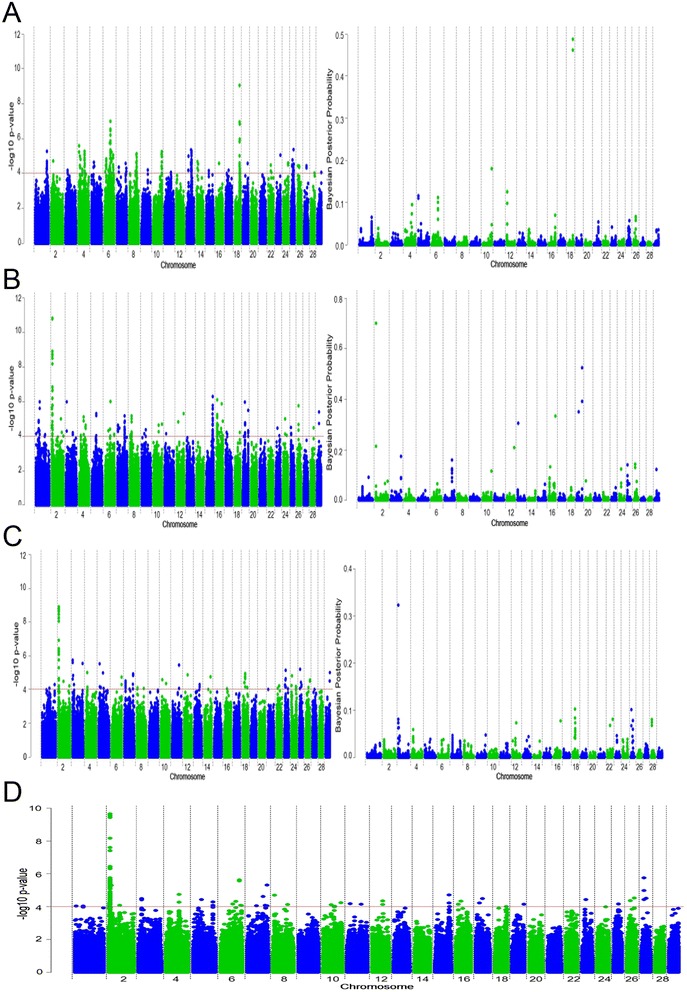
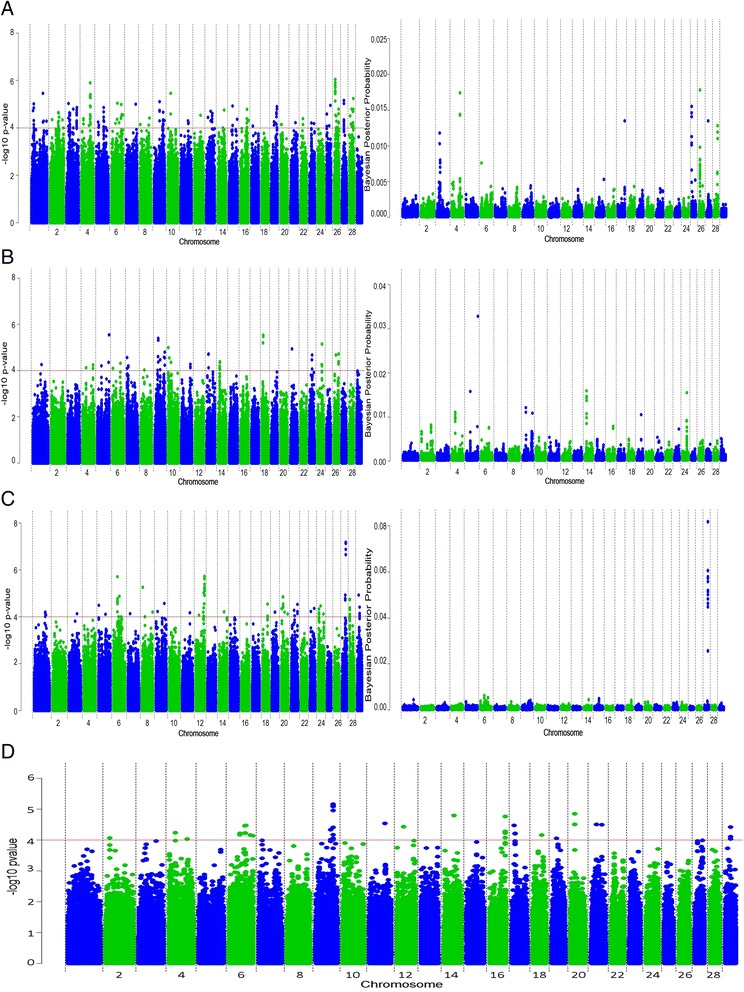
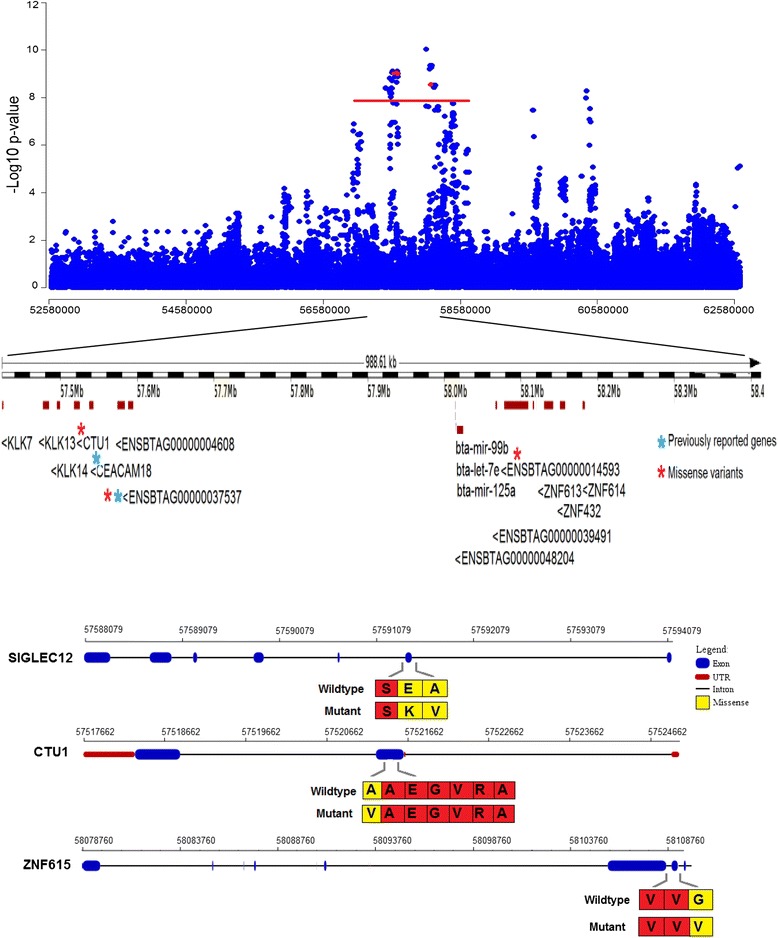
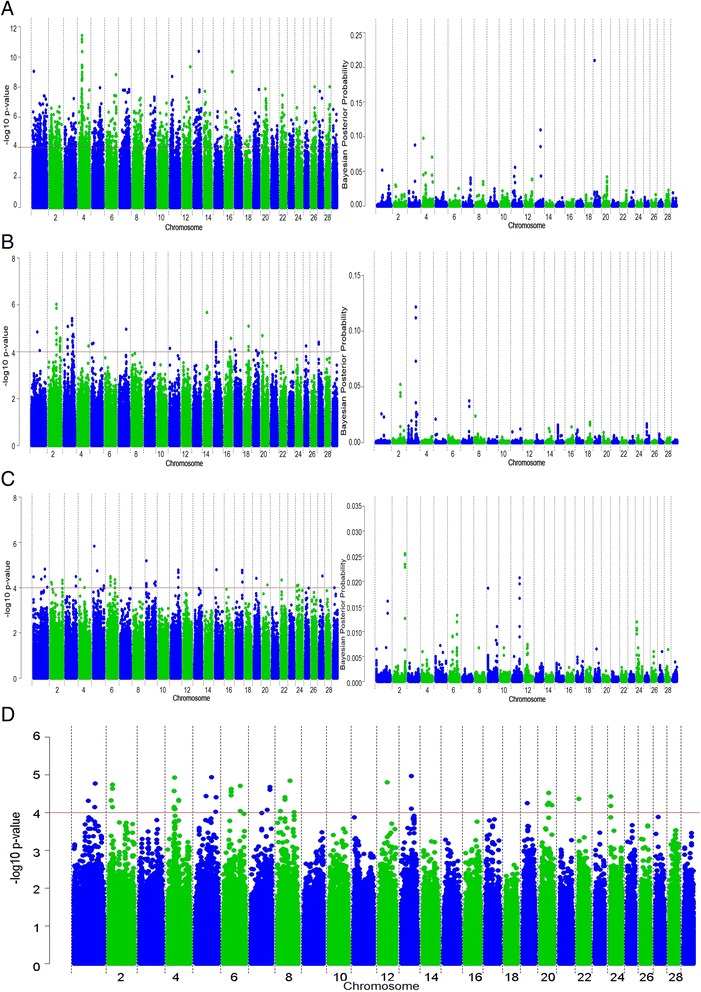
Genomic regions associated with calving difficulty (direct and maternal) and perinatal mortality were detected using two statistical approaches: (1) single-SNP (single nucleotide polymorphism) regression and (2) a Bayesian approach. Data included high-density genotypes on 770 Holstein-Friesian, 927 Charolais and 963 Limousin bulls. Several novel or previously identified genomic regions were detected but associations differed by breed. For example, two genomic associations, one each on chromosomes 18 and 2 explained 2.49 % and 3.13 % of the genetic variance in direct calving difficulty in the Holstein-Friesian and Charolais populations, respectively. Imputed Holstein-Friesian sequence data was used to refine the genomic regions responsible for significant associations. Several candidate genes on chromosome 18 were identified and four highly significant missense variants were detected within three of these genes (SIGLEC12, CTU1, and ZNF615). Nevertheless, only CTU1 contained a missense variant with a putative impact on direct calving difficulty based on SIFT (0.06) and Polyphen (0.95) scores. Using imputed sequence data, we refined a genomic region on chromosome 4 associated with maternal calving difficulty in the Holstein-Friesian population and found the strongest association with an intronic variant in the PCLO gene. A meta-analysis was performed across the three breeds for each calving performance trait to identify common variants associated with these traits in the three breeds. Our results suggest that a portion of the genetic variation in calving performance is common to all three breeds.
The genomic architecture of calving performance is complex and mainly influenced by many polymorphisms of small effect. We identified several associations of moderate effect size but the majority were breed-specific, indicating that breed-specific alleles exist for calving performance or that the linkage phase between genotyped allele and causal mutation varies between breeds.
难产和围产期死亡率在现代养牛生产系统中很普遍。众所周知,这两个性状都存在遗传因素,但对其潜在的基因组结构了解甚少,尤其是在肉牛品种中。因此,我们使用高密度基因型进行了全基因组关联研究,以阐明这些性状的基因组结构,并确定与它们相关的牛基因组区域。
使用两种统计方法检测了与难产(直接和母体)和围产期死亡率相关的基因组区域:(1)单核苷酸多态性(SNP)回归和(2)贝叶斯方法。数据包括770头荷斯坦-弗里生牛、927头夏洛莱牛和963头利木赞牛公牛的高密度基因型。检测到了几个新的或先前确定的基因组区域,但关联因品种而异。例如,两个基因组关联,分别位于18号和2号染色体上,分别解释了荷斯坦-弗里生牛和夏洛莱牛群体中直接难产遗传变异的2.49%和3.13%。利用推算的荷斯坦-弗里生牛序列数据来细化负责显著关联的基因组区域。在18号染色体上鉴定出几个候选基因,并在其中三个基因(SIGLEC12、CTU1和ZNF615)中检测到四个高度显著的错义变异。然而,根据SIFT(0.06)和Polyphen(0.95)评分,只有CTU1包含一个可能对直接难产有影响的错义变异。利用推算的序列数据,我们细化了荷斯坦-弗里生牛群体中与母体难产相关的4号染色体上的一个基因组区域,并发现与PCLO基因中的一个内含子变异有最强的关联。对每个产犊性能性状在三个品种间进行了荟萃分析,以确定在这三个品种中与这些性状相关的常见变异。我们的结果表明,产犊性能的一部分遗传变异在所有三个品种中是共同的。
产犊性能的基因组结构复杂,主要受许多小效应多态性的影响。我们确定了几个中等效应大小的关联,但大多数是品种特异性的,这表明存在产犊性能的品种特异性等位基因,或者基因型等位基因与因果突变之间的连锁阶段在不同品种之间有所不同。