Long Xin, Chen Qian, Zhao Jianping, Rafaels Nicholas, Mathias Priyanka, Liang Huifang, Potee Joseph, Campbell Monica, Zhang Bixiang, Gao Li, Georas Steve N, Vercelli Donata, Beaty Terri H, Ruczinski Ingo, Mathias Rasika, Barnes Kathleen C, Chen Xiaoping
Hepatic Surgery Center, Tongji Hospital, Tongji Medical College, Huazhong University of Science and Technology, Wuhan, Hubei province, China; Johns Hopkins Asthma & Allergy Center, The Johns Hopkins University School of Medicine, Baltimore, Maryland, United States of America.
Division of Gastroenterology and Hepatology, Tongji Hospital, Tongji Medical College, Huazhong University of Science and Technology, Wuhan, Hubei province, China.
PLoS One. 2015 Aug 10;10(8):e0135360. doi: 10.1371/journal.pone.0135360. eCollection 2015.
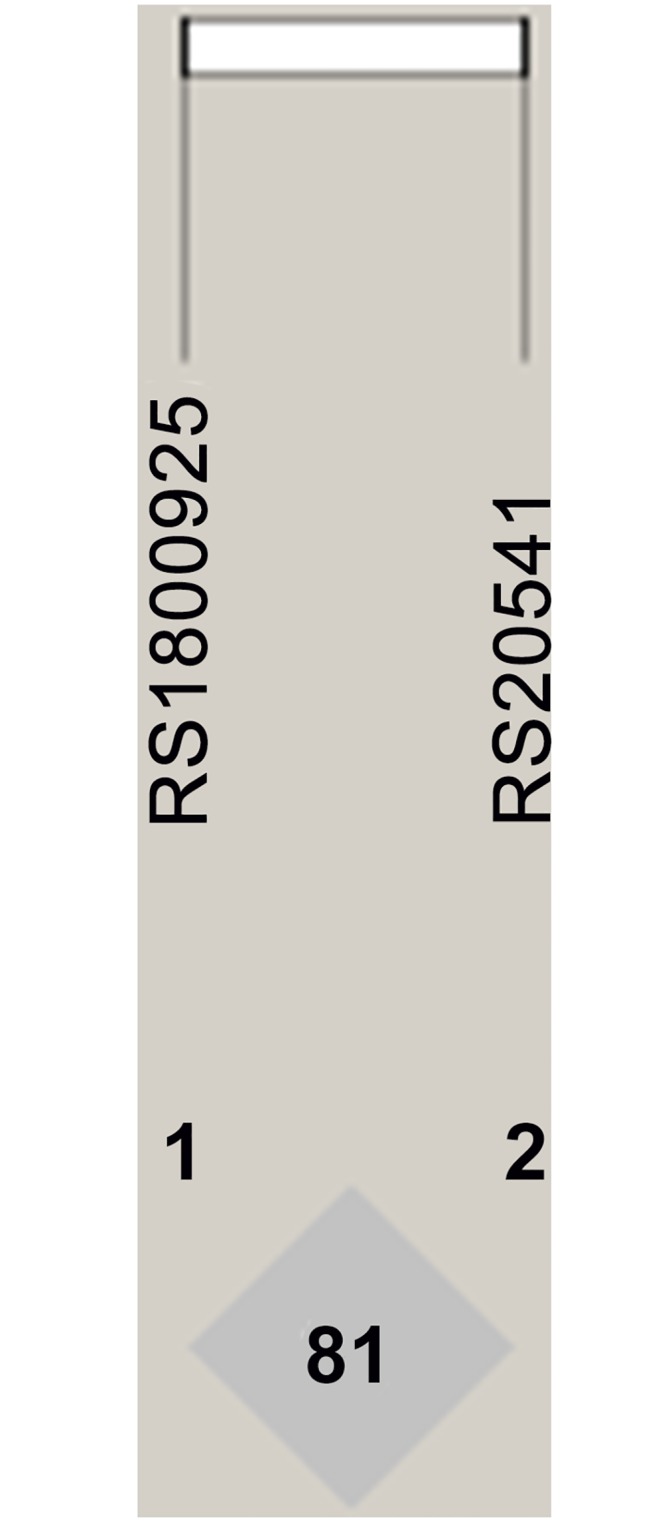
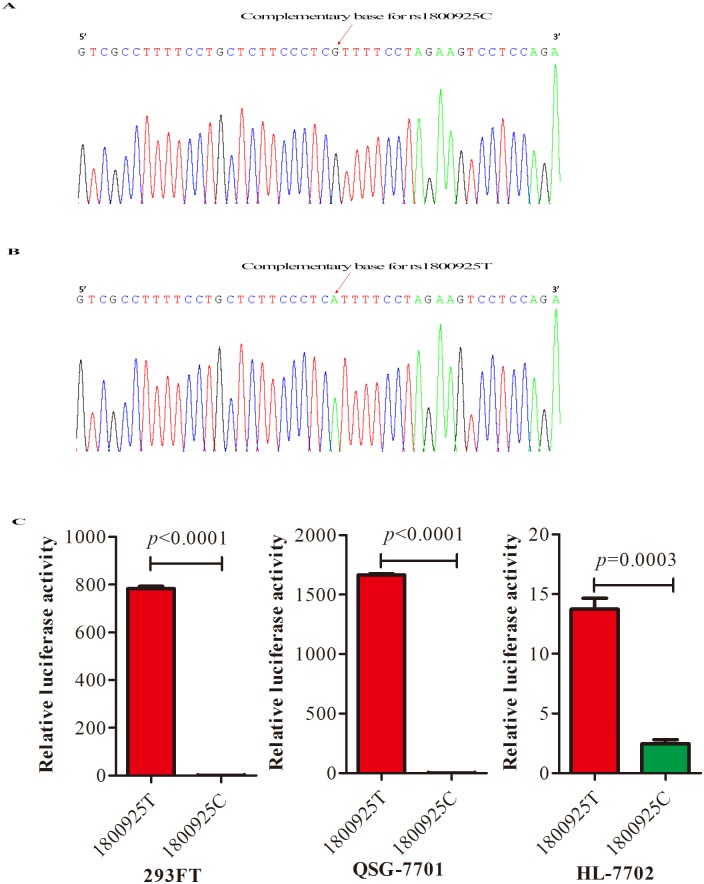
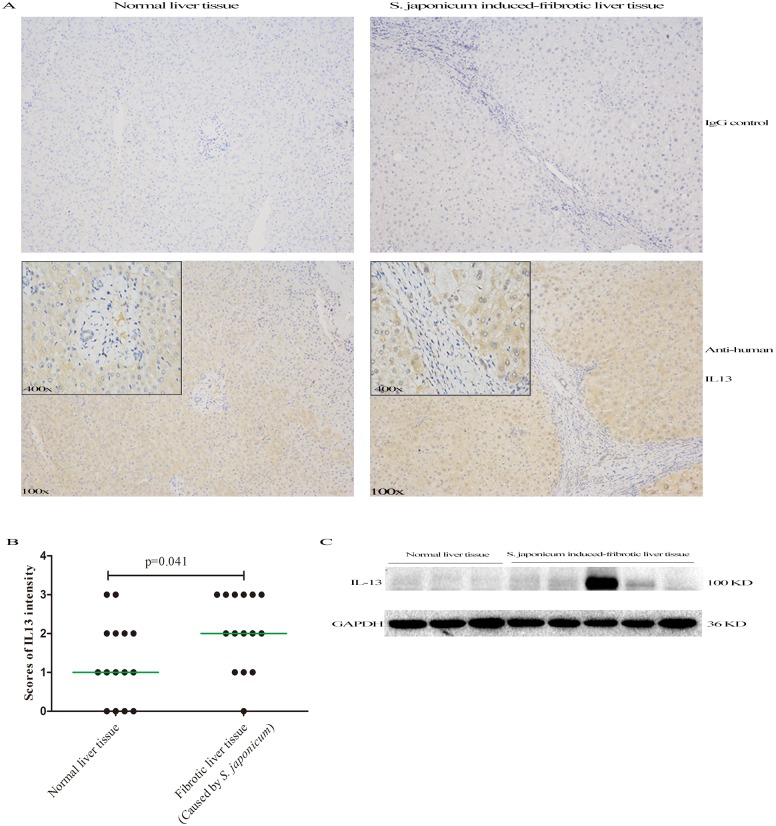
The aim of this study was to determine whether two polymorphisms in the gene encoding IL13 previously associated with Schistosoma hematobium (S. hematobium) and S. mansoni infection are associated with S. japonicum infection. Single nucleotide polymorphisms (SNPs) rs1800925 (IL13/-1112C>T) and rs20541 (IL13R130Q) were genotyped in 947 unrelated individuals (307 chronically infected, 339 late-stage with liver fibrosis, 301 uninfected controls) from a schistosomiasis-endemic area of Hubei province in China. Regression models were used to evaluate allelic and haplotypic associations with chronic and late-stage schistosomiasis adjusted for non-genetic covariates. Expression of IL-13 was measured in S. japonicun-infected liver fibrosis tissue and normal liver tissue from uninfected controls by immunohistochemistry (IHC). The role of rs1800925 in IL-13 transcription was further determined by Luciferase report assay using the recombinant PGL4.17-rs180092 plasmid. We found SNP rs1800925T was associated with late-stage schistosomiasis caused by S. japonicum but not chronic schistosomiasis (OR = 1.39, 95%CI = 1.02-1.91, p = 0.03) and uninfected controls (OR = 1.49, 95%CI = 1.03-2.13, p = 0.03). Moreover, the haplotype rs1800925T-rs20541C increased the risk of disease progression to late-stage schistosomiasis (OR = 1.46, p = 0.035), whereas haplotype rs1800925C-rs20541A showed a protective role against development of late-stage schistosomiasis (F = 0.188, OR = 0.61, p = 0.002). Furthermore, S. japonicum-induced fibrotic liver tissue had higher IL13 expression than normal liver tissue. Plasmid PGL4.17-rs1800925T showed a stronger relative luciferase activity than Plasmid PGL4.17-rs1800925C in 293FT, QSG-7701 and HL-7702 cell lines. In conclusion, the functional IL13 polymorphism, rs1800925T, previously associated with risk of schistosomiasis, also contributes to risk of late-stage schistosomiasis caused by S. japonicum.
本研究的目的是确定白细胞介素13(IL13)编码基因中先前与埃及血吸虫和曼氏血吸虫感染相关的两种多态性是否与日本血吸虫感染有关。对来自中国湖北省血吸虫病流行区的947名无亲缘关系的个体(307名慢性感染者、339名晚期肝纤维化患者、301名未感染对照)进行了单核苷酸多态性(SNP)rs1800925(IL13/-1112C>T)和rs20541(IL13R130Q)基因分型。使用回归模型评估等位基因和单倍型与慢性和晚期血吸虫病的关联,并对非遗传协变量进行了校正。通过免疫组织化学(IHC)检测日本血吸虫感染的肝纤维化组织和未感染对照的正常肝组织中IL-13的表达。使用重组PGL4.17-rs180092质粒通过荧光素酶报告基因检测进一步确定rs1800925在IL-13转录中的作用。我们发现SNP rs1800925T与日本血吸虫引起的晚期血吸虫病相关,但与慢性血吸虫病无关(比值比[OR]=1.39,95%置信区间[CI]=1.02-1.91,p=0.03),且与未感染对照相关(OR=1.49,95%CI=1.03-2.13,p=0.03)。此外,单倍型rs1800925T-rs20541C增加了疾病进展至晚期血吸虫病的风险(OR=1.46,p=0.035),而单倍型rs1800925C-rs20541A对晚期血吸虫病的发展具有保护作用(F=0.188,OR=0.61,p=0.002)。此外,日本血吸虫诱导的纤维化肝组织中IL13表达高于正常肝组织。在293FT、QSG-7701和HL-7702细胞系中,质粒PGL4.17-rs1800925T显示出比质粒PGL4.17-rs1800925C更强的相对荧光素酶活性。总之,功能性IL13多态性rs1800925T先前与血吸虫病风险相关,它也与日本血吸虫引起的晚期血吸虫病风险有关。