Januar V, Ancelin M-L, Ritchie K, Saffery R, Ryan J
1] Cancer and Disease Epigenetics, Murdoch Childrens Research Institute, Royal Children's Hospital, Parkville, VIC, Australia [2] Department of Paediatrics, University of Melbourne, Parkville, VIC, Australia.
Inserm U1061, Hopital La Colombiere & University Montpellier, Montpellier, France.
Transl Psychiatry. 2015 Aug 18;5(8):e619. doi: 10.1038/tp.2015.114.
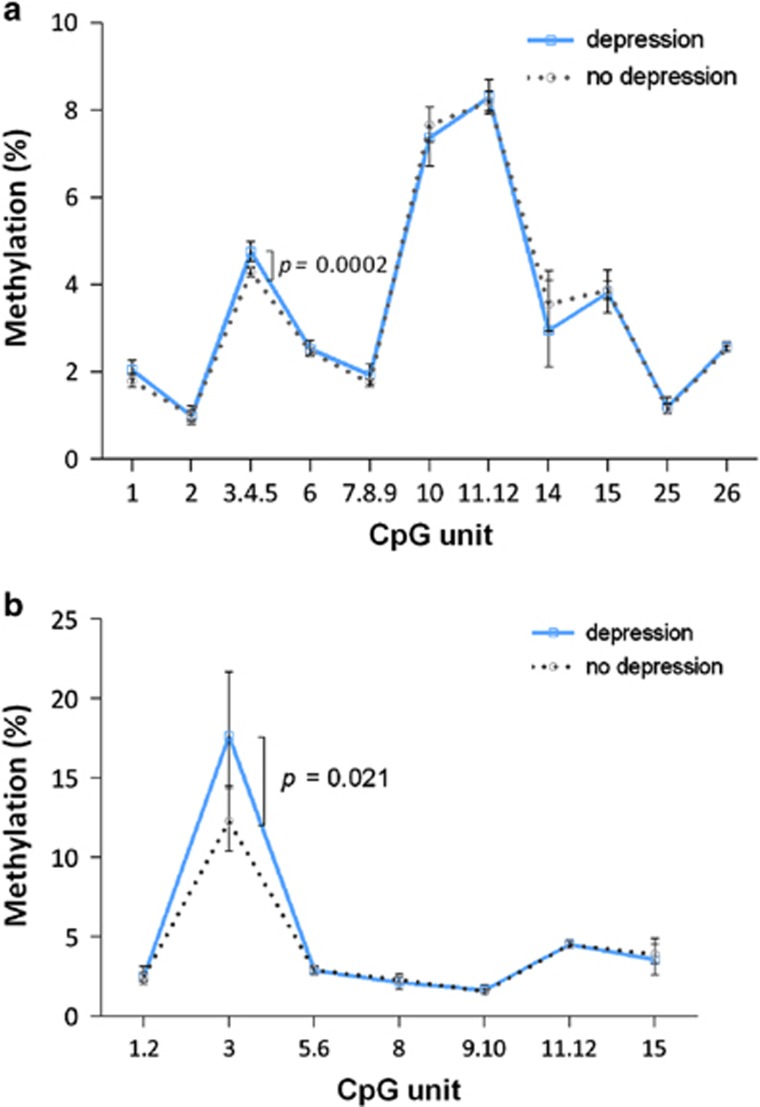
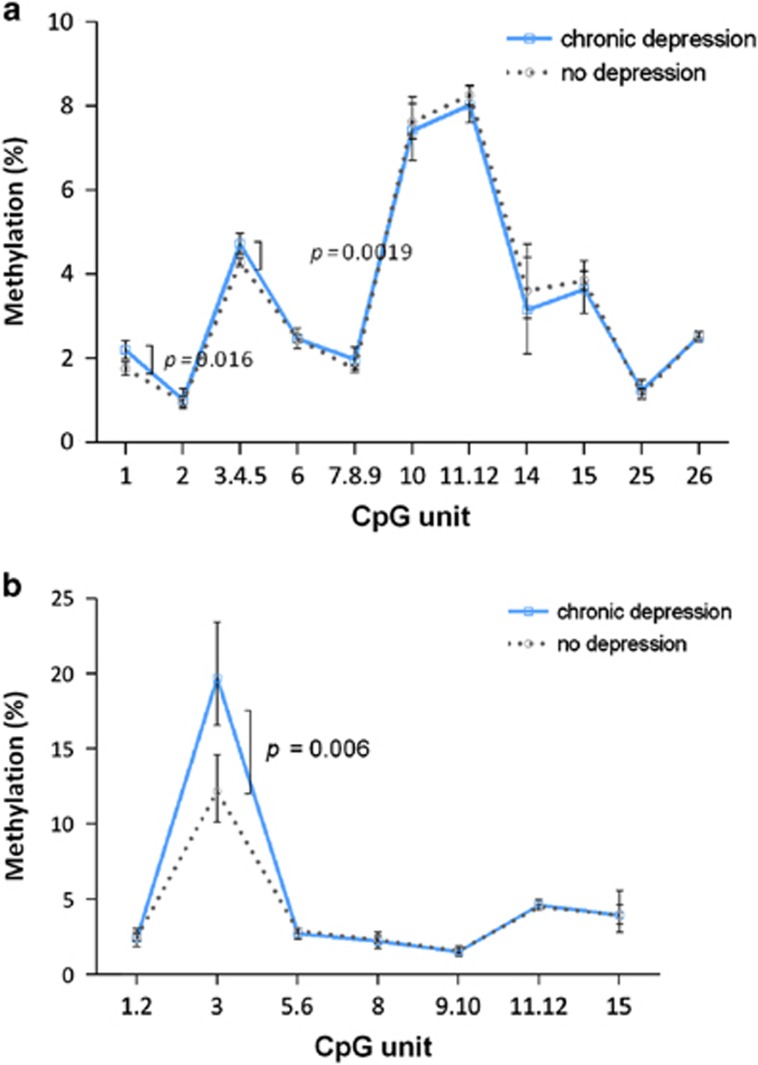
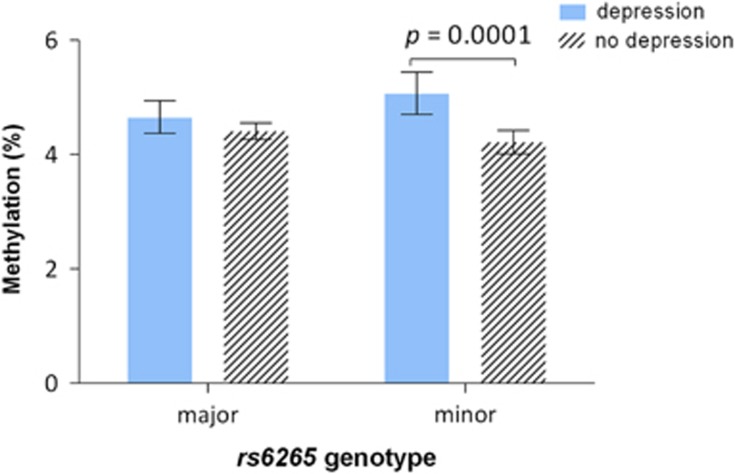
The regulation of the brain-derived neurotrophic factor (BDNF) is important for depression pathophysiology and epigenetic regulation of the BDNF gene may be involved. This study investigated whether BDNF methylation is a marker of depression. One thousand and twenty-four participants were recruited as part of a longitudinal study of psychiatric disorders in general population elderly (age ⩾ 65). Clinical levels of depression were assessed using the Mini International Neuropsychiatric Interview for the diagnosis of major depressive disorder according to the Diagnostic and Statistical Manual of Mental Disorder IV criteria, and the Centre for Epidemiologic Studies Depression Scale (CES-D) for assessment of moderate to severe depressive symptoms. Buccal DNA methylation at the two most widely studied BDNF promoters, I and IV, was investigated using the Sequenom MassARRAY platform that allows high-throughput investigation of methylation at individual CpG sites within defined genomic regions. In multivariate linear regression analyses adjusted for a range of participant characteristics including antidepressant use, depression at baseline, as well as chronic late-life depression over the 12-year follow-up, were associated with overall higher BDNF methylation levels, with two sites showing significant associations (promoter I, Δ mean = 0.4%, P = 0.0002; promoter IV, Δ mean = 5.4%, P = 0.021). Three single-nucleotide polymorphisms (rs6265, rs7103411 and rs908867) were also found to modify the association between depression and promoter I methylation. As one of the largest epigenetic studies of depression, and the first investigating BDNF methylation in buccal tissue, our findings highlight the potential for buccal BDNF methylation to be a biomarker of depression.
脑源性神经营养因子(BDNF)的调控对抑郁症病理生理学至关重要,BDNF基因的表观遗传调控可能与之有关。本研究调查了BDNF甲基化是否为抑郁症的一个标志物。1024名参与者作为普通老年人群(年龄≥65岁)精神疾病纵向研究的一部分被招募。根据《精神疾病诊断与统计手册》第四版标准,使用迷你国际神经精神访谈来诊断重度抑郁症,以评估抑郁症的临床水平,并使用流行病学研究中心抑郁量表(CES-D)来评估中度至重度抑郁症状。使用Sequenom MassARRAY平台研究了BDNF两个研究最广泛的启动子I和IV处的口腔DNA甲基化,该平台允许对定义基因组区域内的单个CpG位点进行甲基化的高通量研究。在多变量线性回归分析中,对一系列参与者特征进行了调整,包括抗抑郁药使用情况、基线时的抑郁症以及12年随访期间的慢性晚年抑郁症,结果显示这些因素与总体较高的BDNF甲基化水平相关,有两个位点显示出显著关联(启动子I,平均变化=0.4%,P = 0.0002;启动子IV,平均变化=5.4%,P = 0.021)。还发现三个单核苷酸多态性(rs6265、rs7103411和rs908867)改变了抑郁症与启动子I甲基化之间的关联。作为抑郁症最大的表观遗传学研究之一,也是首次研究口腔组织中BDNF甲基化的研究,我们的发现突出了口腔BDNF甲基化作为抑郁症生物标志物的潜力。