Ataş Mustafa, Açmaz Gökhan, Aksoy Hüseyin, Demircan Süleyman, Göktaş Altan, Arifoğlu Hasan Basri, Zararsız Gökmen
Department of Ophthalmology, Kayseri Education and Research Hospital, Kayseri, Turkey.
Department of Obstetrics and Gynecology, Kayseri Education and Research Hospital, Kayseri, Turkey.
Prz Menopauzalny. 2014 Mar;13(1):36-41. doi: 10.5114/pm.2014.41088. Epub 2014 Mar 10.
Menopause is a physiological life period that potentially affects various organs and systems. Therefore, a wide spectrum of signs and symptoms of eyes may be clinically observed in the postmenopausal period.
To evaluate the macular, retinal nerve fiber layer (RNFL) and choroidal thickness alterations by using spectral-domain optical coherence tomography (SD-OCT) in postmenopausal women and compare with healthy reproductive-age women controls.
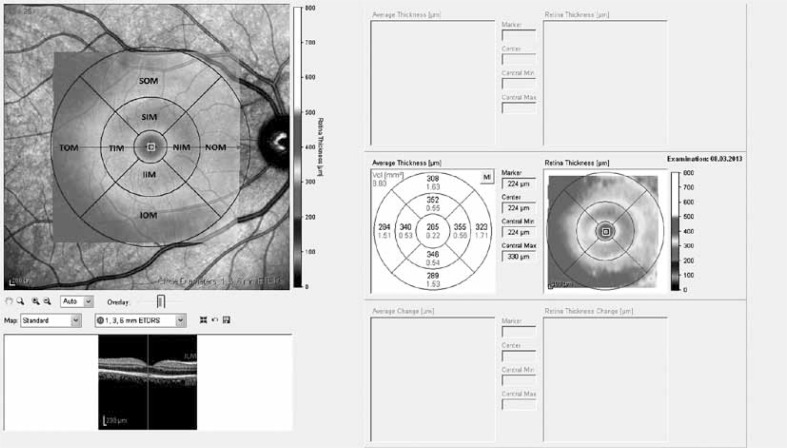
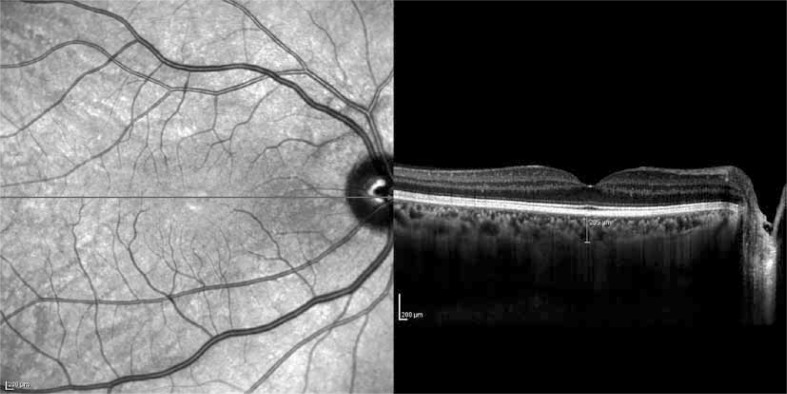
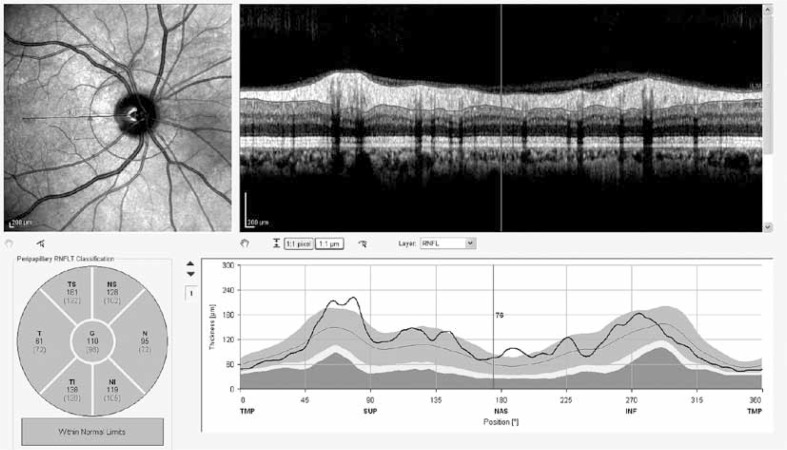
The study population included a healthy reproductive-age control group (n = 72) and postmenopausal study group (n = 72). Retinal thickness parameters were measured by SD-OCT. Peripapillary RNFL thickness parameters, macular thickness and choroidal thickness were evaluated.
Superior inner macula, temporal inner macula, inferior inner macula, nasal inner macula, inferior outer macula and choroid thickness were significantly thinner in the postmenopausal study group than the healthy reproductive-age control group (p = 0.007, p = 0.037, p = 0.027, p = 0.006, p = 0.016, p < 0.001, respectively). After adjusting for age, only choroid thickness was significantly thinner in the postmenopausal study group than controls (p (†) = 0.005).
This study revealed that choroidal thickness measured by SD-OCT was significantly thinner in postmenopausal women than healthy reproductive-age women. We can speculate that the decrease in choroidal thickness in postmenopausal women may indicate a reduced estrogen-dependent vasodilatory effect in ophthalmic artery secondary to menopausal estrogen deficiency.
绝经是一个可能影响各个器官和系统的生理生命阶段。因此,在绝经后期临床上可能会观察到各种各样的眼部体征和症状。
采用频域光学相干断层扫描(SD - OCT)评估绝经后女性的黄斑、视网膜神经纤维层(RNFL)和脉络膜厚度变化,并与健康育龄期女性对照组进行比较。
研究人群包括一个健康育龄期对照组(n = 72)和绝经后研究组(n = 72)。通过SD - OCT测量视网膜厚度参数。评估视乳头周围RNFL厚度参数、黄斑厚度和脉络膜厚度。
绝经后研究组的上内侧黄斑、颞内侧黄斑、下内侧黄斑、鼻内侧黄斑、下外侧黄斑和脉络膜厚度显著薄于健康育龄期对照组(分别为p = 0.007、p = 0.037、p = 0.027、p = 0.006、p = 0.016、p < 0.001)。在调整年龄后,绝经后研究组中仅脉络膜厚度显著薄于对照组(p (†) = 0.005)。
本研究表明,通过SD - OCT测量,绝经后女性的脉络膜厚度显著薄于健康育龄期女性。我们可以推测,绝经后女性脉络膜厚度的降低可能表明绝经后雌激素缺乏导致眼动脉中雌激素依赖性血管舒张作用减弱。