Centre for Integrative Ecology, Deakin University, Locked Bag 20000, Geelong, VIC 3220 Australia ; Zoology, School of Environmental and Rural Science, University of New England, Armidale, NSW 2351 Australia.
Australian Wildlife Conservancy, PO Box 6621, Halifax Street, Adelaide, SA 5000 Australia.
Mov Ecol. 2015 Sep 1;3(1):21. doi: 10.1186/s40462-015-0048-3. eCollection 2015.
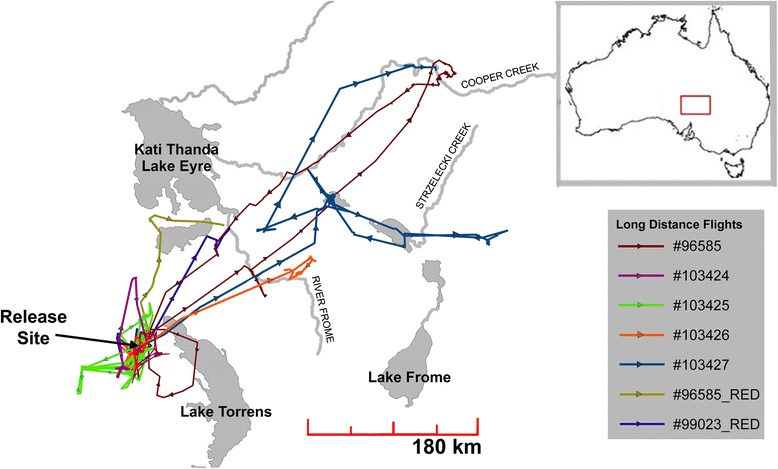
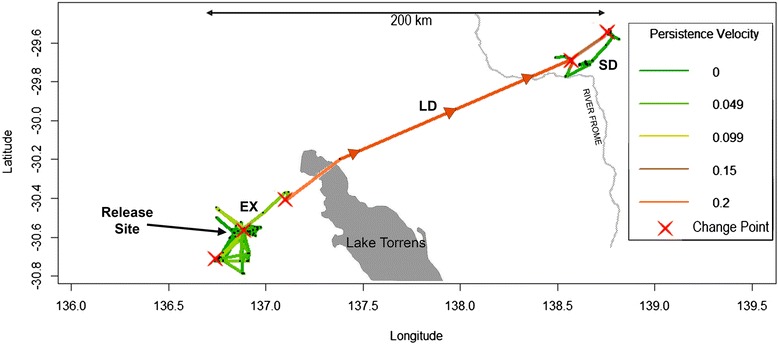
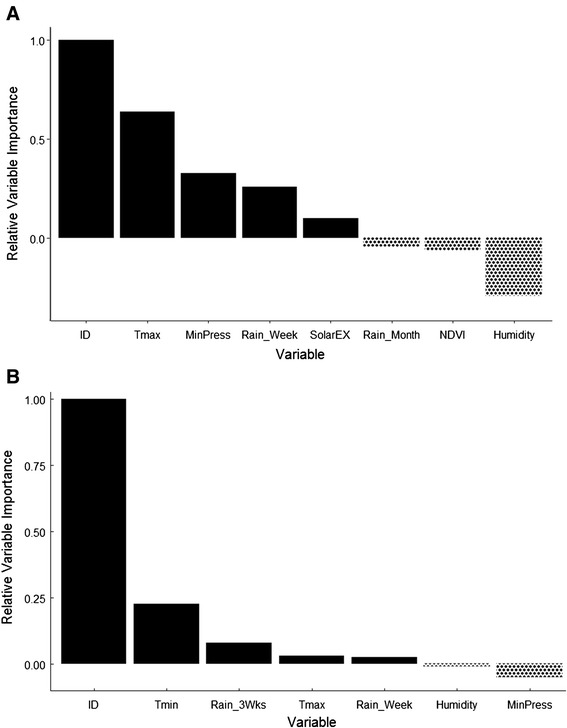
Waterfowl can exploit distant ephemeral wetlands in arid environments and provide valuable insights into the response of birds to rapid environmental change, and behavioural flexibility of avian movements. Currently much of our understanding of behavioural flexibility of avian movement comes from studies of migration in seasonally predictable biomes in the northern hemisphere. We used GPS transmitters to track 20 Pacific black duck (Anas superciliosa) in arid central Australia. We exploited La Niña conditions that brought extensive flooding, so allowing a rare opportunity to investigate how weather and other environmental factors predict initiation of long distance movement toward freshly flooded habitats. We employed behavioural change point analysis to identify three phases of movement: sedentary, exploratory and long distance oriented movement. We then used random forest models to determine the ability of meteorological and remote sensed landscape variables to predict initiation of these phases.
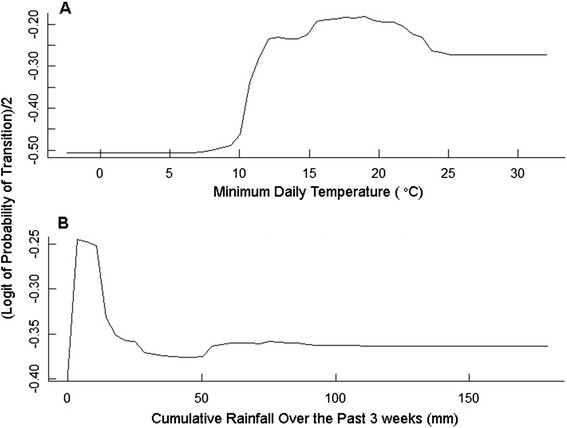
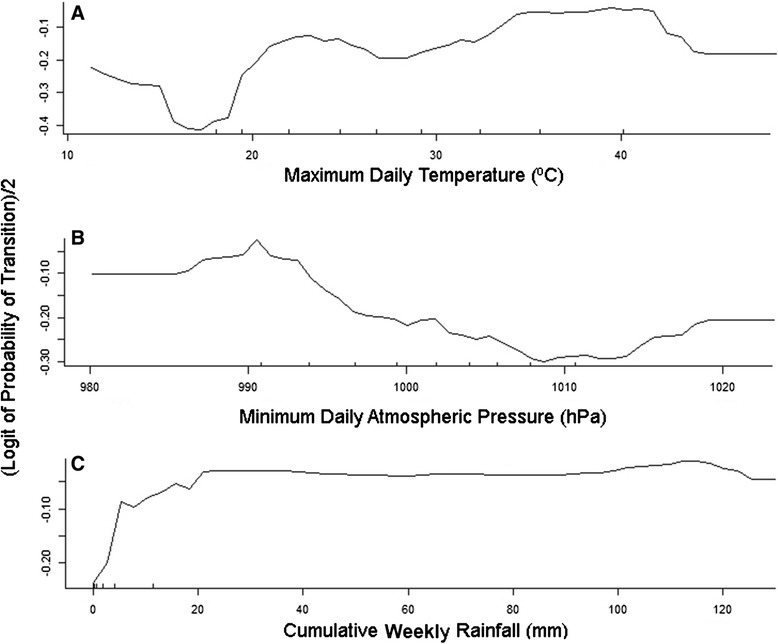
We found that initiation of exploratory movement phases is influenced by fluctuations in local weather conditions and accumulated rainfall in the landscape. Initiation of long distance movement phases was found to be highly individualistic with minor influence from local weather conditions.
Our study reveals how individuals utilise local conditions to respond to changes in resource distribution at broad scales. Our findings suggest that individual movement decisions of dispersive birds are informed by the integration of multiple weather cues operating at different temporal and spatial scales.
水禽可以利用干旱环境中遥远的短暂湿地,并为鸟类对快速环境变化的反应以及鸟类运动的行为灵活性提供有价值的见解。目前,我们对鸟类运动行为灵活性的了解主要来自对北半球季节性可预测生物群落中迁徙的研究。我们使用 GPS 发射器跟踪了澳大利亚中部干旱地区的 20 只太平洋黑鸭(Anas superciliosa)。我们利用拉尼娜现象带来的广泛洪水泛滥的情况,提供了一个难得的机会来研究天气和其他环境因素如何预测长途向新淹没的栖息地的启动。我们采用行为变化点分析来识别运动的三个阶段:久坐、探索和长途定向运动。然后,我们使用随机森林模型来确定气象和遥感景观变量预测这些阶段启动的能力。
我们发现,探索性运动阶段的启动受当地天气条件和景观中累积降雨量的波动影响。长途运动阶段的启动被发现具有高度的个体性,受当地天气条件的影响较小。
我们的研究揭示了个体如何利用当地条件来应对广泛尺度上资源分布的变化。我们的研究结果表明,分散鸟类的个体运动决策是由在不同时间和空间尺度上运作的多个天气线索的整合所告知的。