Bruot Christopher, Palma Julio L, Xiang Limin, Mujica Vladimiro, Ratner Mark A, Tao Nongjian
Center for Bioelectronics and Biosensors, Biodesign Institute, School of Electrical, Computer, and Energy Engineering, Arizona State University, Tempe, Arizona 85287-5801, USA.
Department of Chemistry, Arizona State University, Tempe, Arizona 85287-5801, USA.
Nat Commun. 2015 Sep 4;6:8032. doi: 10.1038/ncomms9032.
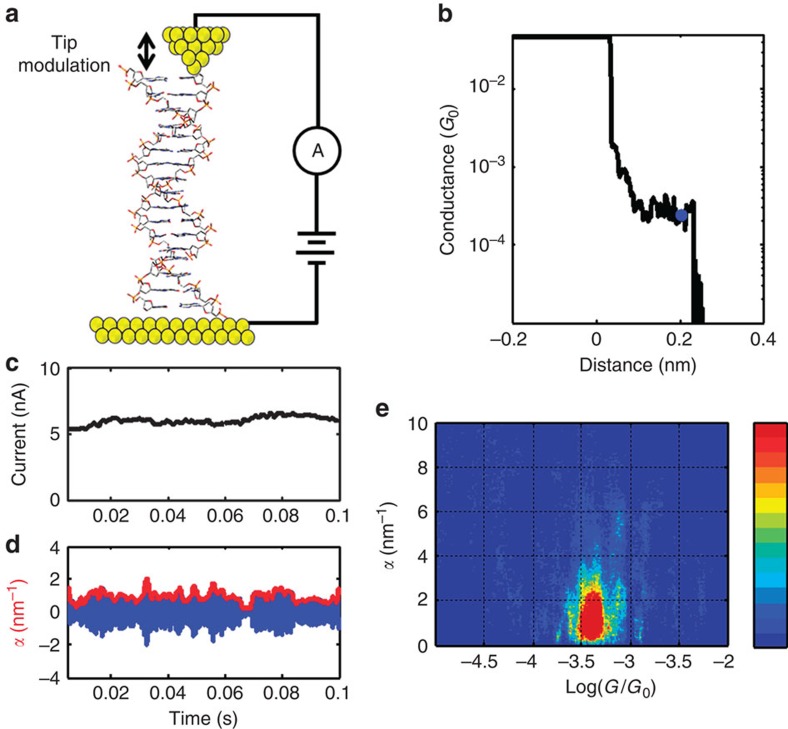
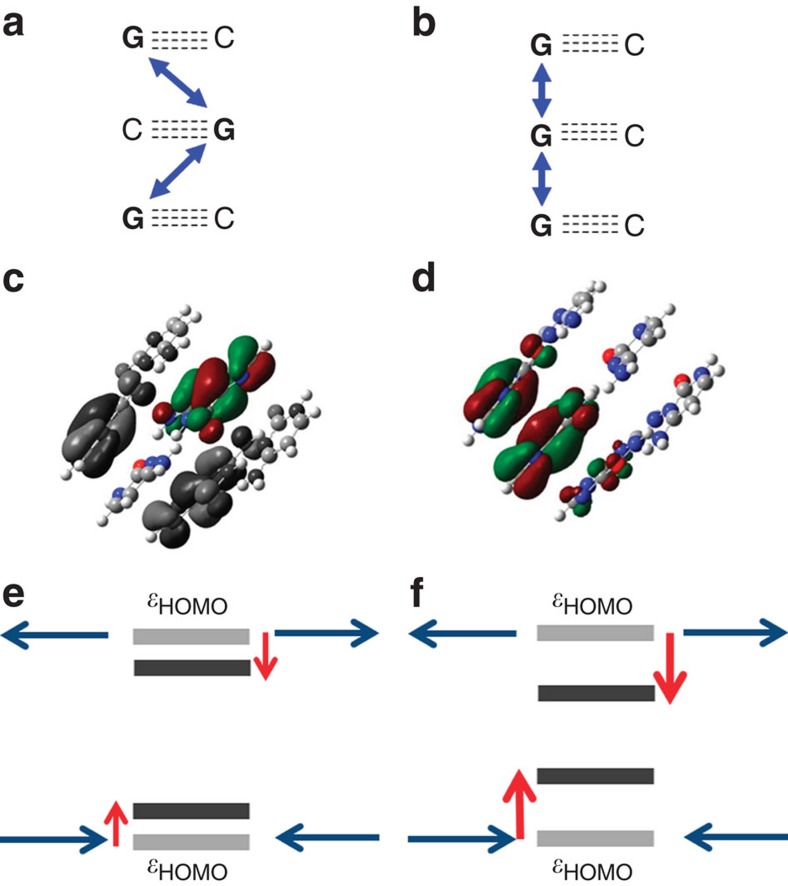
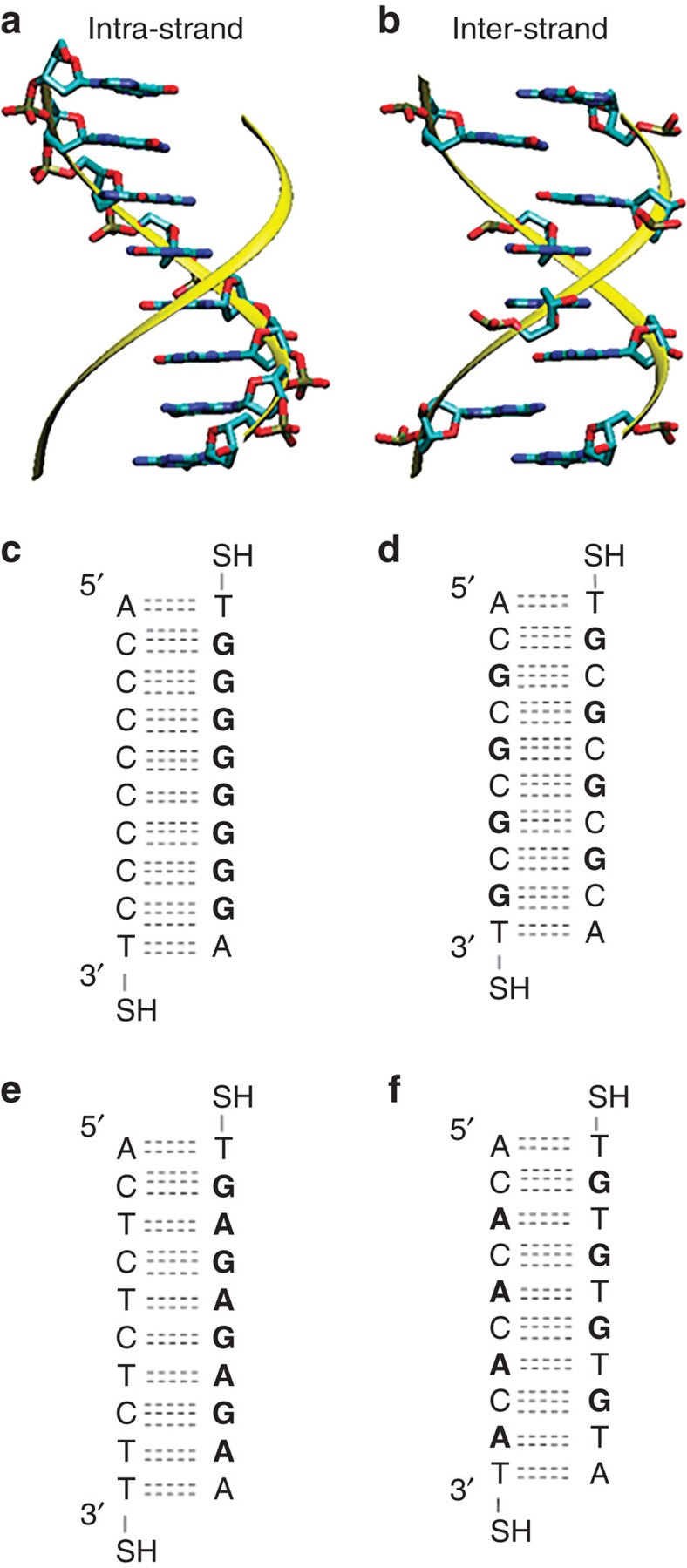
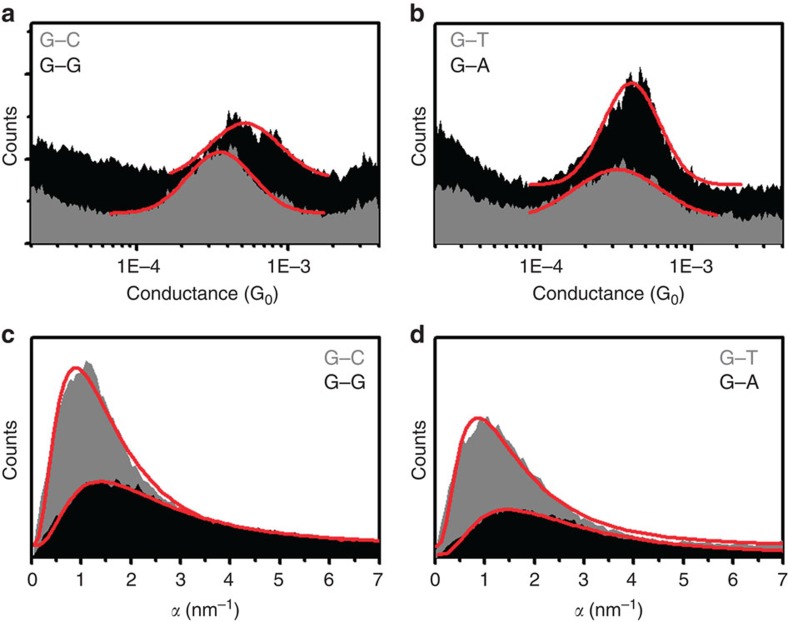
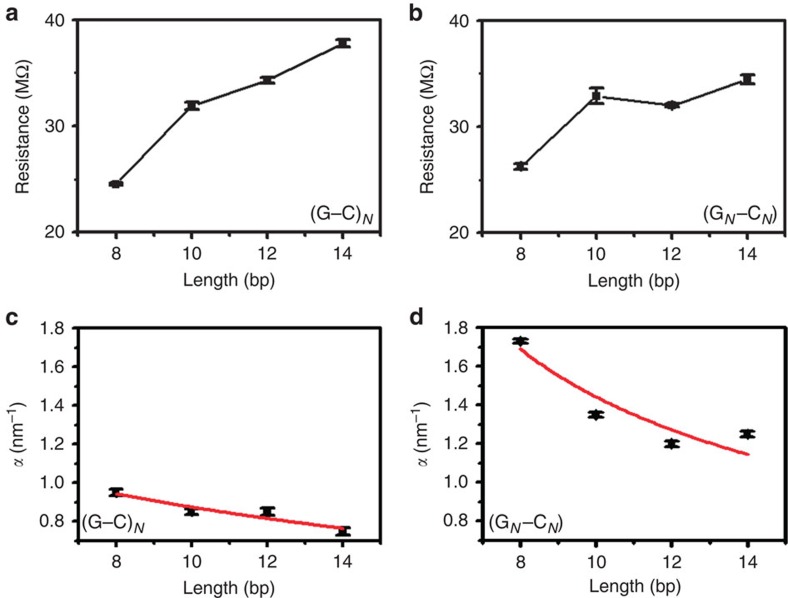
Piezoresistivity is a fundamental property of materials that has found many device applications. Here we report piezoresistivity in double helical DNA molecules. By studying the dependence of molecular conductance and piezoresistivity of single DNA molecules with different sequences and lengths, and performing molecular orbital calculations, we show that the piezoresistivity of DNA is caused by force-induced changes in the π-π electronic coupling between neighbouring bases, and in the activation energy of hole hopping. We describe the results in terms of thermal activated hopping model together with the ladder-based mechanical model for DNA proposed by de Gennes.
压阻效应是材料的一种基本特性,已在许多器件应用中得到发现。在此,我们报告了双螺旋DNA分子中的压阻效应。通过研究不同序列和长度的单个DNA分子的分子电导和压阻效应的依赖性,并进行分子轨道计算,我们表明DNA的压阻效应是由相邻碱基之间π-π电子耦合的力诱导变化以及空穴跳跃的活化能变化引起的。我们根据热激活跳跃模型以及德热纳提出的基于梯子的DNA力学模型来描述这些结果。