Grulova I, Slovinska L, Blaško J, Devaux S, Wisztorski M, Salzet M, Fournier I, Kryukov O, Cohen S, Cizkova D
Institute of Neurobiology, Center of Excellence for Brain Research, Department of Regenerative Medicine and Stem Cell Therapy, Slovak Academy of Sciences, Soltesovej 4-6, 040 01 Kosice, Slovakia.
Laboratoire PRISM: Protéomique, Réponse Inflammatoire, Spectrométrie de Masse, INSERM U1192, Bât SN3, 1er étage, Université de Lille 1, F-59655 Villeneuve d'Ascq, France.
Sci Rep. 2015 Sep 8;5:13702. doi: 10.1038/srep13702.
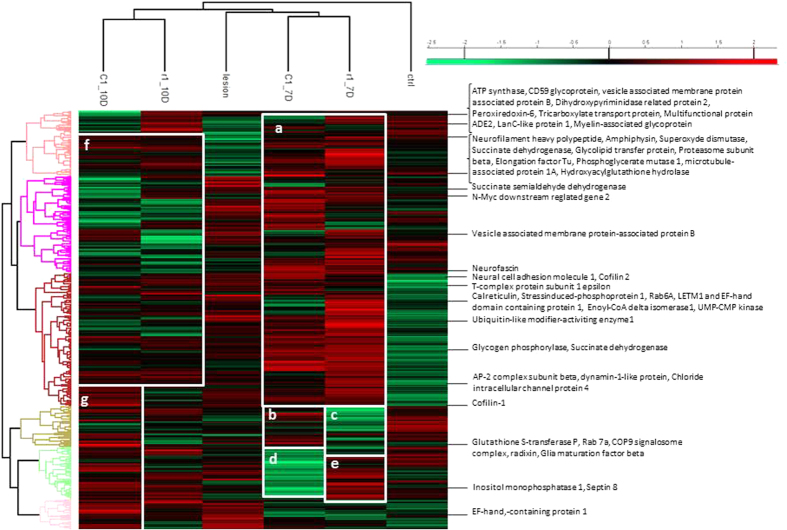
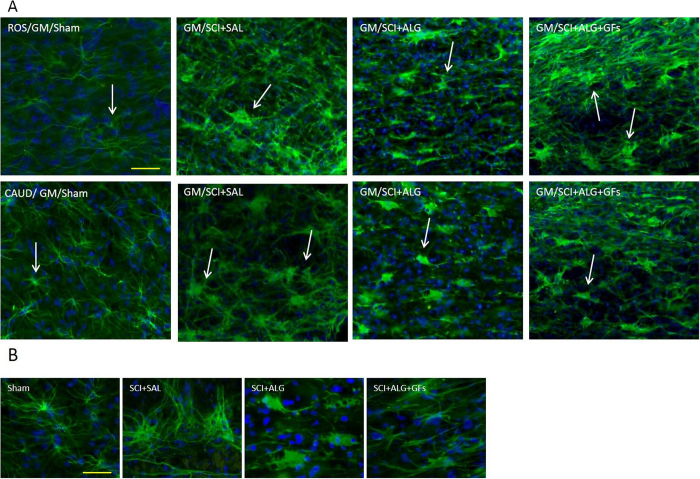
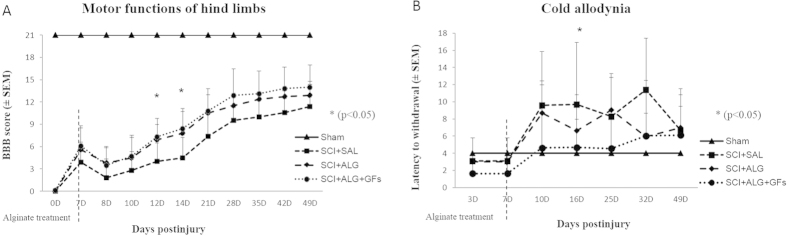
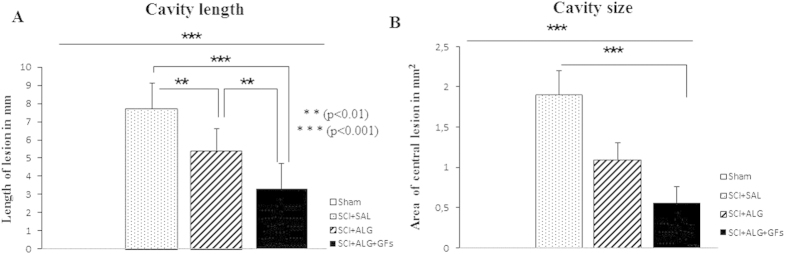
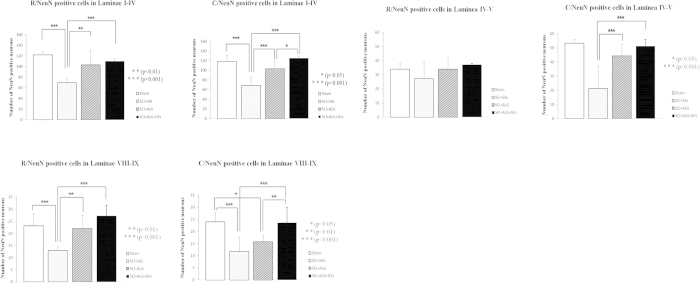
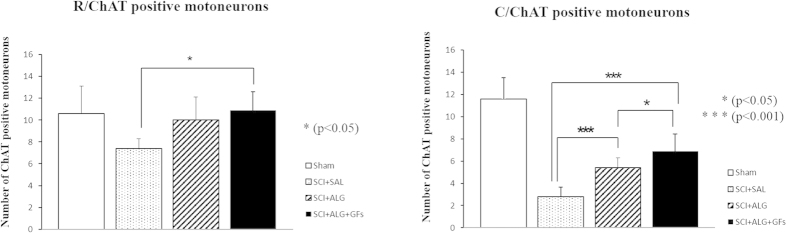
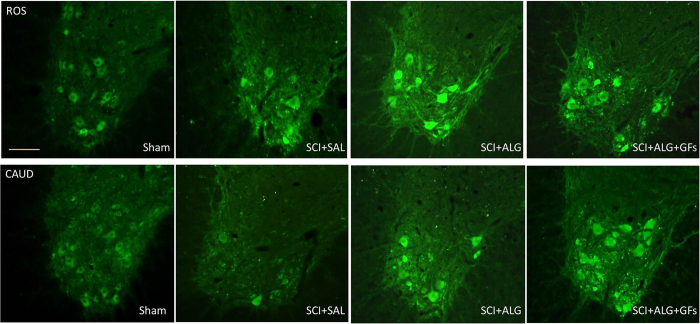
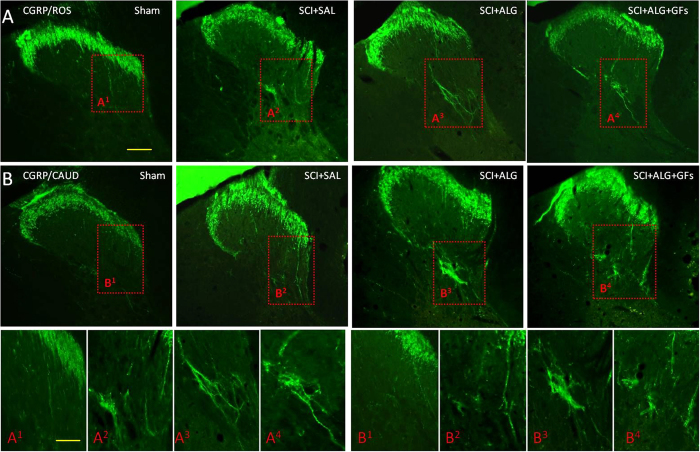
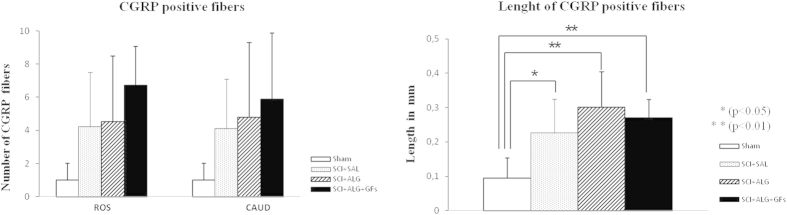
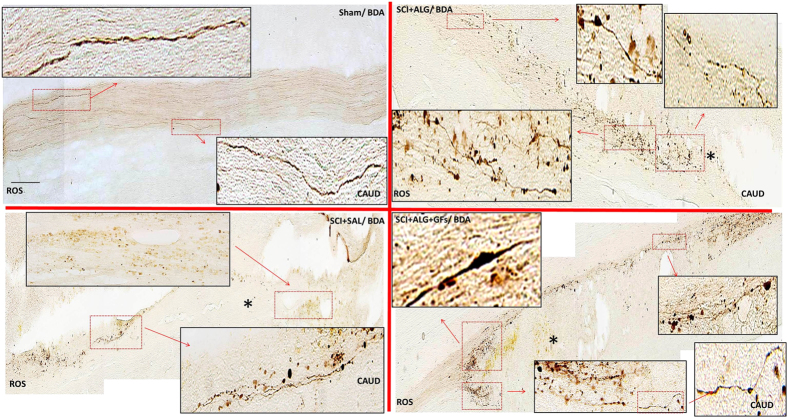
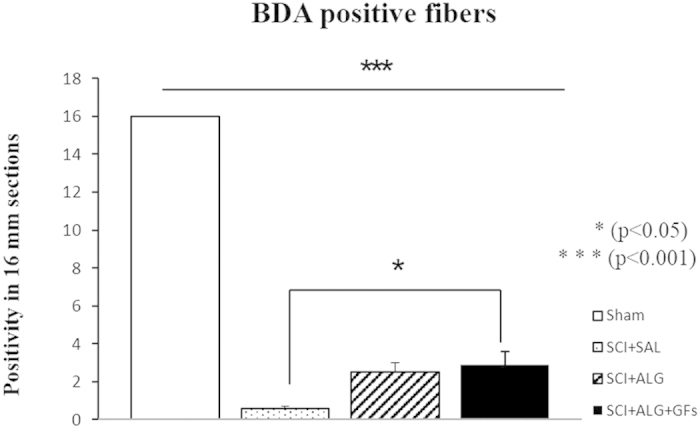
Spinal cord injury (SCI) has been implicated in neural cell loss and consequently functional motor and sensory impairment. In this study, we propose an alginate-based neurobridge enriched with/without trophic growth factors (GFs) that can be utilized as a therapeutic approach for spinal cord repair. The bioavailability of key GFs, such as Epidermal Growth factor (EGF) and basic Fibroblast Growth Factor (bFGF) released from injected alginate biomaterial to the central lesion site significantly enhanced the sparing of spinal cord tissue and increased the number of surviving neurons (choline acetyltransferase positive motoneurons) and sensory fibres. In addition, we document enhanced outgrowth of corticospinal tract axons and presence of blood vessels at the central lesion. Tissue proteomics was performed at 3, 7 and 10 days after SCI in rats indicated the presence of anti-inflammatory factors in segments above the central lesion site, whereas in segments below, neurite outgrowth factors, inflammatory cytokines and chondroitin sulfate proteoglycan of the lectican protein family were overexpressed. Collectively, based on our data, we confirm that functional recovery was significantly improved in SCI groups receiving alginate scaffold with affinity-bound growth factors (ALG+GFs), compared to SCI animals without biomaterial treatment.
脊髓损伤(SCI)与神经细胞损失有关,进而导致运动和感觉功能障碍。在本研究中,我们提出了一种富含/不含营养生长因子(GFs)的藻酸盐基神经桥,可将其用作脊髓修复的治疗方法。从注射的藻酸盐生物材料释放到中枢损伤部位的关键生长因子,如表皮生长因子(EGF)和碱性成纤维细胞生长因子(bFGF)的生物利用度,显著增强了脊髓组织的保留,并增加了存活神经元(胆碱乙酰转移酶阳性运动神经元)和感觉纤维的数量。此外,我们记录到皮质脊髓束轴突的生长增强以及中枢损伤处血管的存在。在大鼠脊髓损伤后3天、7天和10天进行组织蛋白质组学分析,结果表明在中枢损伤部位上方的节段中存在抗炎因子,而在下方的节段中,神经突生长因子、炎性细胞因子和凝集素蛋白家族的硫酸软骨素蛋白聚糖过表达。总体而言,根据我们的数据,我们证实与未接受生物材料治疗的脊髓损伤动物相比,接受具有亲和结合生长因子的藻酸盐支架(ALG+GFs)的脊髓损伤组的功能恢复有显著改善。