Emiroğlu Nazan, Cengiz Fatma Pelin, Kemeriz Funda
Department of Dermatology, Bezmialem Vakif University, Istanbul, Turkey. Head of the Department: Prof. Nahide Onsun MD, PhD.
Department of Dermatology, Aksaray State Hospital, Aksaray, Turkey. Head of the Department: Dr. Cengiz Kilicaslan MD.
Postepy Dermatol Alergol. 2015 Aug;32(4):281-5. doi: 10.5114/pdia.2015.53047. Epub 2015 Aug 12.
Acne vulgaris is a pilosebaceous gland disease that usually affects people from puberty to young adulthood. It is seen especially on the face, neck, trunk and arms. Its severity differs from patient to patient and its pathogenesis is multifactorial. The main pathogenic factors of acne are high sebaceous gland secretion, follicular hyperproliferation, high androgen effects, propionibacterium acnes colonization and inflammation. Diet is always thought a probable reason for acne and many studies are done about acne and diet.
To determine the effect of insulin resistance in severe acne vulgaris.
Two hundred and forty-three acne vulgaris patients and 156 healthy controls were enrolled into the study. The blood levels of insulin and glucose were measured. Homeostasis Model Assessment (HOMA) Index was calculated. The values were compared with the control group.
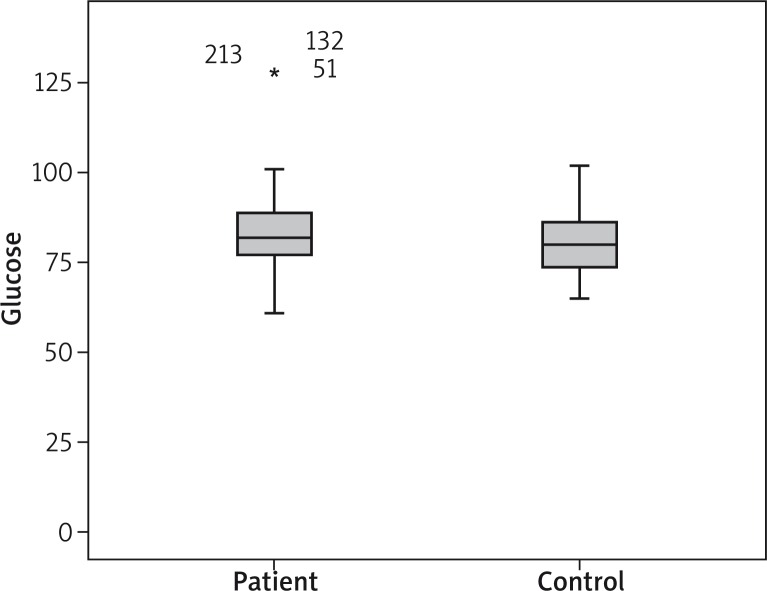
All of the patients were in the severe acne group according to their scores on the global acne scoring scale. While fasting blood glucose levels were not different between the groups (p > 0.05, 82.91 ±9.76 vs. 80.26 ±8.33), the fasting insulin levels were significantly higher in the patient group than in the control group (p < 0.001, 14.01 ±11.94 vs. 9.12 ±3.53). Additionally, there was a highly significant difference between the patient and control groups in terms of HOMA values (p < 0.001, 2.87 ±2.56 vs. 1.63 ±0.65).
These results suggest that insulin resistance may have a role in the pathogenesis of acne.
寻常痤疮是一种皮脂腺疾病,通常影响从青春期到成年早期的人群。尤其见于面部、颈部、躯干和手臂。其严重程度因人而异,发病机制是多因素的。痤疮的主要致病因素包括皮脂腺分泌旺盛、毛囊过度增殖、雄激素作用增强、痤疮丙酸杆菌定植和炎症。饮食一直被认为是痤疮的一个可能原因,并且已经进行了许多关于痤疮与饮食的研究。
确定胰岛素抵抗在重度寻常痤疮发病机制中的作用。
243例寻常痤疮患者和156例健康对照者纳入本研究。检测胰岛素和血糖的血液水平。计算稳态模型评估(HOMA)指数。将这些值与对照组进行比较。
根据全球痤疮评分量表的评分,所有患者均属于重度痤疮组。虽然两组间空腹血糖水平无差异(p>0.05,82.91±9.76 vs. 80.26±8.33),但患者组空腹胰岛素水平显著高于对照组(p<0.001,14.01±11.94 vs. 9.12±3.53)。此外,患者组和对照组的HOMA值存在高度显著差异(p<0.001,2.87±2.56 vs. 1.63±0.65)。
这些结果表明胰岛素抵抗可能在痤疮发病机制中起作用。