Vougat Ronald Romuald Bebey Ngom, Foyet Harquin Simplice, Ziebe Roland, Garabed Rebecca B
Department of Agriculture, Livestock and by-products, The Higher Institute of the Sahel, University of Maroua, Maroua, Cameroon.
Department of Biological Sciences, Faculty of Sciences, University of Maroua, Maroua, Cameroon.
J Intercult Ethnopharmacol. 2015 Jan-Mar;4(1):40-6. doi: 10.5455/jice.20141020064838. Epub 2014 Nov 28.
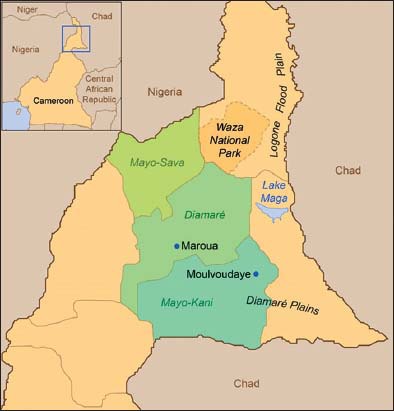
Plants used in the Far North Region of Cameroon by livestock farmers to manage foot and mouth disease (FMD) in cattle and the phytochemical composition and antioxidant potentials of two of them (Boscia senegalensis [BS] and Tapinanthus dodoneifolius [TD]) were investigated in this study.
Ethno veterinary data were collected from 325 livestock farmers using semi-structured interviews from September 2011 to April 2012. The 2,2-diphenyl-picrylhydrazyl radical scavenging activity and total phenolic content (TPC) were first performed with five different solvents to choose the best extract of each plant based on these two factors. To achieve our aim, the ferric iron reducing activity, hydroxyl radical scavenging activity (HRSA), free radical scavenging activity (FRSA), vitamin E and iron content were analyzed on extracts selected using current techniques.
The results showed that 12 plants of 8 different families are regularly used by farmers to manage FMD. It also demonstrated that acetone extract of TD and methanolic extract of BS are the extracts which showed the best total antioxidant activity (AA) and the best TPC. In general, TD show the best AA during the HRSA and FRSA analysis compared with BS. Similarly, TD content more phenolic compounds and tannins than BS. Both plants contain proteins, saponins, tannins, phenols, alkaloid, and polyphenols which are known to have many biological activities.
These results support the AA of both plants and can justify their use by herders to treat FMD which is often followed by many secondary diseases.
本研究调查了喀麦隆远北地区牧民用于防治牛口蹄疫的植物,以及其中两种植物(塞内加尔没药树[BS]和多叶桑寄生[TD])的植物化学成分和抗氧化潜力。
2011年9月至2012年4月,通过半结构化访谈从325名牧民那里收集民族兽医学数据。首先用五种不同溶剂进行2,2-二苯基-1-苦基肼自由基清除活性和总酚含量(TPC)测定,以根据这两个因素选择每种植物的最佳提取物。为实现我们的目标,使用现有技术对所选提取物的铁离子还原活性、羟自由基清除活性(HRSA)、自由基清除活性(FRSA)、维生素E和铁含量进行了分析。
结果表明,8个不同科的12种植物被牧民经常用于防治口蹄疫。结果还表明,TD的丙酮提取物和BS的甲醇提取物表现出最佳的总抗氧化活性(AA)和最佳的TPC。总体而言,在HRSA和FRSA分析中,TD的AA比BS的更好。同样,TD比BS含有更多的酚类化合物和单宁。两种植物都含有蛋白质、皂苷、单宁、酚类、生物碱和多酚,已知这些物质具有多种生物活性。
这些结果支持了这两种植物的抗氧化活性,并可以证明牧民使用它们治疗口蹄疫是合理的,口蹄疫之后常常会引发许多继发性疾病。