Lien Laura L, Steggell Carmen D, Iwarsson Susanne
School of Design and Human Environment, College of Business, Oregon State University, 228 Milam Hall, Corvallis, OR 97331, USA.
Department of Rehabilitation Science, School of Public Health and Health Professions, University at Buffalo, SUNY, 501 Kimball Tower, Buffalo, NY 14214, USA.
Int J Environ Res Public Health. 2015 Sep 23;12(9):11954-74. doi: 10.3390/ijerph120911954.
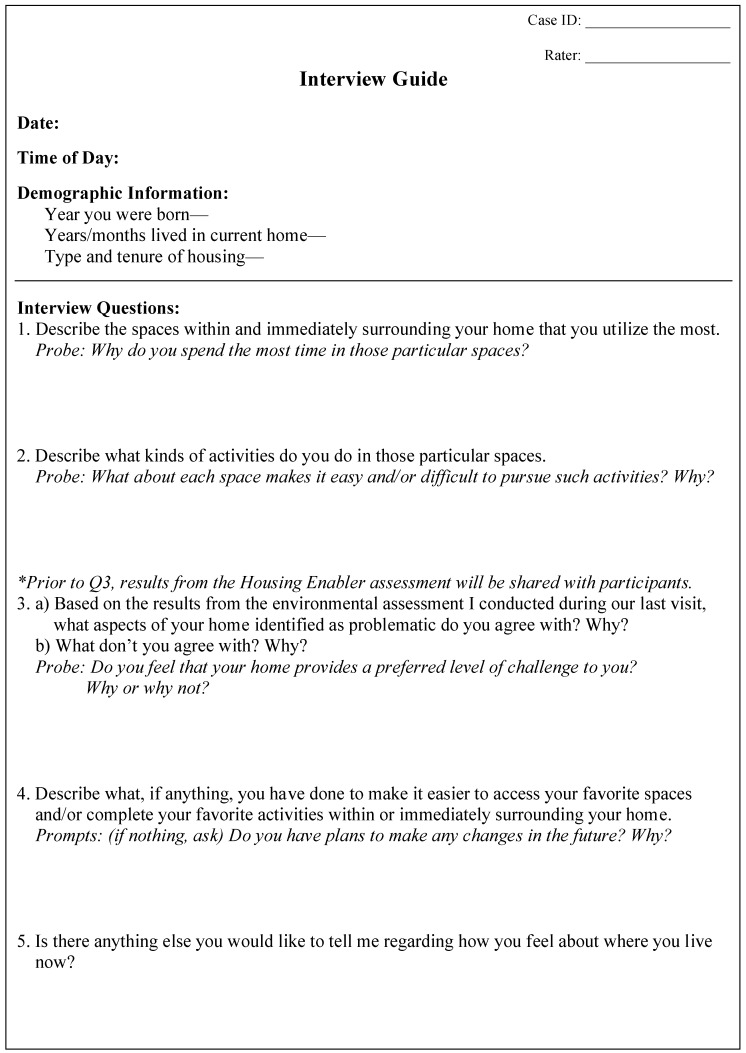
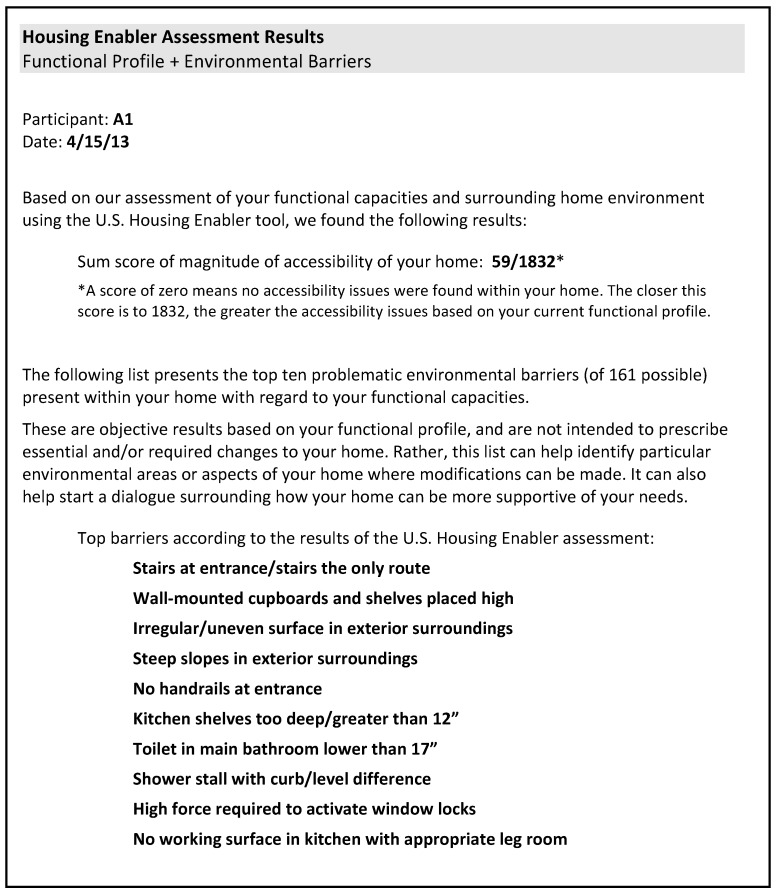
Older adults prefer to age in place, necessitating a match between person and environment, or person-environment (P-E) fit. In occupational therapy practice, home modifications can support independence, but more knowledge is needed to optimize interventions targeting the housing situation of older adults. In response, this study aimed to explore the accessibility and usability of the home environment to further understand adaptive environmental behaviors. Mixed methods data were collected using objective and perceived indicators of P-E fit among 12 older adults living in community-dwelling housing. Quantitative data described objective P-E fit in terms of accessibility, while qualitative data explored perceived P-E fit in terms of usability. While accessibility problems were prevalent, participants' perceptions of usability revealed a range of adaptive environmental behaviors employed to meet functional needs. A closer examination of the P-E interaction suggests that objective accessibility does not always stipulate perceived usability, which appears to be malleable with age, self-perception, and functional competency. Findings stress the importance of evaluating both objective and perceived indicators of P-E fit to provide housing interventions that support independence. Further exploration of adaptive processes in older age may serve to deepen our understanding of both P-E fit frameworks and theoretical models of aging well.
老年人更喜欢居家养老,这就需要人与环境相匹配,即人-环境(P-E)适配。在职业治疗实践中,家庭改造可以支持老年人独立生活,但需要更多知识来优化针对老年人住房状况的干预措施。为此,本研究旨在探索家庭环境的可达性和可用性,以进一步了解适应性环境行为。采用混合方法收集了12名居住在社区住房中的老年人的P-E适配的客观和主观指标数据。定量数据从可达性方面描述了客观的P-E适配,而定性数据从可用性方面探索了主观的P-E适配。虽然可达性问题普遍存在,但参与者对可用性的认知揭示了一系列为满足功能需求而采取的适应性环境行为。对P-E相互作用的进一步研究表明,客观可达性并不总是决定主观可用性,主观可用性似乎会随着年龄、自我认知和功能能力而变化。研究结果强调了评估P-E适配的客观和主观指标以提供支持独立生活的住房干预措施的重要性。对老年人适应过程的进一步探索可能有助于加深我们对P-E适配框架和健康老龄化理论模型的理解。