Awan Faryal Mehwish, Naz Anam, Obaid Ayesha, Ali Amjad, Ahmad Jamil, Anjum Sadia, Janjua Hussnain Ahmed
Atta-ur-Rahman School of Applied Biosciences (ASAB), National University of Sciences and Technology (NUST), H-12 Islamabad, Pakistan.
Research Center for Modeling and Simulation (RCMS), National University of Sciences and Technology (NUST), H-12 Islamabad, Pakistan.
PLoS One. 2015 Sep 28;10(9):e0138913. doi: 10.1371/journal.pone.0138913. eCollection 2015.
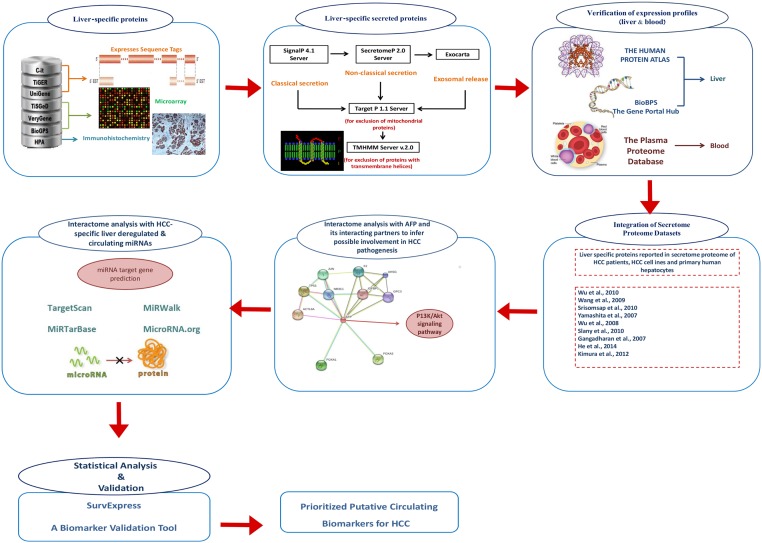
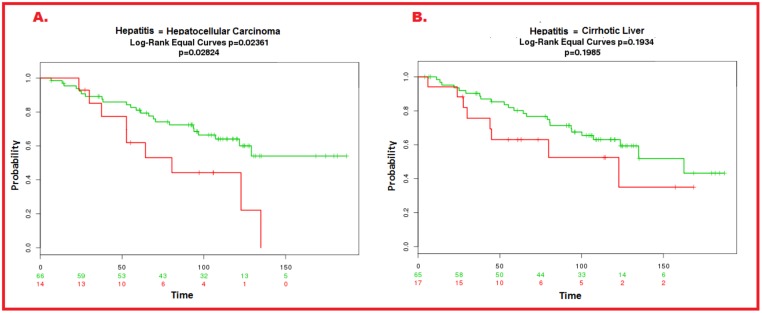
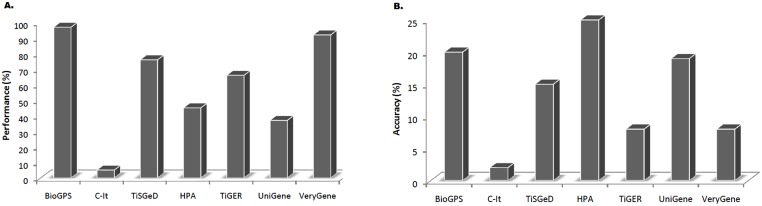
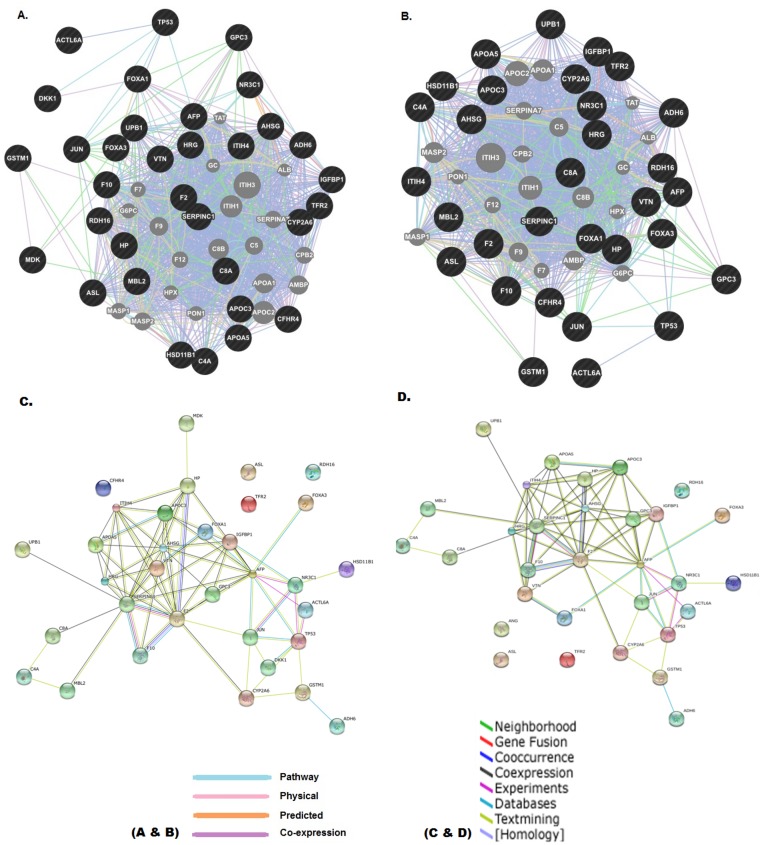
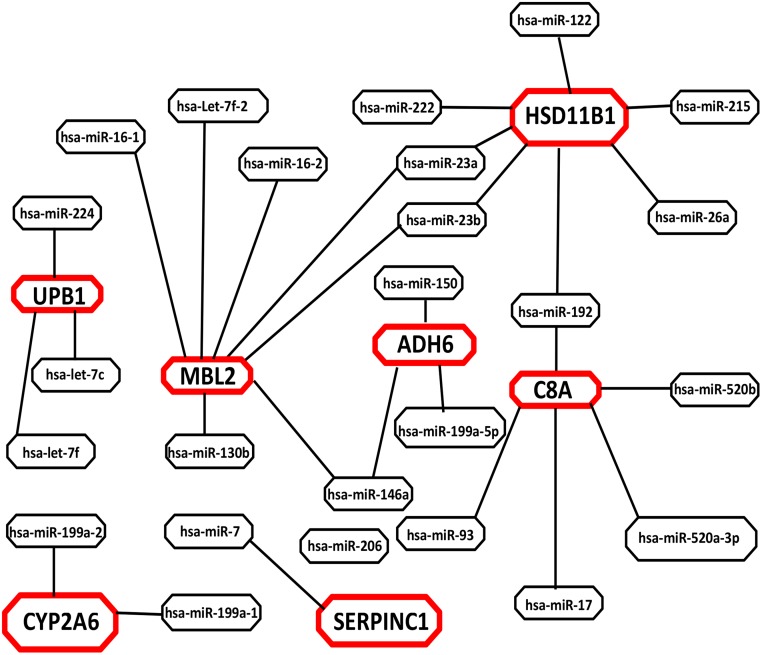
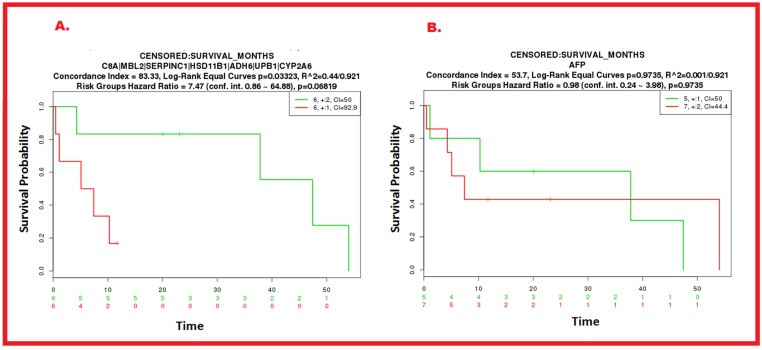
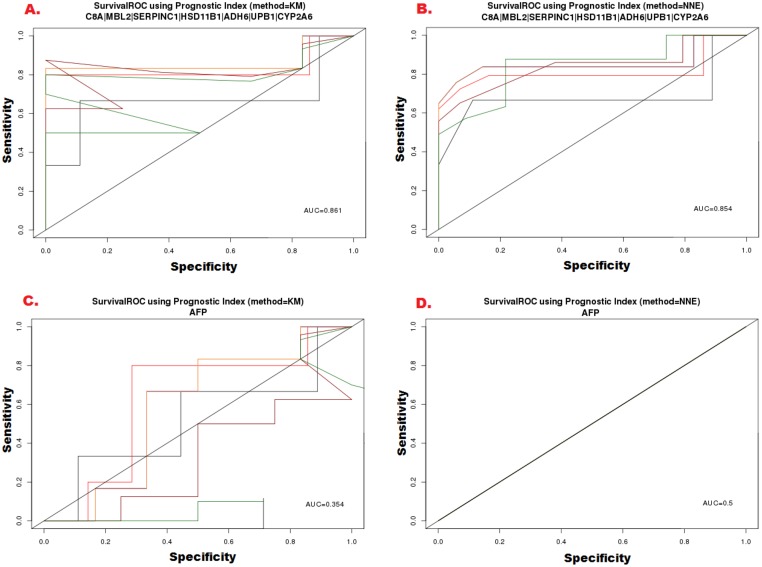
Hepatocellular carcinoma (HCC) is the world's third most widespread cancer. Currently available circulating biomarkers for this silently progressing malignancy are not sufficiently specific and sensitive to meet all clinical needs. There is an imminent and pressing need for the identification of novel circulating biomarkers to increase disease-free survival rate. In order to facilitate the selection of the most promising circulating protein biomarkers, we attempted to define an objective method likely to have a significant impact on the analysis of vast data generated from cutting-edge technologies. Current study exploits data available in seven publicly accessible gene and protein databases, unveiling 731 liver-specific proteins through initial enrichment analysis. Verification of expression profiles followed by integration of proteomic datasets, enriched for the cancer secretome, filtered out 20 proteins including 6 previously characterized circulating HCC biomarkers. Finally, interactome analysis of these proteins with midkine (MDK), dickkopf-1 (DKK-1), current standard HCC biomarker alpha-fetoprotein (AFP), its interacting partners in conjunction with HCC-specific circulating and liver deregulated miRNAs target filtration highlighted seven novel statistically significant putative biomarkers including complement component 8, alpha (C8A), mannose binding lectin (MBL2), antithrombin III (SERPINC1), 11β-hydroxysteroid dehydrogenase type 1 (HSD11B1), alcohol dehydrogenase 6 (ADH6), beta-ureidopropionase (UPB1) and cytochrome P450, family 2, subfamily A, polypeptide 6 (CYP2A6). Our proposed methodology provides a swift assortment process for biomarker prioritization that eventually reduces the economic burden of experimental evaluation. Further dedicated validation studies of potential putative biomarkers on HCC patient blood samples are warranted. We hope that the use of such integrative secretome, interactome and miRNAs target filtration approach will accelerate the selection of high-priority biomarkers for other diseases as well, that are more amenable to downstream clinical validation experiments.
肝细胞癌(HCC)是全球第三大常见癌症。目前用于这种隐匿性进展恶性肿瘤的循环生物标志物不够特异和敏感,无法满足所有临床需求。迫切需要鉴定新型循环生物标志物以提高无病生存率。为了便于选择最有前景的循环蛋白生物标志物,我们试图定义一种客观方法,该方法可能对分析前沿技术产生的大量数据产生重大影响。当前的研究利用了七个可公开访问的基因和蛋白质数据库中的数据,通过初步富集分析揭示了731种肝脏特异性蛋白质。对表达谱进行验证,随后整合富含癌症分泌组的蛋白质组数据集,筛选出20种蛋白质,其中包括6种先前已鉴定的循环HCC生物标志物。最后,对这些蛋白质与中期因子(MDK)、Dickkopf-1(DKK-1)、当前标准HCC生物标志物甲胎蛋白(AFP)及其相互作用伙伴进行相互作用组分析,并结合HCC特异性循环和肝脏失调的miRNA靶标筛选,突出了七种新的具有统计学意义的推定生物标志物,包括补体成分8α(C8A)、甘露糖结合凝集素(MBL2)、抗凝血酶III(SERPINC1)、11β-羟基类固醇脱氢酶1型(HSD11B1)、乙醇脱氢酶6(ADH6)、β-脲基丙酸酶(UPB1)和细胞色素P450 2A6家族多肽6(CYP2A6)。我们提出的方法为生物标志物优先级排序提供了一个快速分类过程,最终减轻了实验评估的经济负担。有必要对HCC患者血液样本中的潜在推定生物标志物进行进一步的专门验证研究。我们希望,使用这种综合分泌组、相互作用组和miRNA靶标筛选方法也将加速其他疾病高优先级生物标志物的选择,这些生物标志物更适合下游临床验证实验。