Packierisamy P Raviwharmman, Ng Chiu-Wan, Dahlui Maznah, Inbaraj Jonathan, Balan Venugopalan K, Halasa Yara A, Shepard Donald S
Am J Trop Med Hyg. 2015 Nov;93(5):1020-1027. doi: 10.4269/ajtmh.14-0667. Epub 2015 Sep 28.
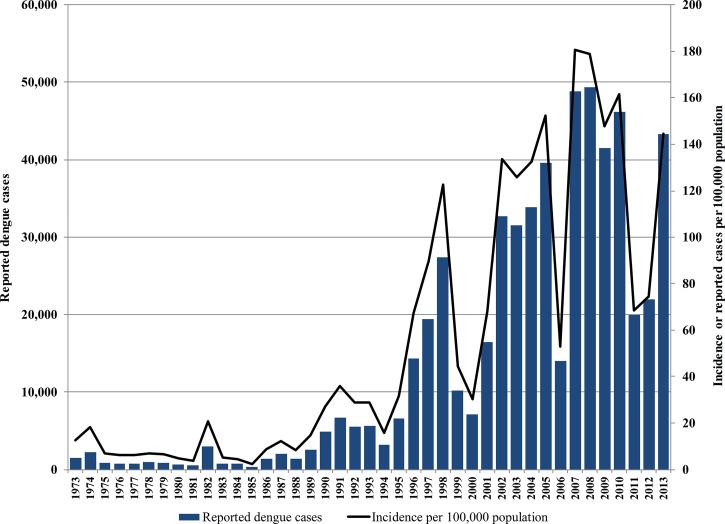
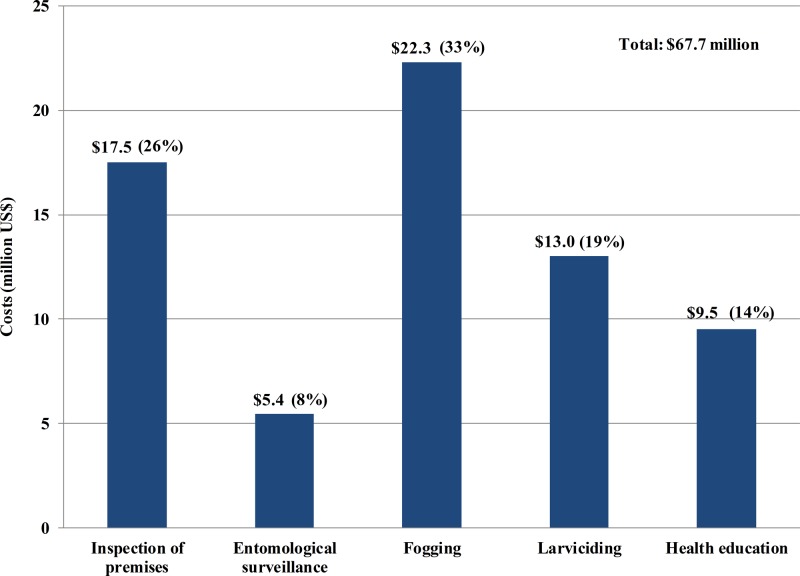
Dengue fever, an arbovirus disease transmitted by Aedes mosquitoes, has recently spread rapidly, especially in the tropical countries of the Americas and Asia-Pacific regions. It is endemic in Malaysia, with an annual average of 37,937 reported dengue cases from 2007 to 2012. This study measured the overall economic impact of dengue in Malaysia, and estimated the costs of dengue prevention. In 2010, Malaysia spent US$73.5 million or 0.03% of the country's GDP on its National Dengue Vector Control Program. This spending represented US$1,591 per reported dengue case and US$2.68 per capita population. Most (92.2%) of this spending occurred in districts, primarily for fogging. A previous paper estimated the annual cost of dengue illness in the country at US$102.2 million. Thus, the inclusion of preventive activities increases the substantial estimated cost of dengue to US$175.7 million, or 72% above illness costs alone. If innovative technologies for dengue vector control prove efficacious, and a dengue vaccine was introduced, substantial existing spending could be rechanneled to fund them.
登革热是一种由伊蚊传播的虫媒病毒疾病,最近传播迅速,尤其是在美洲和亚太地区的热带国家。在马来西亚,登革热呈地方性流行,2007年至2012年期间平均每年报告37,937例登革热病例。本研究衡量了登革热在马来西亚造成的总体经济影响,并估算了登革热预防成本。2010年,马来西亚在其国家登革热病媒控制计划上花费了7350万美元,占该国国内生产总值的0.03%。这笔支出相当于每报告一例登革热病例花费1591美元,人均花费2.68美元。这笔支出的大部分(92.2%)发生在各地区,主要用于喷雾灭蚊。此前一篇论文估计该国登革热疾病的年度成本为1.022亿美元。因此,将预防活动纳入计算后,登革热的估计成本大幅增加至1.757亿美元,比仅计算疾病成本高出72%。如果登革热病媒控制的创新技术被证明有效,并且引入了登革热疫苗,现有的大量支出可以重新分配用于资助这些技术和疫苗。