National Institutes of Health, Bethesda, Maryland, USA.
Emerg Infect Dis. 2013 Apr;19(4):542-50. doi: 10.3201/eid1904.120117.
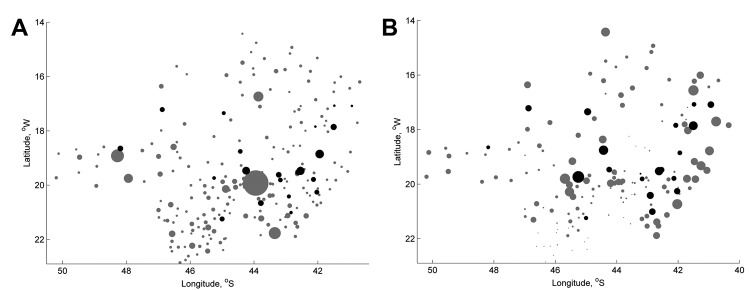
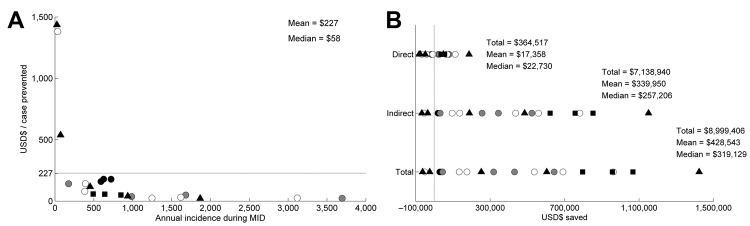
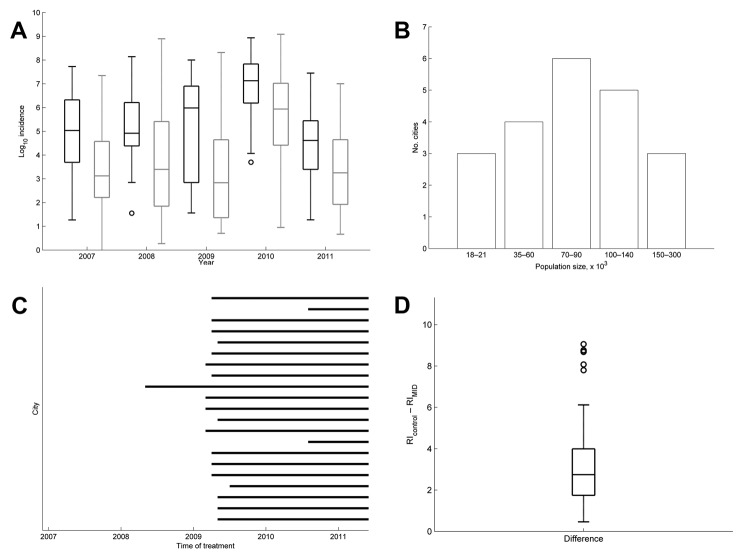
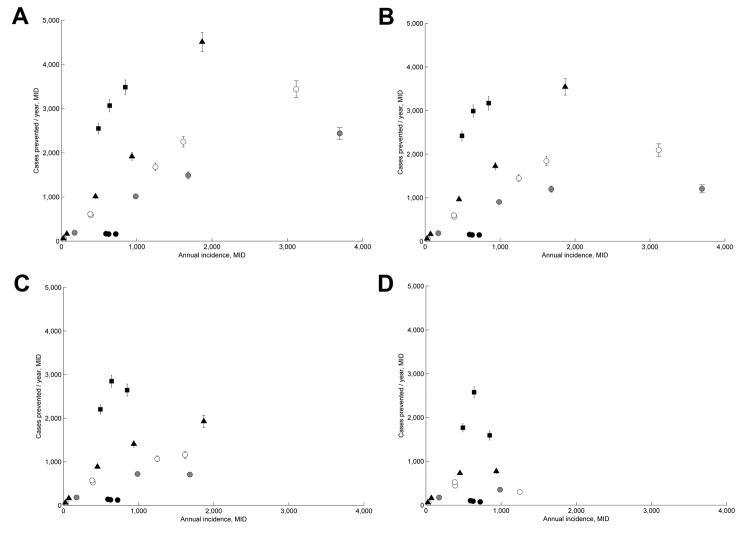
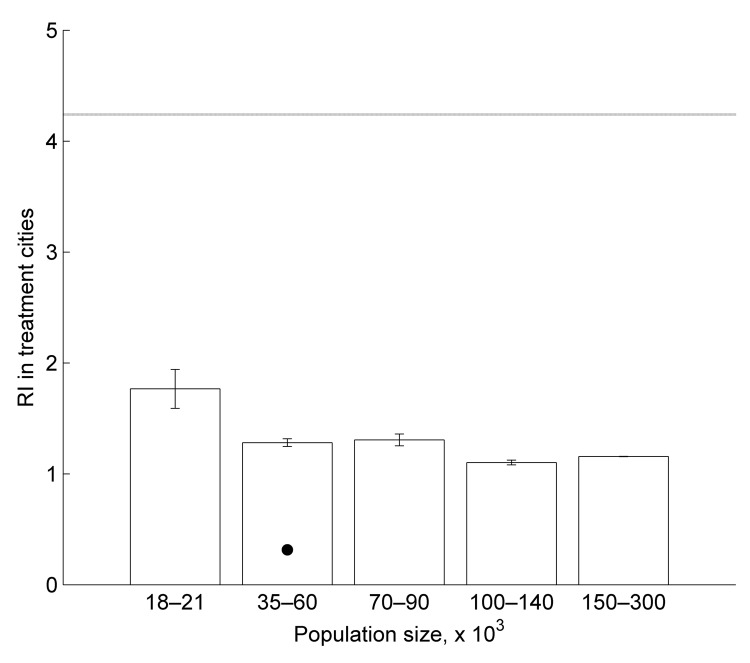
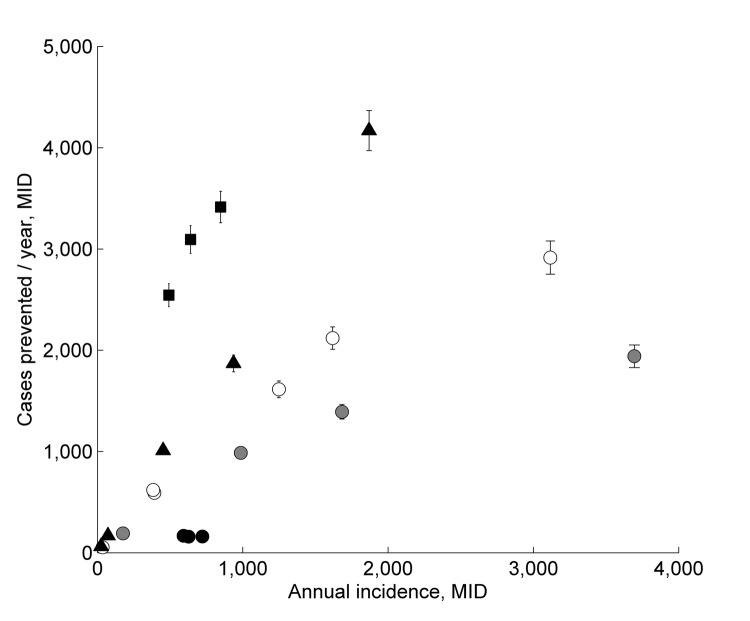
Of all countries in the Western Hemisphere, Brazil has the highest economic losses caused by dengue fever. We evaluated the cost-effectiveness of a novel system of vector surveillance and control, Monitoramento Inteligente da Dengue (Intelligent Dengue Monitoring System [MID]), which was implemented in 21 cities in Minas Gerais, Brazil. Traps for adult female mosquitoes were spaced at 300-m intervals throughout each city. In cities that used MID, vector control was conducted specifically at high-risk sites (indicated through daily updates by MID). In control cities, vector control proceeded according to guidelines of the Brazilian government. We estimated that MID prevented 27,191 cases of dengue fever and saved an average of $227 (median $58) per case prevented, which saved approximately $364,517 in direct costs (health care and vector control) and $7,138,940 in lost wages (societal effect) annually. MID was more effective in cities with stronger economies and more cost-effective in cities with higher levels of mosquito infestation.
在西半球所有国家中,巴西因登革热造成的经济损失最高。我们评估了一种新型蚊虫监测和控制系统——Monitoramento Inteligente da Dengue(智能登革热监测系统[MID])的成本效益,该系统在巴西米纳斯吉拉斯州的 21 个城市实施。诱捕成年雌性蚊子的诱捕器在每个城市的间隔为 300 米。在使用 MID 的城市中,蚊虫控制是在高风险地点进行的(通过 MID 的每日更新来指示)。在对照城市中,蚊虫控制是按照巴西政府的指导方针进行的。我们估计,MID 预防了 27191 例登革热病例,平均每例预防成本为 227 美元(中位数为 58 美元),每年可节省直接成本(医疗保健和蚊虫控制)约 364517 美元和 7138940 美元的工资损失(社会效益)。MID 在经济实力较强的城市效果更好,在蚊虫密度较高的城市成本效益更高。