Schmithausen Ricarda Maria, Schulze-Geisthoevel Sophia Veronika, Stemmer Franziska, El-Jade Mohamed, Reif Marion, Hack Sylvia, Meilaender Alina, Montabauer Gabriele, Fimmers Rolf, Parcina Marijo, Hoerauf Achim, Exner Martin, Petersen Brigitte, Bierbaum Gabriele, Bekeredjian-Ding Isabelle
Institute of Medical Microbiology, Immunology and Parasitology, University Hospital Bonn, Bonn, Germany; Institute of Animal Science, Preventive Health Management Group, University of Bonn, Katzenburgweg 7-9, Bonn, Germany.
Institute of Animal Science, Preventive Health Management Group, University of Bonn, Katzenburgweg 7-9, Bonn, Germany.
PLoS One. 2015 Sep 30;10(9):e0138173. doi: 10.1371/journal.pone.0138173. eCollection 2015.
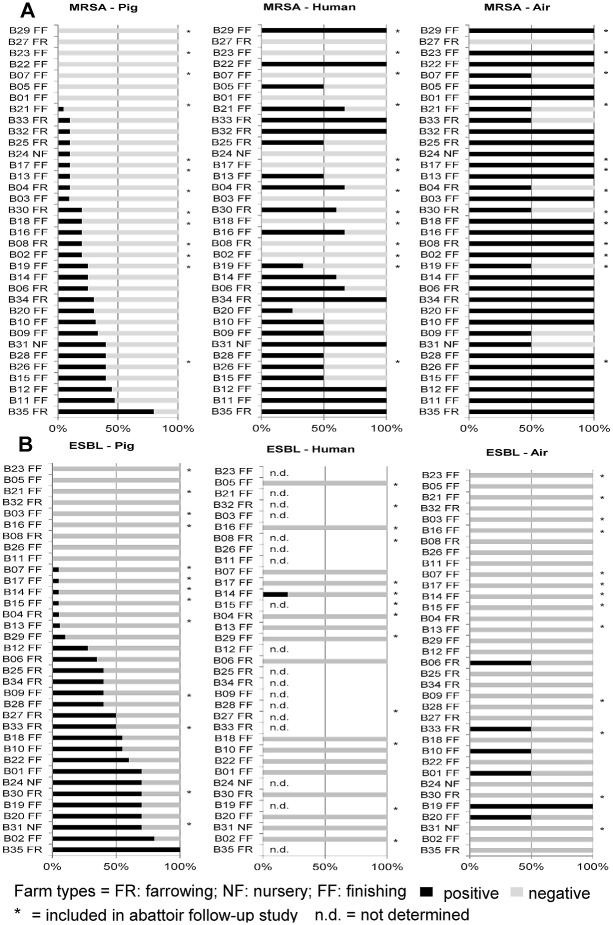
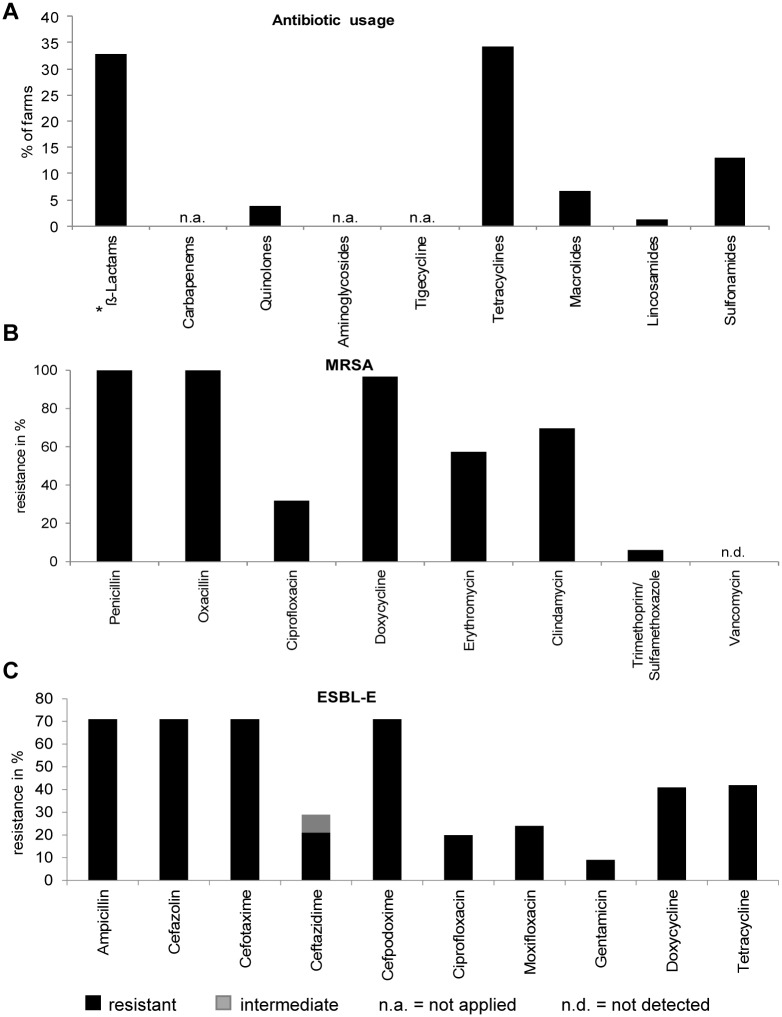
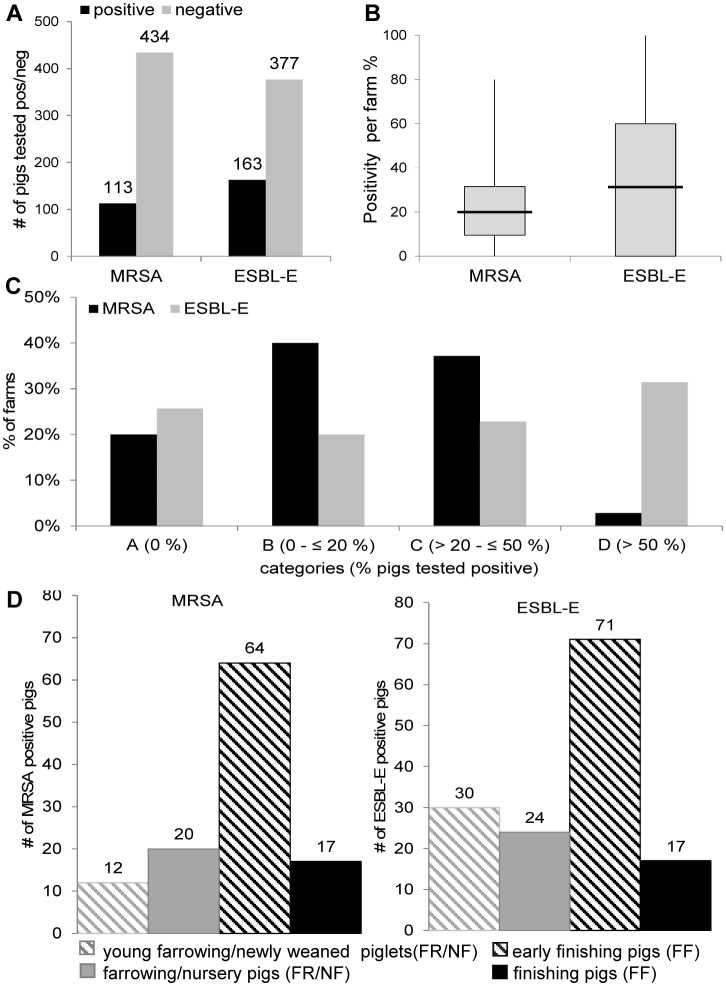
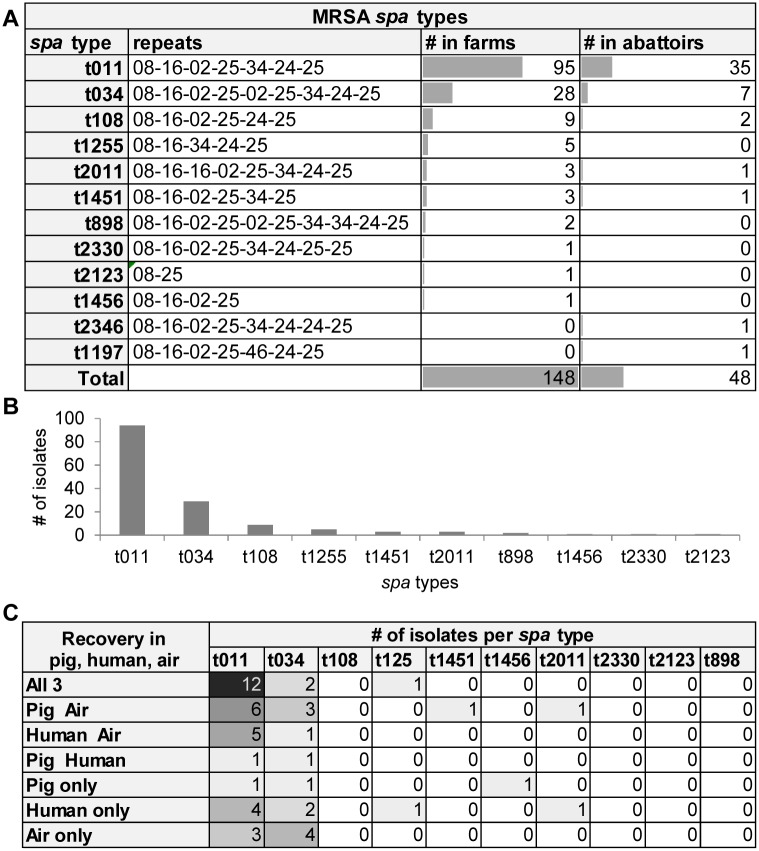
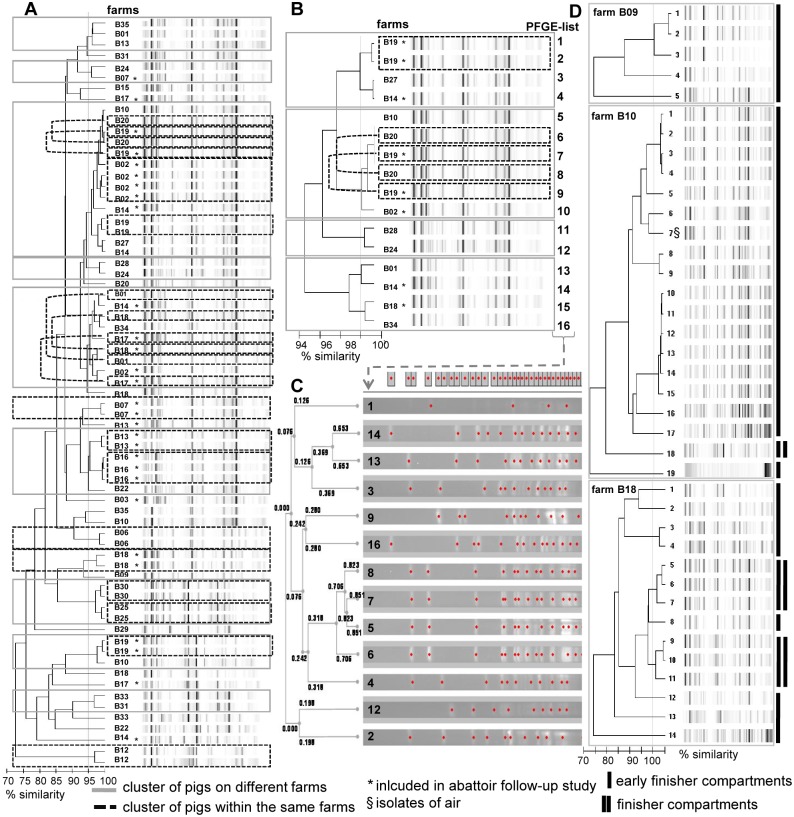
Livestock-associated bacteria with resistance to two or more antibiotic drug classes have heightened our awareness for the consequences of antibiotic consumption and spread of resistant bacterial strains in the veterinary field. In this study we assessed the prevalence of concomitant colonization with livestock-associated methicillin-resistant Staphylococcus aureus (LA-MRSA) and enterobacteriaceae expressing extended-spectrum betalactamases (ESBL-E) in farms at the German-Dutch border region. Nasal colonization of pigs with MRSA (113/547 (20.7%)) was less frequent than rectal colonization with ESBL-E (163/540 (30.2%)). On the individual farm level MRSA correlated with ESBL-E recovery. The data further provide information on prevalence at different stages of pig production, including abattoirs, as well as in air samples and humans living and working on the farms. Notably, MRSA was detected in stable air samples of 34 out of 35 pig farms, highlighting air as an important MRSA transmission reservoir. The majority of MRSA isolates, including those from humans, displayed tetracycline resistance and spa types t011 and t034 characteristic for LA-MRSA, demonstrating transmission from pigs to humans. ESBL-E positive air samples were detected on 6 out of 35 farms but no pig-to-human transmission was found. Detection of ESBL-E, e.g. mostly Escherichia coli with CTX-M-type ESBL, was limited to these six farms. Molecular typing revealed transmission of ESBL-E within the pig compartments; however, related strains were also found on unrelated farms. Although our data suggest that acquisition of MRSA and ESBL-E might occur among pigs in the abattoirs, MRSA and ESBL-E were not detected on the carcasses. Altogether, our data define stable air (MRSA), pig compartments (ESBL-E) and abattoir waiting areas (MRSA and ESBL-E) as major hot spots for transmission of MRSA and/or ESBL-E along the pig production chain.
对两种或更多类抗生素具有耐药性的家畜相关细菌,提高了我们对抗生素使用后果以及耐药菌株在兽医领域传播的认识。在本研究中,我们评估了德国 - 荷兰边境地区农场中家畜相关耐甲氧西林金黄色葡萄球菌(LA-MRSA)与表达超广谱β-内酰胺酶(ESBL-E)的肠杆菌科细菌同时定植的流行情况。猪的鼻腔MRSA定植率(113/547,20.7%)低于直肠ESBL-E定植率(163/540,30.2%)。在单个农场层面,MRSA与ESBL-E的检出相关。这些数据还提供了猪生产不同阶段(包括屠宰场)以及空气样本和在农场生活及工作的人员中的流行情况信息。值得注意的是,在35个猪场中的34个猪场的猪舍空气样本中检测到了MRSA,凸显了空气作为重要的MRSA传播源。大多数MRSA分离株,包括来自人类的分离株,都表现出四环素耐药性以及LA-MRSA特有的spa型t011和t034,表明存在从猪到人的传播。在35个农场中的6个农场检测到了ESBL-E阳性空气样本,但未发现从猪到人的传播。ESBL-E的检测,例如大多为携带CTX-M型ESBL的大肠杆菌,仅限于这六个农场。分子分型显示ESBL-E在猪群中传播;然而,在不相关的农场也发现了相关菌株。尽管我们的数据表明在屠宰场的猪中可能会出现MRSA和ESBL-E的感染,但在屠体上未检测到MRSA和ESBL-E。总体而言,我们的数据确定了猪舍空气(MRSA)、猪群(ESBL-E)和屠宰场等候区(MRSA和ESBL-E)是猪生产链中MRSA和/或ESBL-E传播的主要热点区域。