Willenberg Ina, Meschede Anna K, Gueler Faikah, Jang Mi-Sun, Shushakova Nelli, Schebb Nils Helge
University of Veterinary Medicine Hannover, Institute for Food Toxicology and Analytical Chemistry, Bischofsholer Damm 15, 30173 Hannover, Germany.
Department of Nephrology, Hannover Medical School, Carl-Neuberg-Str. 1, 30625 Hannover, Germany.
PLoS One. 2015 Oct 6;10(10):e0139147. doi: 10.1371/journal.pone.0139147. eCollection 2015.
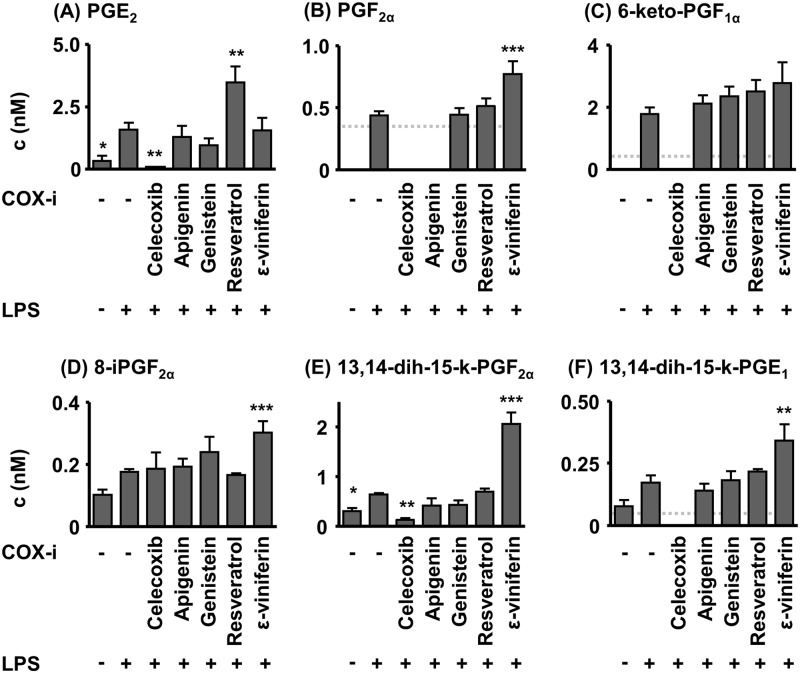
Epidemiologic studies show a correlation between the dietary intake of food polyphenols and beneficial health effects. Several in vitro studies indicate that the anti-inflammatory potential of polyphenols is, at least in part, mediated by a modulation of the enzymes of the arachidonic acid cascade, such as the prostaglandin forming cyclooxygenases (COXs). Evidence that this mode of action can be transferred to the situation in vivo is scarce. This study characterized effects of a subset of polyphenols on COX-2 expression and activity in vitro and compared the potency with known drugs. Next, the in vivo relevance of the observed in vitro effects was tested. Enzyme assays and incubations of polyphenols with the cancer cell line HCA-7 and lipopolysaccharide (LPS) stimulated primary monocytes support the hypothesis that polyphenols can effect COX-2 expression and activity in vitro. The effects were most pronounced in the monocyte assay for wogonin, apigenin, resveratrol and genistein with IC50 values of 1.5 μM, 2.6 μM, 2.8 μM and 7.4 μM. However, these values are 100- to 1000-fold higher in comparison to those of the known pharmaceuticals celecoxib, indomethacin and dexamethasone. In an animal model of LPS induced sepsis, pretreatment with polyphenols (i. p. 100 mg/kg bw) did not result in decreased plasma or tissue prostaglandin levels, whereas the positive control celecoxib effectively attenuated LPS induced prostaglandin formation. These data suggest that despite the moderate potency in vitro, an effect of polyphenols on COX-2 during acute inflammation is unlikely, even if a high dose of polyphenols is ingested.
流行病学研究表明,食物中多酚的摄入量与有益健康的效果之间存在关联。多项体外研究表明,多酚的抗炎潜力至少部分是由对花生四烯酸级联反应相关酶的调节介导的,比如形成前列腺素的环氧化酶(COXs)。然而,这种作用方式能否转化为体内实际情况的证据却很少。本研究对一部分多酚在体外对COX-2表达和活性的影响进行了表征,并将其效力与已知药物进行了比较。接下来,测试了体外观察到的效应在体内的相关性。酶活性测定以及多酚与癌细胞系HCA-7和脂多糖(LPS)刺激的原代单核细胞的孵育实验支持了多酚可在体外影响COX-2表达和活性这一假说。在单核细胞实验中,汉黄芩素、芹菜素、白藜芦醇和染料木黄酮的效应最为显著,IC50值分别为1.5 μM、2.6 μM、2.8 μM和7.4 μM。然而,与已知药物塞来昔布、吲哚美辛和地塞米松相比,这些值要高出100到1000倍。在LPS诱导的败血症动物模型中,用多酚(腹腔注射100 mg/kg体重)进行预处理并未导致血浆或组织中前列腺素水平降低,而阳性对照塞来昔布有效地减弱了LPS诱导的前列腺素生成。这些数据表明,尽管多酚在体外有一定效力,但即使摄入高剂量的多酚,其在急性炎症期间对COX-2产生影响的可能性也不大。