Cortez Sarah, Milbrandt Melissa, Kaphingst Kimberly, James Aimee, Colditz Graham
Breast Cancer Res Treat. 2015 Nov;154(1):191-9. doi: 10.1007/s10549-015-3601-2.
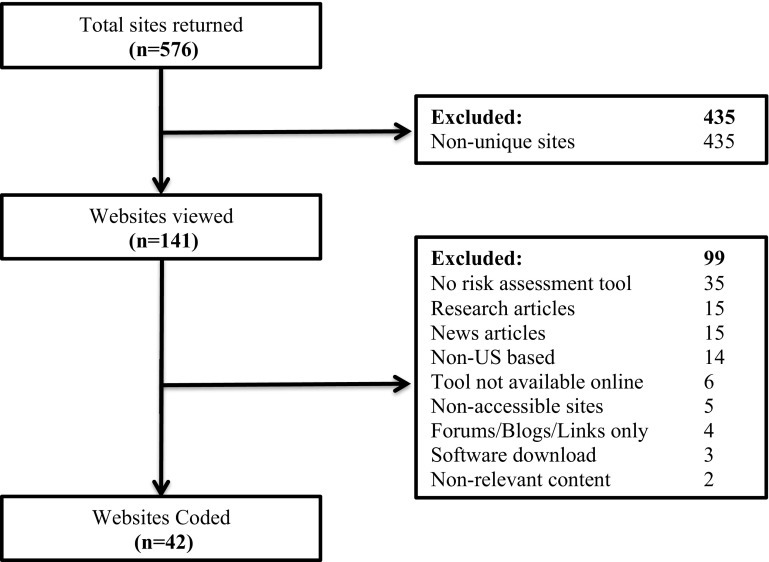
Numerous breast cancer risk assessment tools that allow users to input personal risk information and obtain a personalized breast cancer risk estimate are available on the Internet. The goal of these tools is to increase screening awareness and identify modifiable health behaviors; however, the utility of this risk information is limited by the readability of the material. We undertook this study to assess the overall readability of breast cancer risk assessment tools and accompanying information, as well as to identify areas of suggested improvement. We searched for breast cancer risk assessment tools, using five search terms, on three search engines. All searches were performed on June 12, 2014. Sites that met inclusion criteria were then assessed for readability using the suitability assessment of materials (SAM) and the SMOG readability formula (July 1, 2014–January 31, 2015). The primary outcomes are the frequency distribution of overall SAM readability category (superior, adequate, or not suitable) and mean SMOG reading grade level. The search returned 42 sites were eligible for assessment, only 9 (21.4 %) of which achieved an overall SAM superior rating, and 27 (64.3 %) were deemed adequate. The average SMOG reading grade level was grade 12.1 (SD 1.6, range 9–15). The readability of breast cancer risk assessment tools and the sites that host them is an important barrier to risk communication. This study demonstrates that most breast cancer risk assessment tools are not accessible to individuals with limited health literacy skills. More importantly, this study identifies potential areas of improvement and has the potential to heighten a physician’s awareness of the Internet resources a patient might navigate in their quest for breast cancer risk information.
互联网上有许多乳腺癌风险评估工具,用户可以输入个人风险信息并获得个性化的乳腺癌风险估计。这些工具的目标是提高筛查意识并识别可改变的健康行为;然而,这些风险信息的效用受到材料可读性的限制。我们开展这项研究以评估乳腺癌风险评估工具及相关信息的整体可读性,并确定建议改进的领域。我们在三个搜索引擎上使用五个搜索词搜索乳腺癌风险评估工具。所有搜索均在2014年6月12日进行。然后使用材料适用性评估(SAM)和烟雾可读性公式(2014年7月1日至2015年1月31日)对符合纳入标准的网站进行可读性评估。主要结果是SAM整体可读性类别(优秀、 adequate或不适合)的频率分布以及烟雾可读性平均年级水平。搜索返回42个符合评估条件的网站,其中只有9个(21.4%)获得了SAM整体优秀评级,27个(64.3%)被认为是adequate。烟雾可读性平均年级水平为12.1年级(标准差1.6,范围9 - 15)。乳腺癌风险评估工具及其所在网站的可读性是风险沟通的一个重要障碍。这项研究表明,健康素养技能有限的个人无法使用大多数乳腺癌风险评估工具。更重要的是,这项研究确定了潜在的改进领域,并有可能提高医生对患者在寻求乳腺癌风险信息时可能浏览的互联网资源的认识。