Zhang Ting, Wang Yiqing, Kong Lu, Xue Yuying, Tang Meng
Key Laboratory of Environmental Medicine Engineering, Ministry of Education, School of Public Health, Southeast University, Nanjing 210009, China.
Jiangsu Key Laboratory for Biomaterials and Devices, Southeast University, Nanjing 210009, China.
Int J Environ Res Public Health. 2015 Oct 26;12(10):13435-54. doi: 10.3390/ijerph121013435.
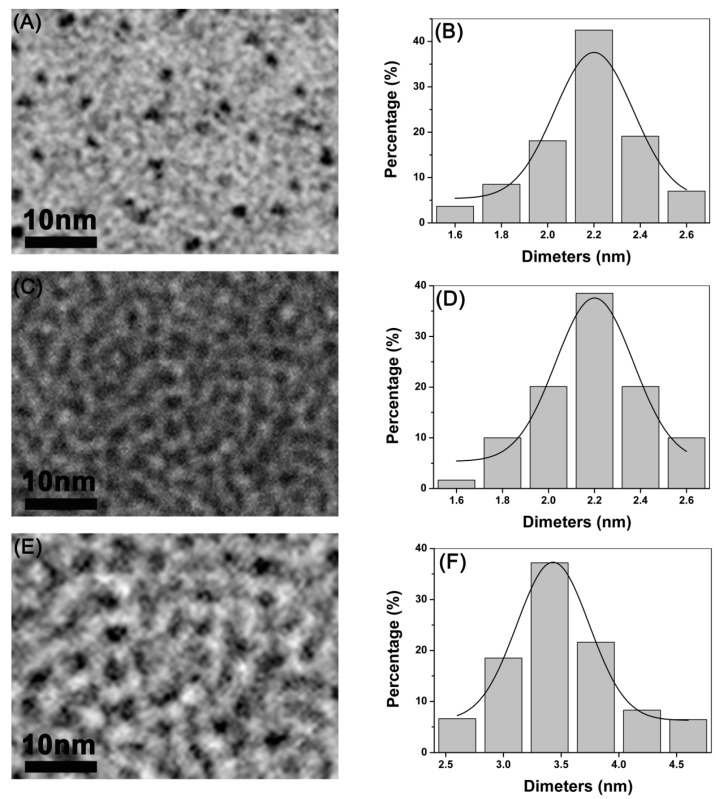
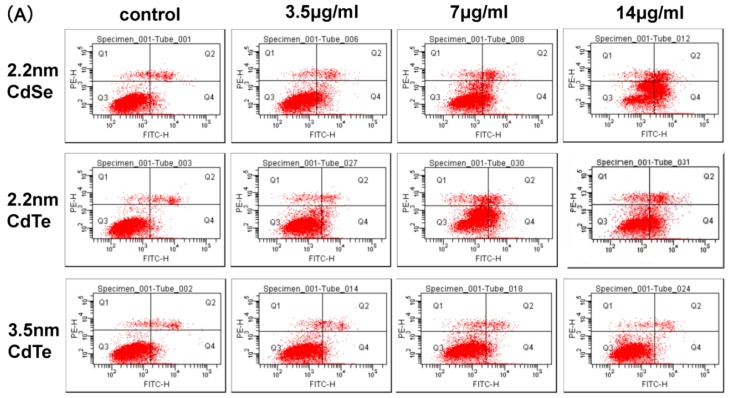
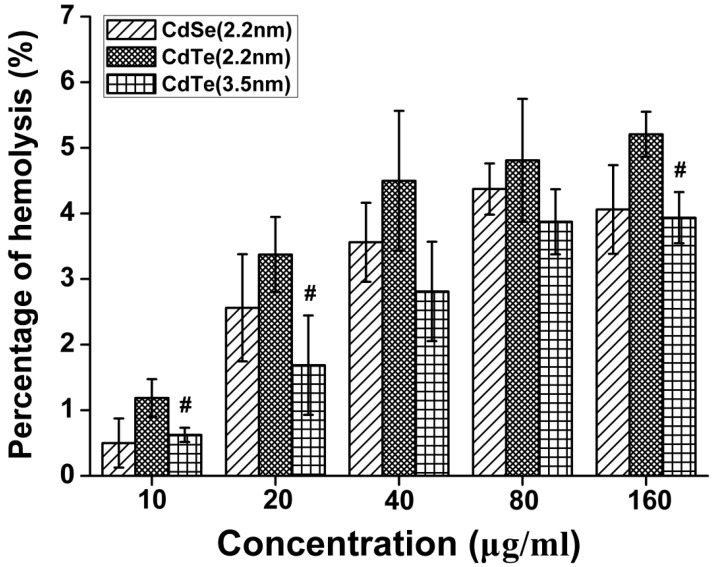
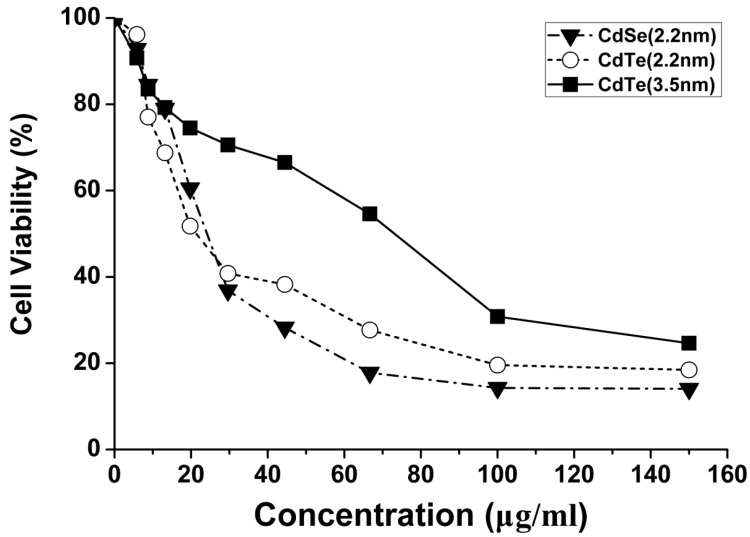
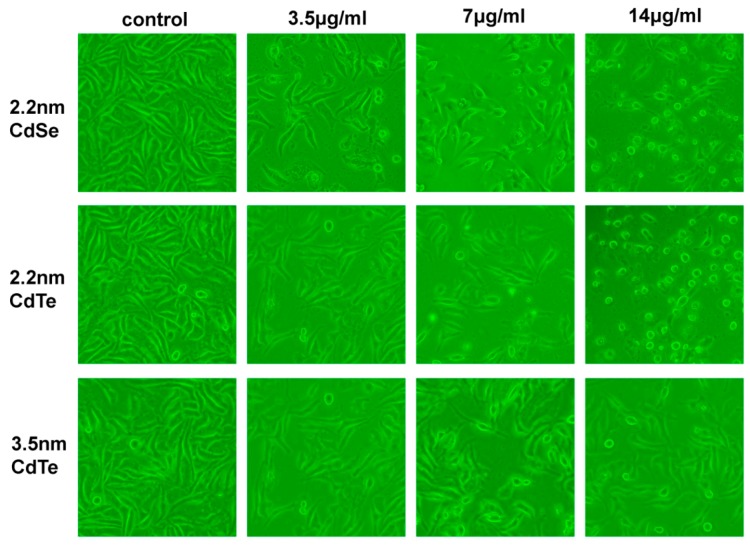
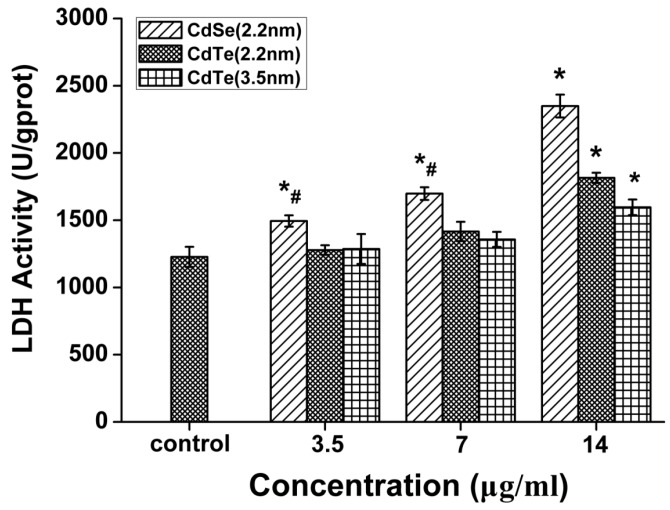
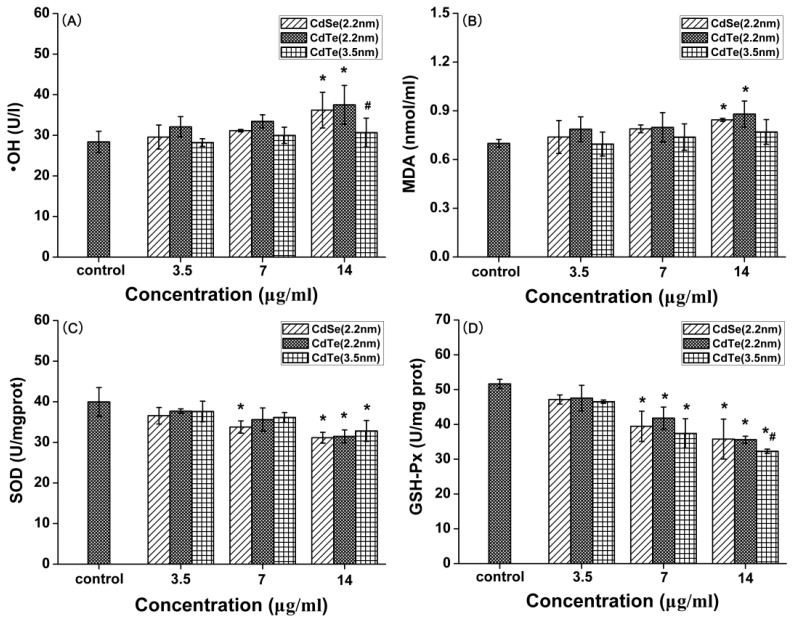
Although it has been reported that fluorescent quantum dots (QDs) have obvious acute toxic effects in vitro, their toxic effects at low doses or threshold doses are still unknown. Therefore, we evaluated the biological histocompatibility and in vitro toxicity of three types of QDs at threshold doses. Also, we compared the toxic effects of QDs with different raw chemical compositions and sizes. The results showed that low concentrations of QDs (≤7 μg/mL) had no obvious effect on cell viability and cell membrane damage, oxidative damage, cell apoptosis or DNA damage. However, QD exposure led to a significant cytotoxicity at higher doses (≥14 μg/mL) and induced abnormal cellular morphology. In addition, when comparing the three types of QDs, 2.2 nm CdTe QDs exposure showed a significantly increased proportion of apoptotic cells and significant DNA damage, suggesting that size and composition contribute to the toxic effects of QDs. Based on these discussions, it was concluded that the concentration (7 μg/mL) may serve as a threshold level for these three types of QDs only in L929 fibroblasts, whereas high concentrations (above 14 μg/mL) may be toxic, resulting in inhibition of proliferation, induction of apoptosis and DNA damage in L929 fibroblasts.
尽管有报道称荧光量子点(QDs)在体外具有明显的急性毒性作用,但其在低剂量或阈剂量下的毒性作用仍不清楚。因此,我们评估了三种类型的量子点在阈剂量下的生物组织相容性和体外毒性。此外,我们比较了具有不同原始化学成分和尺寸的量子点的毒性作用。结果表明,低浓度的量子点(≤7μg/mL)对细胞活力、细胞膜损伤、氧化损伤、细胞凋亡或DNA损伤没有明显影响。然而,在较高剂量(≥14μg/mL)下,量子点暴露会导致显著的细胞毒性并诱导细胞形态异常。此外,在比较这三种类型的量子点时,暴露于2.2nm的碲化镉量子点显示凋亡细胞比例显著增加且DNA损伤显著,这表明尺寸和成分会影响量子点的毒性作用。基于这些讨论,得出的结论是,浓度(7μg/mL)可能仅在L929成纤维细胞中作为这三种类型量子点的阈水平,而高浓度(高于14μg/mL)可能具有毒性,导致L929成纤维细胞增殖受抑制、诱导凋亡和DNA损伤。