Baffoni Loredana, Gaggia Francesca, Dalanaj Nereida, Prodi Antonio, Nipoti Paola, Pisi Annamaria, Biavati Bruno, Di Gioia Diana
Department of Agricultural Sciences, University of Bologna, Viale Fanin 44, 40127, Bologna, Italy.
Department of Industrial Chemistry, Faculty of Natural Sciences, Tirana University, Bulevardi Zogu i Parë, Tirana, Albania.
BMC Microbiol. 2015 Oct 30;15:242. doi: 10.1186/s12866-015-0573-7.
Fusarium head blight (FHB) is a severe disease caused by different Fusarium species, which affects a wide range of cereal crops, including wheat. It determines from 10 to 30% of yield loss in Europe. Chemical fungicides are mainly used to reduce the incidence of FHB, but low environmental impact solutions are looked forward. Applications of soil/rhizobacteria as biocontrol agents against FHB in wheat are described in literature, whereas the potential use of lactobacilli in agriculture has scarcely been explored.
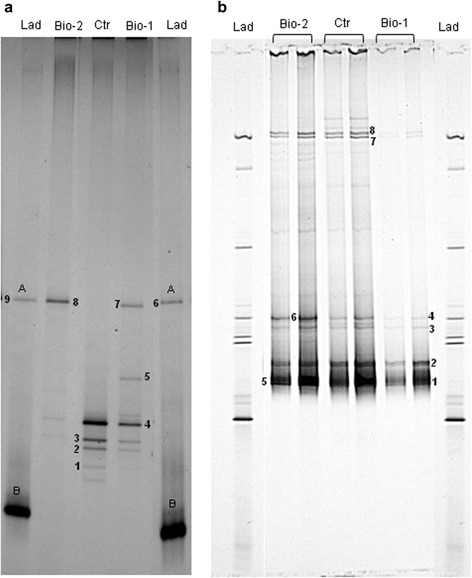
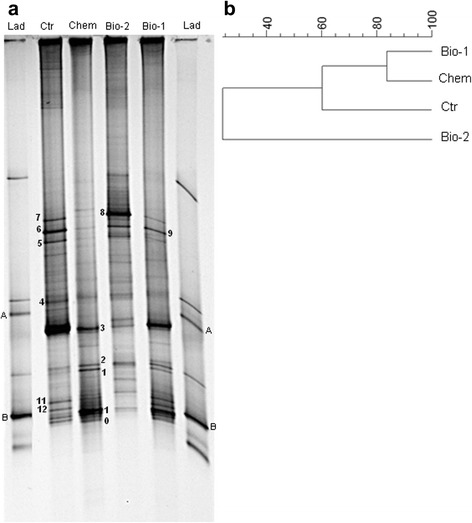
The aim of this work was to study the inhibitory effect of two bacterial strains, Lactobacillus plantarum SLG17 and Bacillus amyloliquefaciens FLN13, against Fusarium spp. in vitro and to assess their efficacy in field, coupled to the study of the microbial community profile of wheat seeds. Antimicrobial assays were performed on agar plates and showed that the two antagonistic strains possessed antimicrobial activity against Fusarium spp. In the field study, a mixture of the two strains was applied to durum wheat i) weekly from heading until anthesis and ii) at flowering, compared to untreated and fungicide treated plots. The FHB index, combining both disease incidence and disease severity, was used to evaluate the extent of the disease on wheat. A mixture of the two microorganisms, when applied in field from heading until anthesis, was capable of reducing the FHB index. Microbial community profile of seeds was studied via PCR-DGGE, showing the presence of L. plantarum SLG17 in wheat seeds and thus underlining an endophytic behavior of the strain.
L. plantarum SLG17 and B. amyloliquefaciens FLN13, applied as biocontrol agents starting from the heading period until anthesis of wheat plants, are promising agents for the reduction of FHB index.
镰刀菌穗腐病(FHB)是由不同镰刀菌物种引起的一种严重病害,影响包括小麦在内的多种谷类作物。在欧洲,它导致10%至30%的产量损失。化学杀菌剂主要用于降低镰刀菌穗腐病的发病率,但人们期待环境影响较小的解决方案。文献中描述了土壤/根际细菌作为小麦镰刀菌穗腐病生物防治剂的应用,而乳酸菌在农业中的潜在用途几乎未被探索。
本研究旨在研究植物乳杆菌SLG17和解淀粉芽孢杆菌FLN13这两种细菌菌株对镰刀菌属在体外的抑制作用,并评估它们在田间的防治效果,同时研究小麦种子的微生物群落特征。在琼脂平板上进行了抗菌试验,结果表明这两种拮抗菌株对镰刀菌属具有抗菌活性。在田间试验中,将这两种菌株的混合物施用于硬粒小麦,与未处理和杀菌剂处理的地块相比,处理方式如下:i)从抽穗期到开花期每周施用一次;ii)在开花期施用一次。结合发病率和病情严重程度的镰刀菌穗腐病指数用于评估小麦病害的严重程度。当在田间从抽穗期到开花期施用这两种微生物的混合物时,能够降低镰刀菌穗腐病指数。通过PCR-DGGE研究种子的微生物群落特征,结果表明植物乳杆菌SLG17存在于小麦种子中,从而突出了该菌株的内生行为。
从抽穗期到小麦开花期施用植物乳杆菌SLG17和解淀粉芽孢杆菌FLN13作为生物防治剂,有望降低镰刀菌穗腐病指数。