Herregods N, Dehoorne J, Pattyn E, Jaremko J L, Baraliakos X, Elewaut D, Van Vlaenderen J, Van den Bosch F, Joos R, Verstraete K, Jans L
Department of Radiology and Medical Imaging, Ghent University Hospital, De Pintelaan 185, 9000, Gent, Belgium.
Department of Pediatric Rheumatology, Ghent University Hospital, De Pintelaan 185, 9000, Gent, Belgium.
Pediatr Rheumatol Online J. 2015 Nov 10;13(1):46. doi: 10.1186/s12969-015-0045-5.
To determine the prevalence and diagnostic value of pelvic enthesitis on MRI of the sacroiliac (SI) joints in enthesitis related arthritis (ERA).
We retrospectively studied 143 patients aged 6-18 years old who underwent MRI of the SI joints for clinically suspected sacroiliitis between 2006-2014. Patients were diagnosed with ERA according to the International League of Associations for Rheumatology (ILAR) criteria. All MRI studies were reassessed for the presence of pelvic enthesitis, which was correlated to the presence of sacroiliitis on MRI and to the final clinical diagnosis. The added value for detection of pelvic enthesitis and fulfilment of criteria for the diagnosis of ERA was studied.
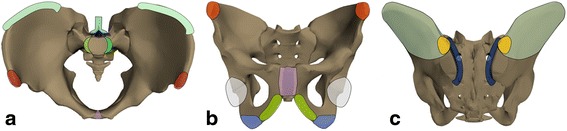
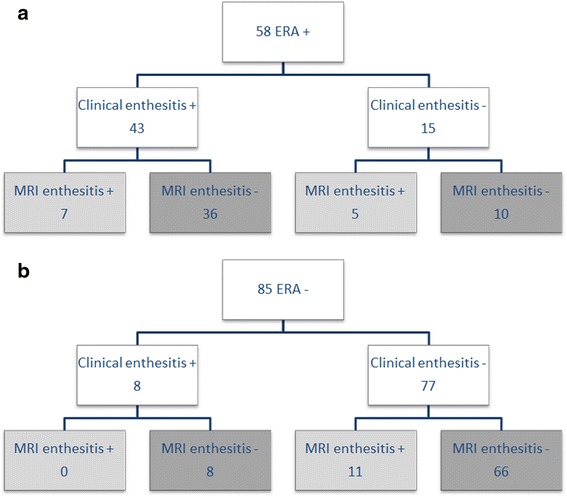
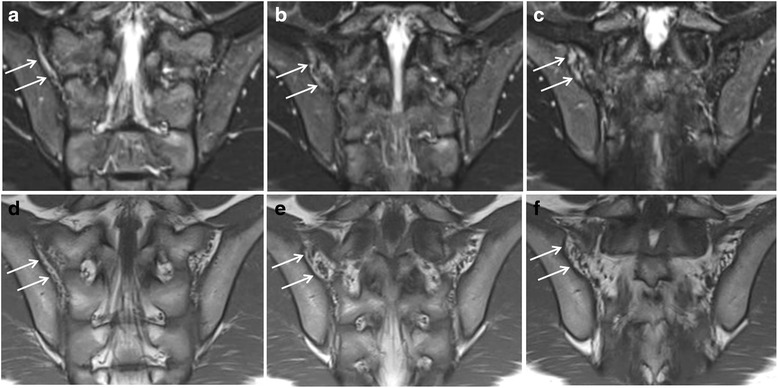
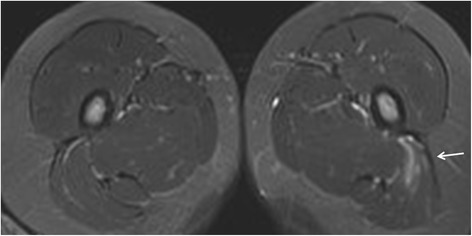
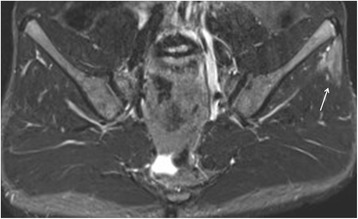
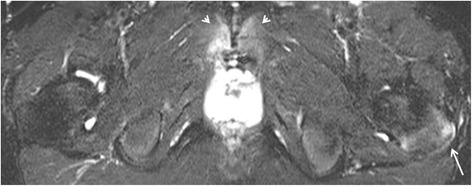
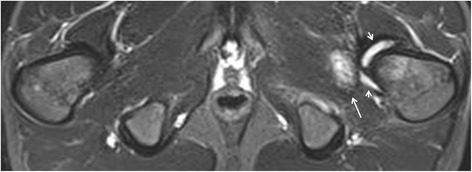
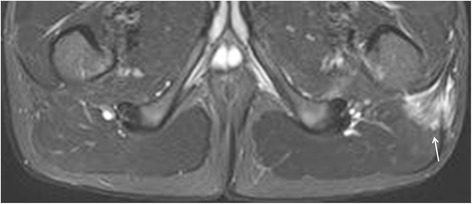
Pelvic enthesitis was seen in 23 of 143 (16 %) patients. The most commonly affected sites were the entheses around the hip (35 % of affected entheses) and the retroarticular interosseous ligaments (32 % of affected entheses). MRI showed pelvic enthesitis in 21 % of patients with ERA and in 13 % of patients without ERA. Pelvic enthesitis was seen on MRI in 7/51 (14 %) patients with clinically evident enthesitis, and 16/92 (17 %) patients without clinically evident enthesitis. In 7 of 11 ERA-negative patients without clinical enthesitis but with pelvic enthesitis on MRI, the ILAR criteria could have been fulfilled, if pelvic enthesitis on MRI was included in the criteria. There is a high correlation between pelvic enthesitis and sacroiliitis, with sacroiliitis present in 17/23 (74 %) patients with pelvic enthesitis.
Pelvic enthesitis may be present in children with or without clinically evident peripheral enthesitis. There is a high correlation between pelvic enthesitis and sacroiliitis on MRI of the sacroiliac joints in children. As pelvic enthesitis indicates active inflammation, it may play a role in assessment of the inflammatory status. Therefore, it should be carefully sought and noted by radiologists examining MRI of the sacroiliac joints in children.
确定在附着点炎相关关节炎(ERA)中,骨盆附着点炎在骶髂(SI)关节MRI上的患病率及诊断价值。
我们回顾性研究了2006年至2014年间143例年龄在6至18岁、因临床怀疑骶髂关节炎而接受SI关节MRI检查的患者。根据国际风湿病联盟(ILAR)标准对患者进行ERA诊断。对所有MRI研究重新评估骨盆附着点炎的存在情况,并将其与MRI上骶髂关节炎的存在情况以及最终临床诊断相关联。研究了检测骨盆附着点炎的附加值以及满足ERA诊断标准的情况。
143例患者中有23例(16%)出现骨盆附着点炎。最常受累的部位是髋关节周围的附着点(占受累附着点的35%)和关节后骨间韧带(占受累附着点的32%)。MRI显示,ERA患者中有21%存在骨盆附着点炎,无ERA患者中有13%存在骨盆附着点炎。在7/51例(14%)有临床明显附着点炎的患者以及16/92例(17%)无临床明显附着点炎的患者的MRI上可见骨盆附着点炎。在11例无临床附着点炎但MRI上有骨盆附着点炎的ERA阴性患者中,如果将MRI上的骨盆附着点炎纳入标准,7例患者可能满足ILAR标准。骨盆附着点炎与骶髂关节炎高度相关,17/23例(74%)有骨盆附着点炎的患者存在骶髂关节炎。
骨盆附着点炎可能存在于有或无临床明显外周附着点炎的儿童中。儿童骶髂关节MRI上骨盆附着点炎与骶髂关节炎高度相关。由于骨盆附着点炎提示有活动性炎症,它可能在炎症状态评估中发挥作用。因此,在对儿童骶髂关节进行MRI检查时,放射科医生应仔细查找并记录该情况。