Voinson Marina, Billiard Sylvain, Alvergne Alexandra
Université de Lille-Sciences et Technologies, UMR 8198 Evo-Eco-Paleo, Villeneuve d'Ascq, France.
School of Anthropology and Museum Ethnography, University of Oxford, Oxford, United Kingdom.
PLoS One. 2015 Nov 23;10(11):e0142990. doi: 10.1371/journal.pone.0142990. eCollection 2015.
Theoretical studies predict that it is not possible to eradicate a disease under voluntary vaccination because of the emergence of non-vaccinating "free-riders" when vaccination coverage increases. A central tenet of this approach is that human behaviour follows an economic model of rational choice. Yet, empirical studies reveal that vaccination decisions do not necessarily maximize individual self-interest. Here we investigate the dynamics of vaccination coverage using an approach that dispenses with payoff maximization and assumes that risk perception results from the interaction between epidemiology and cognitive biases.
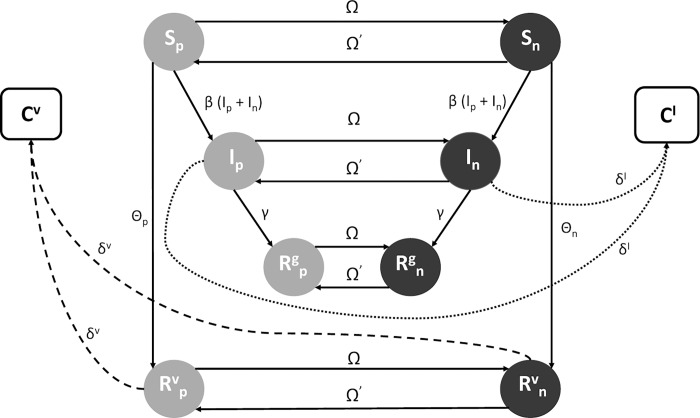
We consider a behaviour-incidence model in which individuals perceive actual epidemiological risks as a function of their opinion of vaccination. As a result of confirmation bias, sceptical individuals (negative opinion) overestimate infection cost while pro-vaccines individuals (positive opinion) overestimate vaccination cost. We considered a feedback between individuals and their environment as individuals could change their opinion, and thus the way they perceive risks, as a function of both the epidemiology and the most common opinion in the population.
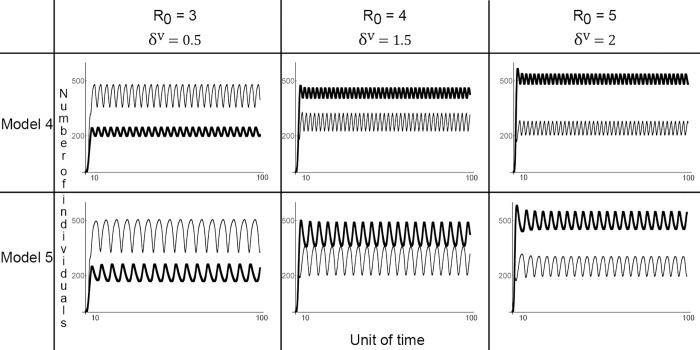
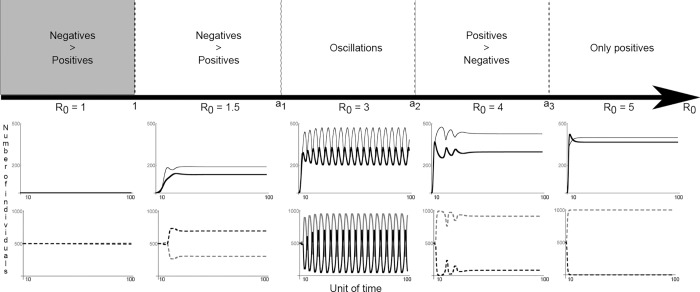
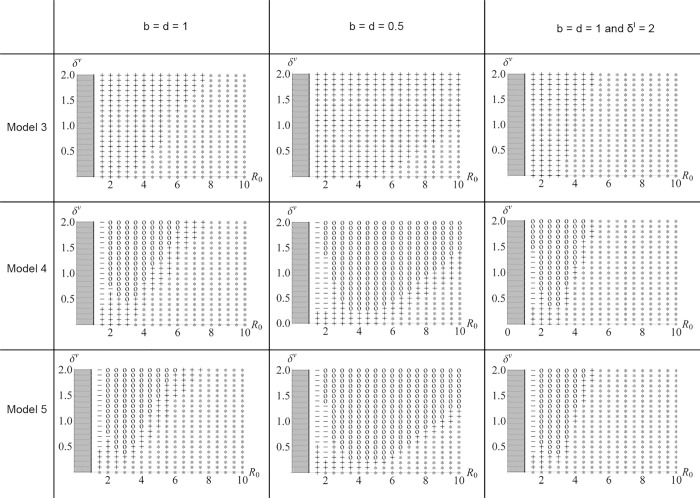
For all parameter values investigated, the infection is never eradicated under voluntary vaccination. For moderately contagious diseases, oscillations in vaccination coverage emerge because individuals process epidemiological information differently depending on their opinion. Conformism does not generate oscillations but slows down the cultural response to epidemiological change.
Failure to eradicate vaccine preventable disease emerges from the model because of cognitive biases that maintain heterogeneity in how people perceive risks. Thus, assumptions of economic rationality and payoff maximization are not mandatory for predicting commonly observed dynamics of vaccination coverage. This model shows that alternative notions of rationality, such as that of ecological rationality whereby individuals use simple cognitive heuristics, offer promising new avenues for modelling vaccination behaviour.
理论研究预测,在自愿接种疫苗的情况下,由于随着疫苗接种覆盖率的提高会出现不接种的“搭便车者”,因此不可能根除疾病。这种方法的一个核心原则是人类行为遵循理性选择的经济模型。然而,实证研究表明,疫苗接种决策不一定能使个人自身利益最大化。在此,我们采用一种摒弃收益最大化的方法来研究疫苗接种覆盖率的动态变化,并假设风险认知是由流行病学与认知偏差之间的相互作用产生的。
我们考虑一个行为-发病率模型,其中个体根据其对疫苗接种的看法来感知实际的流行病学风险。由于确认偏差,持怀疑态度的个体(负面看法)高估感染成本,而支持接种疫苗的个体(正面看法)高估接种成本。我们考虑了个体与其环境之间的反馈,因为个体可以根据流行病学情况和人群中最普遍的看法来改变自己的看法,从而改变他们感知风险的方式。
对于所研究的所有参数值,在自愿接种疫苗的情况下,感染永远不会被根除。对于中等传染性疾病,疫苗接种覆盖率会出现波动,因为个体根据自己的看法以不同方式处理流行病学信息。从众行为不会产生波动,但会减缓文化对流行病学变化的反应。
该模型中未能根除疫苗可预防疾病是由于认知偏差导致人们在风险感知方式上保持异质性。因此,经济理性和收益最大化的假设对于预测常见的疫苗接种覆盖率动态变化并非必不可少。该模型表明,诸如生态理性(即个体使用简单认知启发法)等替代理性概念为模拟疫苗接种行为提供了有前景的新途径。