Wu Miaoli, Lan Siren, Cai Bangping, Chen Shipin, Chen Hui, Zhou Shiliang
Forestry College, Fujian Agriculture and Forestry University, Fuzhou, 350002, Fujian, China.
Xiamen Botanical Garden, Xiamen, 361000, Fujian, China.
PLoS One. 2015 Dec 2;10(12):e0143792. doi: 10.1371/journal.pone.0143792. eCollection 2015.
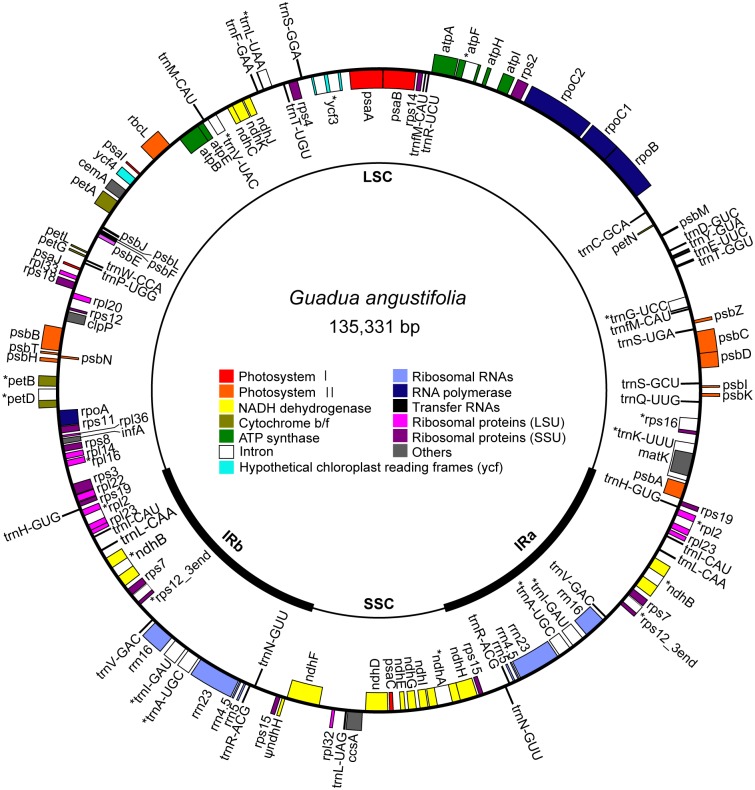
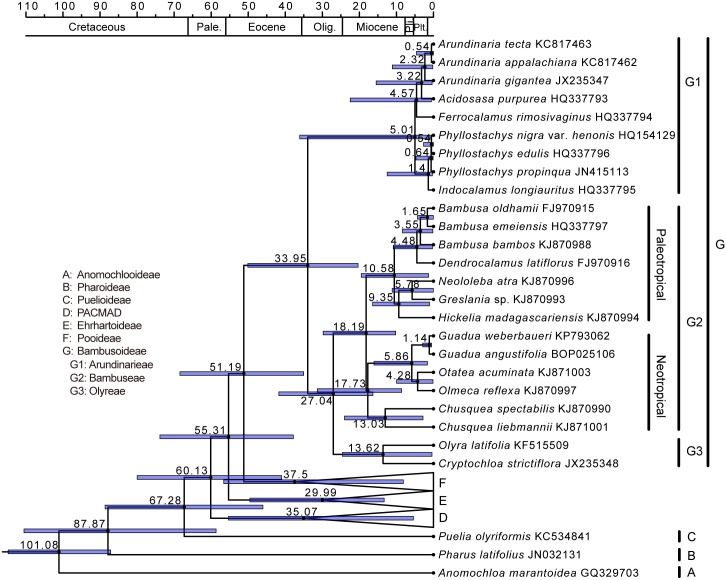
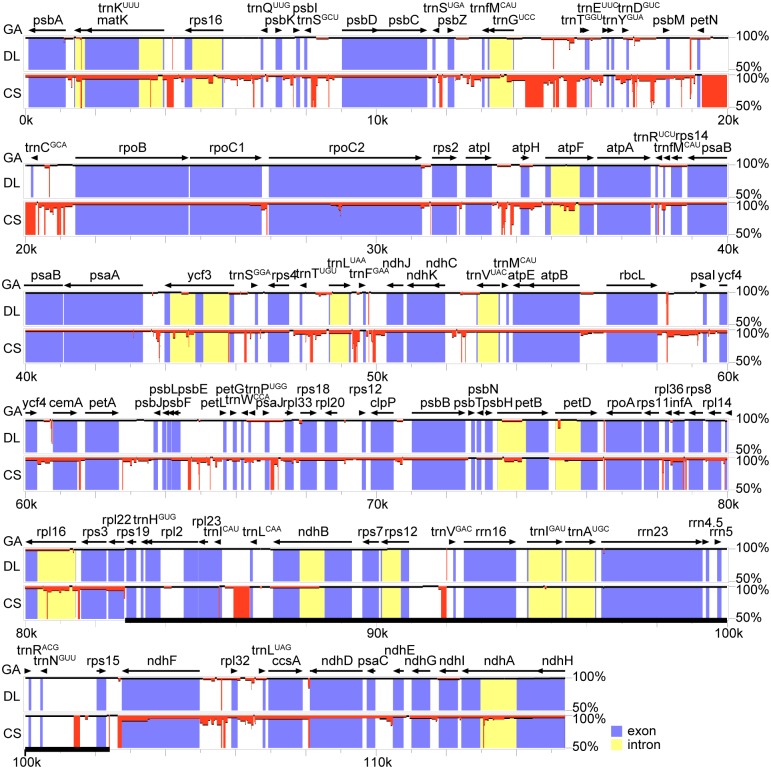
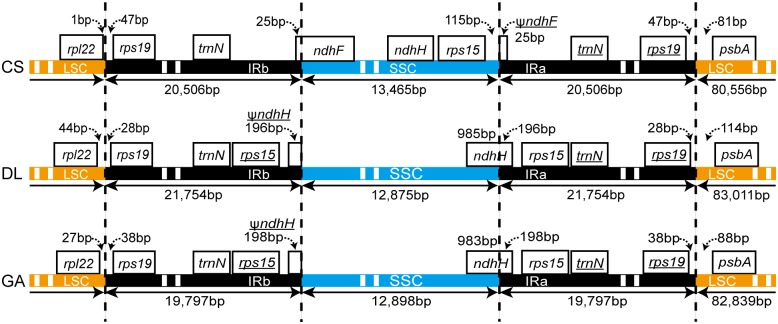
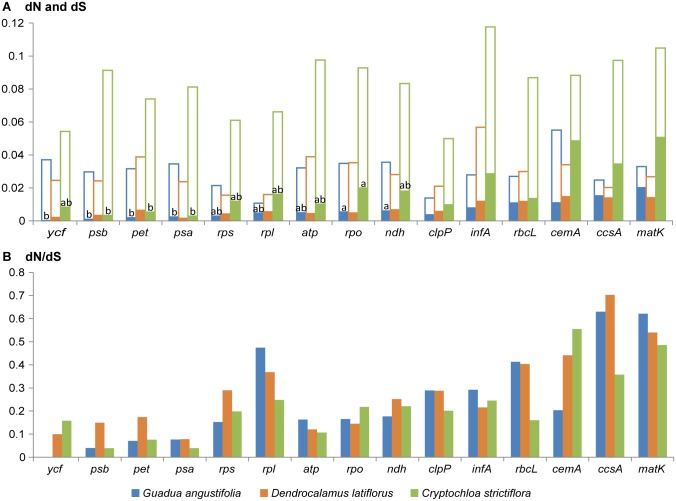
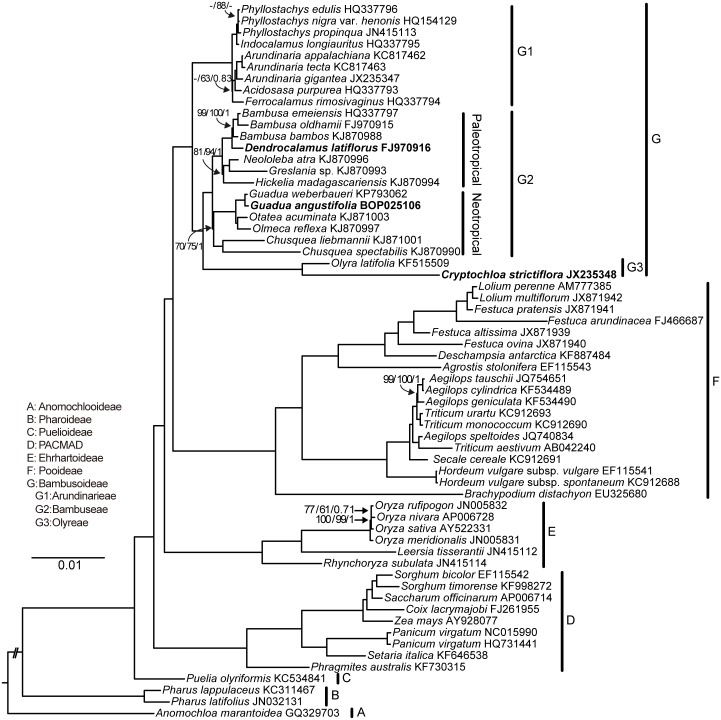
To elucidate chloroplast genome evolution within neotropical-paleotropical bamboos, we fully characterized the chloroplast genome of the woody bamboo Guadua angustifolia. This genome is 135,331 bp long and comprises of an 82,839-bp large single-copy (LSC) region, a 12,898-bp small single-copy (SSC) region, and a pair of 19,797-bp inverted repeats (IRs). Comparative analyses revealed marked conservation of gene content and sequence evolutionary rates between neotropical and paleotropical woody bamboos. The neotropical herbaceous bamboo Cryptochloa strictiflora differs from woody bamboos in IR/SSC boundaries in that it exhibits slightly contracted IRs and a faster substitution rate. The G. angustifolia chloroplast genome is similar in size to that of neotropical herbaceous bamboos but is ~3 kb smaller than that of paleotropical woody bamboos. Dissimilarities in genome size are correlated with differences in the lengths of intergenic spacers, which are caused by large-fragment insertion and deletion. Phylogenomic analyses of 62 taxa yielded a tree topology identical to that found in preceding studies. Divergence time estimation suggested that most bamboo genera diverged after the Miocene and that speciation events of extant species occurred during or after the Pliocene.
为了阐明新热带 - 古热带竹类植物叶绿体基因组的进化,我们对木质竹类瓜多竹(Guadua angustifolia)的叶绿体基因组进行了全面表征。该基因组长度为135,331 bp,由一个82,839 bp的大单拷贝(LSC)区域、一个12,898 bp的小单拷贝(SSC)区域和一对19,797 bp的反向重复序列(IR)组成。比较分析表明,新热带和古热带木质竹类在基因含量和序列进化速率方面具有显著的保守性。新热带草本竹类密花隐子草(Cryptochloa strictiflora)在IR/SSC边界与木质竹类不同,其IR区域略有收缩,替换速率更快。瓜多竹的叶绿体基因组大小与新热带草本竹类相似,但比古热带木质竹类小约3 kb。基因组大小的差异与基因间隔区长度的差异相关,这是由大片段插入和缺失引起的。对62个分类单元的系统基因组分析得出的树形拓扑结构与先前研究一致。分歧时间估计表明,大多数竹属在中新世之后分化,现存物种的物种形成事件发生在上新世期间或之后。