Cheng Qun, Li Ninghui, Dong Lidong, Zhang Dayong, Fan Sujie, Jiang Liangyu, Wang Xin, Xu Pengfei, Zhang Shuzhen
Key Laboratory of Soybean Biology of Chinese Education Ministry, Soybean Research Institute, Northeast Agricultural University Harbin, China.
Key Laboratory of Soybean Biology of Chinese Education Ministry, Soybean Research Institute, Northeast Agricultural University Harbin, China ; Jiamusi Branch Academy of Heilongjiang Academy of Agricultural Sciences Jiamusi, China.
Front Plant Sci. 2015 Nov 23;6:1024. doi: 10.3389/fpls.2015.01024. eCollection 2015.
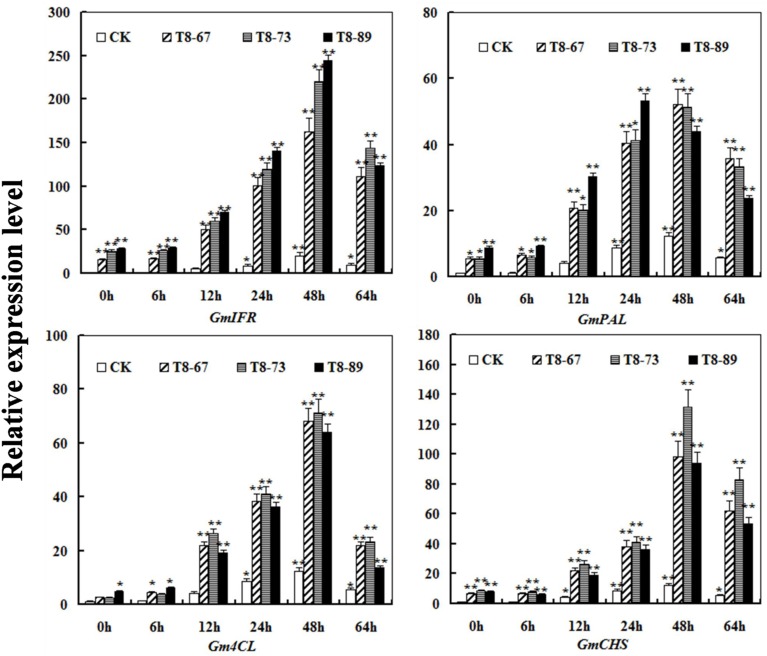
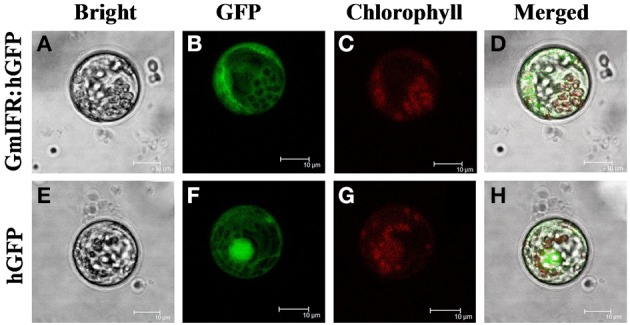
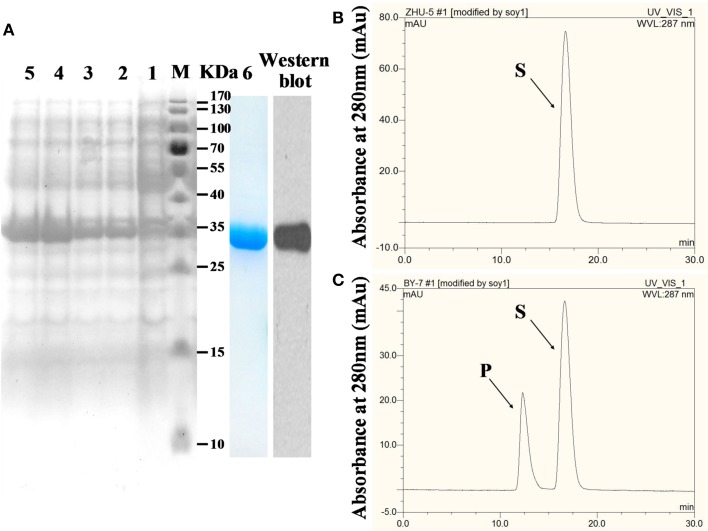
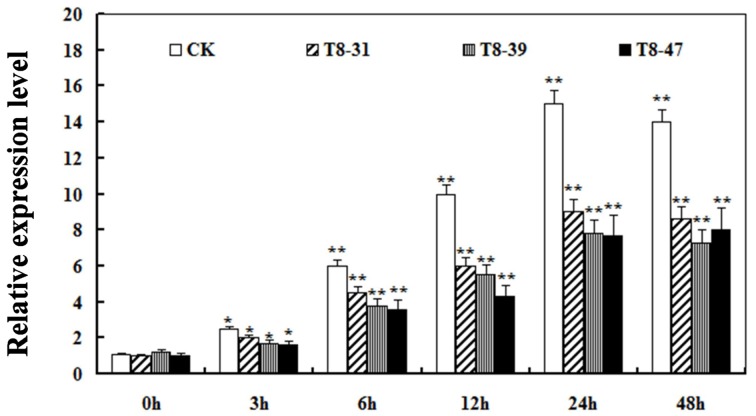
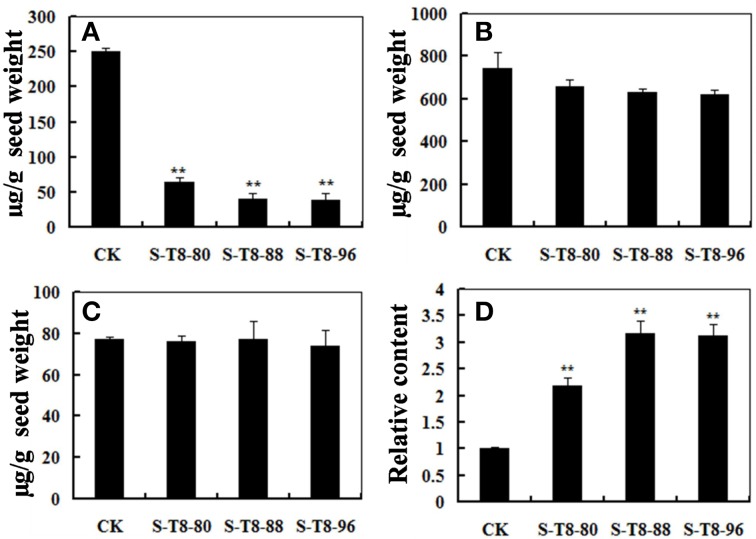
Isoflavone reductase (IFR) is an enzyme involved in the biosynthetic pathway of isoflavonoid phytoalexin in plants. IFRs are unique to the plant kingdom and are considered to have crucial roles in plant response to various biotic and abiotic environmental stresses. Here, we report the characterization of a novel member of the soybean isoflavone reductase gene family GmIFR. Overexpression of GmIFR transgenic soybean exhibited enhanced resistance to Phytophthora sojae. Following stress treatments, GmIFR was significantly induced by P. sojae, ethephon (ET), abscisic acid (placeCityABA), salicylic acid (SA). It is located in the cytoplasm when transiently expressed in soybean protoplasts. The daidzein levels reduced greatly for the seeds of transgenic plants, while the relative content of glyceollins in transgenic plants was significantly higher than that of non-transgenic plants. Furthermore, we found that the relative expression levels of reactive oxygen species (ROS) of transgenic soybean plants were significantly lower than those of non-transgenic plants after incubation with P. sojae, suggesting an important role of GmIFR might function as an antioxidant to reduce ROS in soybean. The enzyme activity assay suggested that GmIFR has isoflavone reductase activity.
异黄酮还原酶(IFR)是植物中参与异黄酮类植保素生物合成途径的一种酶。IFR在植物界中是独特的,被认为在植物对各种生物和非生物环境胁迫的反应中起关键作用。在此,我们报道了大豆异黄酮还原酶基因家族一个新成员GmIFR的特性。GmIFR转基因大豆的过表达表现出对大豆疫霉的抗性增强。在胁迫处理后,GmIFR受到大豆疫霉、乙烯利(ET)、脱落酸(ABA)、水杨酸(SA)的显著诱导。当在大豆原生质体中瞬时表达时,它位于细胞质中。转基因植物种子中的大豆苷元水平大幅降低,而转基因植物中大豆抗毒素的相对含量显著高于非转基因植物。此外,我们发现转基因大豆植株与大豆疫霉共培养后,活性氧(ROS)的相对表达水平显著低于非转基因植物,这表明GmIFR可能作为一种抗氧化剂在大豆中发挥减少ROS的重要作用。酶活性测定表明GmIFR具有异黄酮还原酶活性。