Lussi Adrian, Carvalho Thiago Saads
Department of Preventive, Restorative and Pediatric Dentistry, University of Bern, Bern, Switzerland.
PLoS One. 2015 Dec 23;10(12):e0143957. doi: 10.1371/journal.pone.0143957. eCollection 2015.
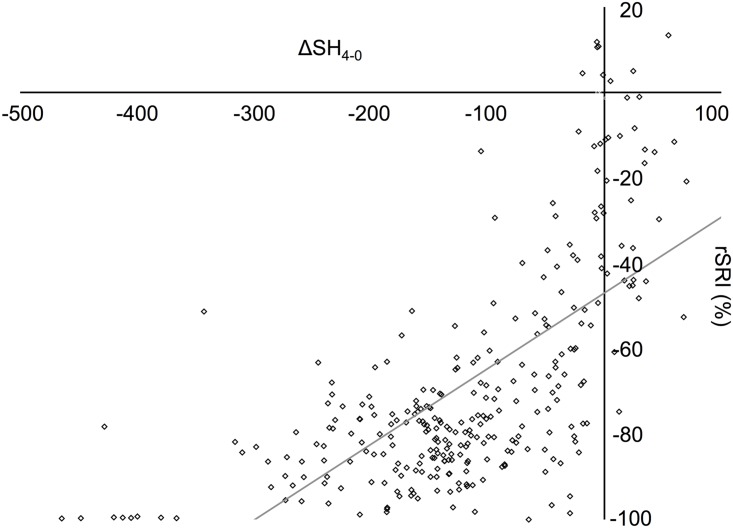
This study aimed at analysing the erosive potential of 30 substances (drinks, candies, and medicaments) on deciduous enamel, and analyse the associated chemical factors with enamel dissolution. We analysed the initial pH, titratable acidity (TA) to pH 5.5, calcium (Ca), inorganic phosphate (Pi), and fluoride (F) concentration, and degree of saturation ((pK -pI)HAP, (pK -pI)FAP, and (pK-pI)CaF2) of all substances. Then, we randomly distributed 300 specimens of human deciduous enamel into 30 groups (n = 10 for each of the substances tested. We also prepared 20 specimens of permanent enamel for the sake of comparison between the two types of teeth, and we tested them in mineral water and Coca-Cola®. In all specimens, we measured surface hardness (VHN: Vickers hardness numbers) and surface reflection intensity (SRI) at baseline (SH baseline and SRI baseline), after a total of 2 min (SH2 min) and after 4 min (SH4 min and SRI4 min) erosive challenges (60 ml of substance for 6 enamel samples; 30°C, under constant agitation at 95 rpm). There was no significant difference in SH baseline between deciduous and permanent enamel. Comparing both teeth, we observed that after the first erosive challenge with Coca-Cola®, a significantly greater hardness loss was seen in deciduous (-90.2 ± 11.3 VHN) than in permanent enamel (-44.3 ± 12.2 VHN; p = 0.007), but no differences between the two types of teeth were observed after two challenges (SH4 min). After both erosive challenges, all substances except for mineral water caused a significant loss in relative surface reflectivity intensity, and most substances caused a significant loss in surface hardness. Multiple regression analyses showed that pH, TA and Ca concentration play a significant role in initial erosion of deciduous enamel. We conclude that drinks, foodstuffs and medications commonly consumed by children can cause erosion of deciduous teeth and erosion is mainly associated with pH, titratable acidity and calcium concentration in the solution.
本研究旨在分析30种物质(饮料、糖果和药物)对乳牙釉质的侵蚀潜力,并分析与釉质溶解相关的化学因素。我们分析了所有物质的初始pH值、滴定酸度(TA)至pH 5.5、钙(Ca)、无机磷酸盐(Pi)和氟化物(F)浓度,以及饱和度((pK - pI)HAP、(pK - pI)FAP和(pK - pI)CaF2)。然后,我们将300个人乳牙釉质标本随机分为30组(每种测试物质n = 10)。为了比较两种类型的牙齿,我们还制备了20个恒牙釉质标本,并在矿泉水和可口可乐中对它们进行测试。在所有标本中,我们在基线(SH基线和SRI基线)、总共2分钟后(SH2分钟)以及4分钟后(SH4分钟和SRI4分钟)的侵蚀挑战后(60毫升物质用于6个釉质样本;30°C,在95转/分钟的持续搅拌下)测量表面硬度(VHN:维氏硬度值)和表面反射强度(SRI)。乳牙和恒牙釉质的SH基线没有显著差异。比较两种牙齿,我们观察到在用可口可乐进行第一次侵蚀挑战后,乳牙(-90.2 ± 11.3 VHN)的硬度损失明显大于恒牙釉质(-44.3 ± 12.2 VHN;p = 0.007),但在两次挑战后(SH4分钟)未观察到两种类型牙齿之间的差异。在两次侵蚀挑战后,除矿泉水外的所有物质均导致相对表面反射强度显著损失,且大多数物质导致表面硬度显著损失。多元回归分析表明,pH值、TA和Ca浓度在乳牙釉质的初始侵蚀中起重要作用。我们得出结论,儿童常见的饮料、食品和药物会导致乳牙侵蚀,侵蚀主要与溶液中的pH值、滴定酸度和钙浓度有关。