Patrick William G, Nielsen Alec A K, Keating Steven J, Levy Taylor J, Wang Che-Wei, Rivera Jaime J, Mondragón-Palomino Octavio, Carr Peter A, Voigt Christopher A, Oxman Neri, Kong David S
MIT Media Lab, School of Architecture and Planning, Massachusetts Institute of Technology, Cambridge, MA, United States of America.
Department of Biological Engineering, Massachusetts Institute of Technology, Cambridge, MA, United States of America.
PLoS One. 2015 Dec 30;10(12):e0143636. doi: 10.1371/journal.pone.0143636. eCollection 2015.
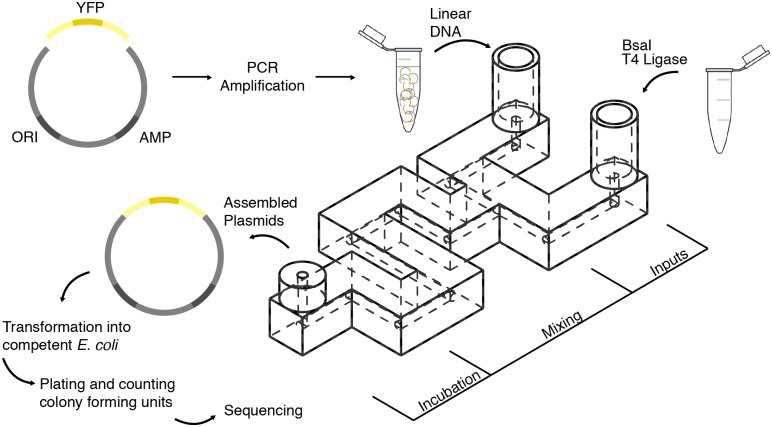
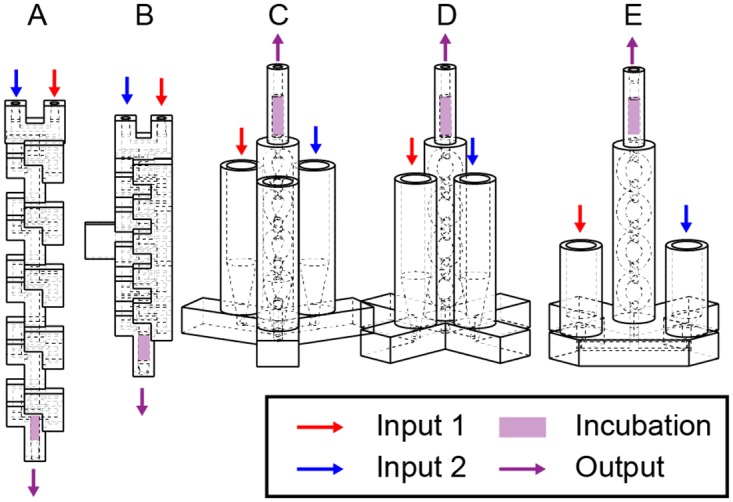
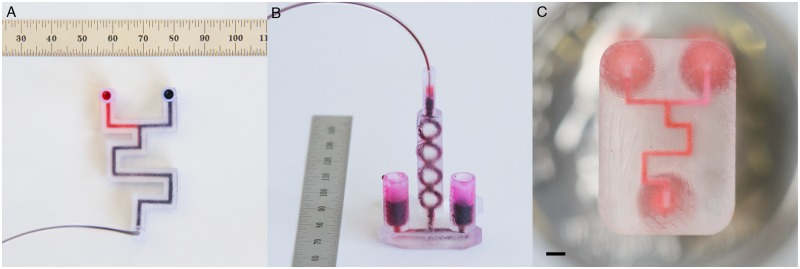
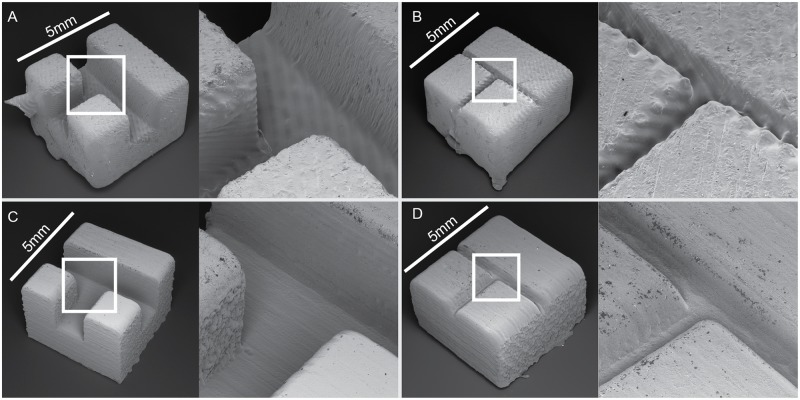
The process of connecting genetic parts-DNA assembly-is a foundational technology for synthetic biology. Microfluidics present an attractive solution for minimizing use of costly reagents, enabling multiplexed reactions, and automating protocols by integrating multiple protocol steps. However, microfluidics fabrication and operation can be expensive and requires expertise, limiting access to the technology. With advances in commodity digital fabrication tools, it is now possible to directly print fluidic devices and supporting hardware. 3D printed micro- and millifluidic devices are inexpensive, easy to make and quick to produce. We demonstrate Golden Gate DNA assembly in 3D-printed fluidics with reaction volumes as small as 490 nL, channel widths as fine as 220 microns, and per unit part costs ranging from $0.61 to $5.71. A 3D-printed syringe pump with an accompanying programmable software interface was designed and fabricated to operate the devices. Quick turnaround and inexpensive materials allowed for rapid exploration of device parameters, demonstrating a manufacturing paradigm for designing and fabricating hardware for synthetic biology.
连接基因部件的过程——DNA组装——是合成生物学的一项基础技术。微流体技术为减少昂贵试剂的使用、实现多重反应以及通过整合多个实验步骤实现实验方案自动化提供了一个有吸引力的解决方案。然而,微流体设备的制造和操作成本可能很高,并且需要专业知识,这限制了该技术的普及。随着商用数字制造工具的进步,现在可以直接打印流体设备和支持硬件。3D打印的微流体和毫微流体设备价格低廉、易于制造且生产速度快。我们展示了在3D打印流体ics中进行的金门DNA组装,反应体积小至490纳升,通道宽度细至220微米,单位部件成本在0.61美元至5.71美元之间。设计并制造了一个带有配套可编程软件接口的3D打印注射泵来操作这些设备。快速周转和廉价材料使得能够快速探索设备参数,展示了一种为合成生物学设计和制造硬件的制造模式。