Kierulf-Lassen Casper, Kristensen Marie Louise Vindvad, Birn Henrik, Jespersen Bente, Nørregaard Rikke
Department of Clinical Medicine, Aarhus University, Aarhus, Denmark.
Department of Renal Medicine, Aarhus University Hospital, Aarhus, Denmark.
PLoS One. 2015 Dec 31;10(12):e0146109. doi: 10.1371/journal.pone.0146109. eCollection 2015.
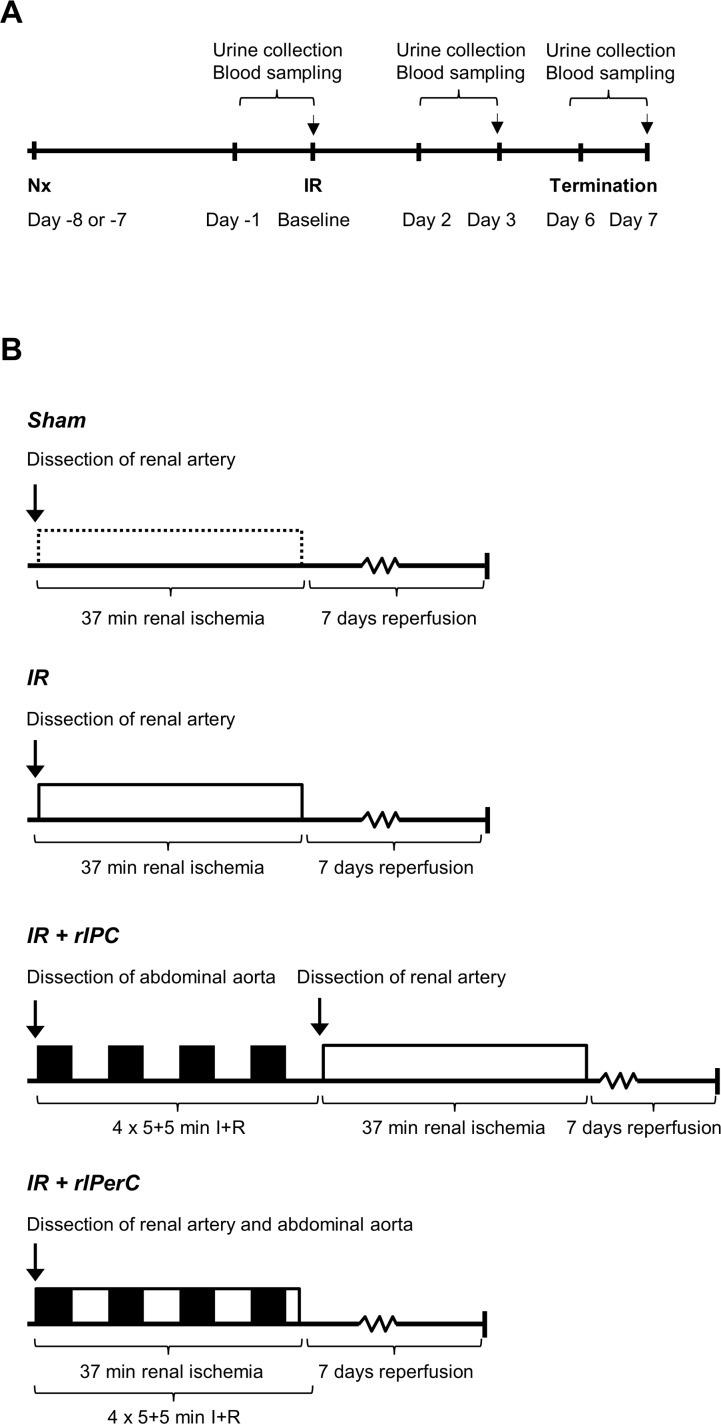
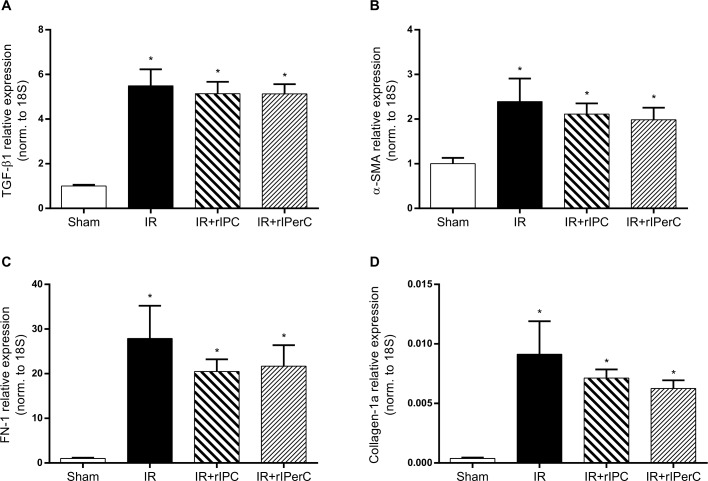
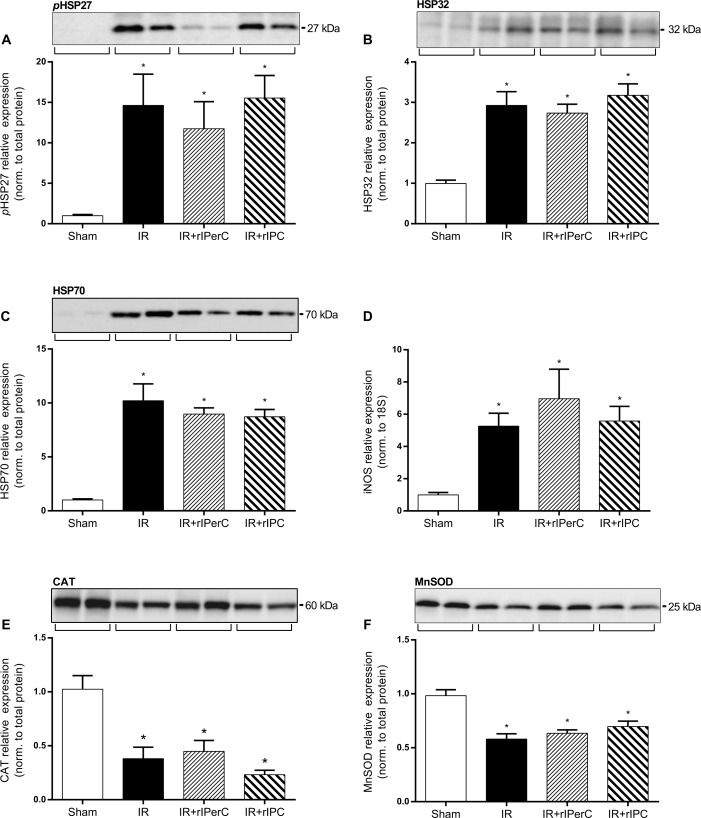
Ischemia-reperfusion injury (IRI) is the major cause of acute kidney injury. Remote ischemic conditioning (rIC) performed as brief intermittent sub-lethal ischemia and reperfusion episodes in a distant organ may protect the kidney against IRI. Here we investigated the renal effects of rIC applied either prior to (remote ischemic preconditioning; rIPC) or during (remote ischemic perconditioning; rIPerC) sustained ischemic kidney injury in rats. The effects were evaluated as differences in creatinine clearance (CrCl) rate, tissue tubular damage marker expression, and potential kidney recovery mediators. One week after undergoing right-sided nephrectomy, rats were randomly divided into four groups: sham (n = 7), ischemia and reperfusion (IR; n = 10), IR+rIPC (n = 10), and IR+rIPerC (n = 10). The rIC was performed as four repeated episodes of 5-minute clamping of the infrarenal aorta followed by 5-minute release either before or during 37 minutes of left renal artery clamping representing the IRI. Urine and blood were sampled prior to ischemia as well as 3 and 7 days after reperfusion. The kidney was harvested for mRNA and protein isolation. Seven days after IRI, the CrCl change from baseline values was similar in the IR (δ: 0.74 mL/min/kg [-0.45 to 1.94]), IR+rIPC (δ: 0.21 mL/min/kg [-0.75 to 1.17], p > 0.9999), and IR+rIPerC (δ: 0.41 mL/min/kg [-0.43 to 1.25], p > 0.9999) groups. Kidney function recovery was associated with a significant up-regulation of phosphorylated protein kinase B (pAkt), extracellular regulated kinase 1/2 (pERK1/2), and heat shock proteins (HSPs) pHSP27, HSP32, and HSP70, but rIC was not associated with any significant differences in tubular damage, inflammatory, or fibrosis marker expression. In our study, rIC did not protect the kidney against IRI. However, on days 3-7 after IRI, all groups recovered renal function. This was associated with pAkt and pERK1/2 up-regulation and increased HSP expression at day 7.
缺血再灌注损伤(IRI)是急性肾损伤的主要原因。远程缺血预处理(rIC)通过在远处器官进行短暂间歇性亚致死性缺血和再灌注发作,可能保护肾脏免受IRI损伤。在此,我们研究了在大鼠持续性缺血性肾损伤之前(远程缺血预处理;rIPC)或期间(远程缺血预适应;rIPerC)应用rIC对肾脏的影响。通过肌酐清除率(CrCl)、组织肾小管损伤标志物表达以及潜在的肾脏恢复介质的差异来评估其效果。在接受右侧肾切除术后一周,将大鼠随机分为四组:假手术组(n = 7)、缺血再灌注组(IR;n = 10)、IR + rIPC组(n = 10)和IR + rIPerC组(n = 10)。rIC通过在代表IRI的左左左侧肾动脉夹闭37分钟之前或期间,对肾下主动脉进行四次5分钟夹闭然后5分钟松开的重复操作来进行。在缺血前以及再灌注后3天和7天采集尿液和血液样本。采集肾脏用于mRNA和蛋白质分离。IRI后7天,IR组(δ:0.74 mL/(min·kg)[-0.45至1.94])、IR + rIPC组(δ:0.21 mL/(min·kg)[-0.75至1.17],p > 0.9999)和IR + rIPerC组(δ:0.41 mL/(min·kg)[-0.43至1.25],p > 0.9999)的CrCl相对于基线值的变化相似。肾功能恢复与磷酸化蛋白激酶B(pAkt)、细胞外调节激酶1/2(pERK1/2)以及热休克蛋白(HSPs)pHSP27、HSP32和HSP70的显著上调相关,但rIC与肾小管损伤、炎症或纤维化标志物表达的任何显著差异均无关。在我们的研究中,rIC不能保护肾脏免受IRI损伤。然而,在IRI后3 - 7天,所有组的肾功能均得以恢复。这与第7天pAkt和pERK1/2上调以及HSP表达增加有关。