Noman Abu Shadat Mohammod, Dilruba Sayada, Mohanto Nayan Chandra, Rahman Lutfur, Khatun Zohora, Riad Wahiduzzaman, Al Mamun Abdullah, Alam Shahnur, Aktar Sharmin, Chowdhury Srikanta, Saud Zahangir Alam, Rahman Zillur, Hossain Khaled, Haque Azizul
Department of Biochemistry and Molecular Biology, University of Chittagong, Chittagong, Bangladesh.
Department of Biochemistry and Molecular Biology, Rajshahi University, Rajshahi, Bangladesh.
J Cytol Histol. 2015 May;6(3). doi: 10.4172/2157-7099.1000323. Epub 2015 Apr 24.
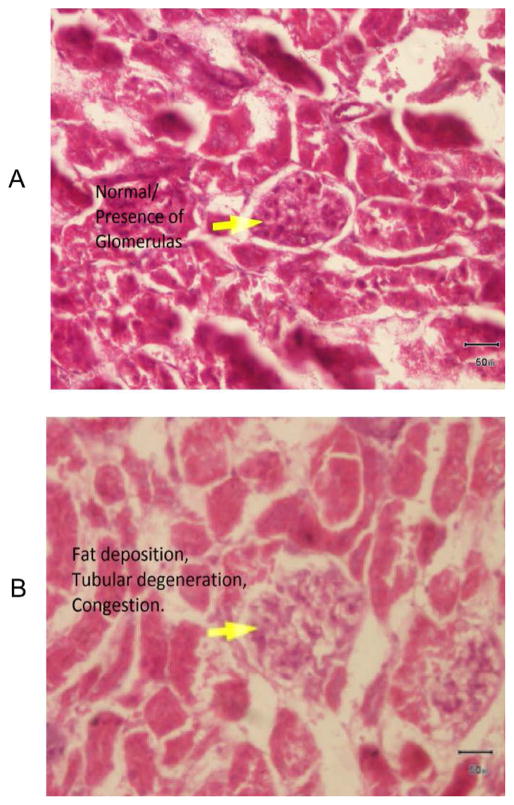
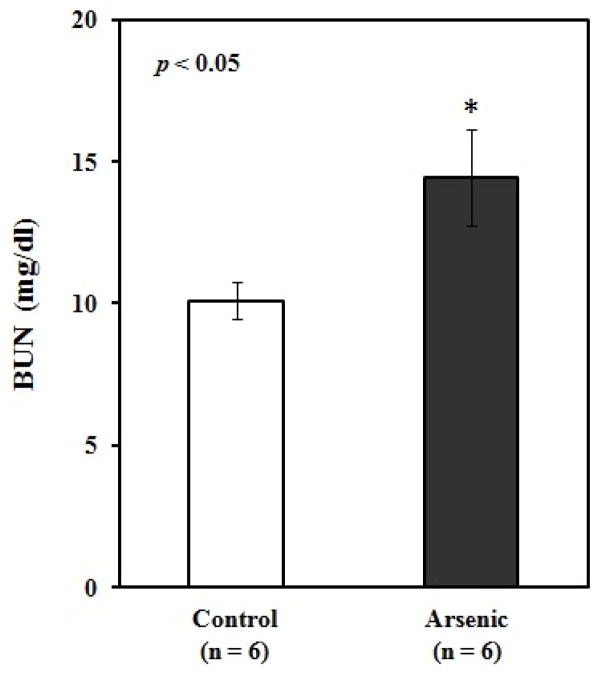
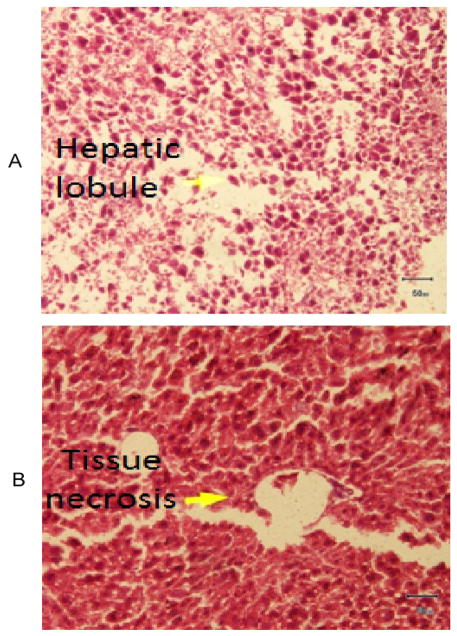
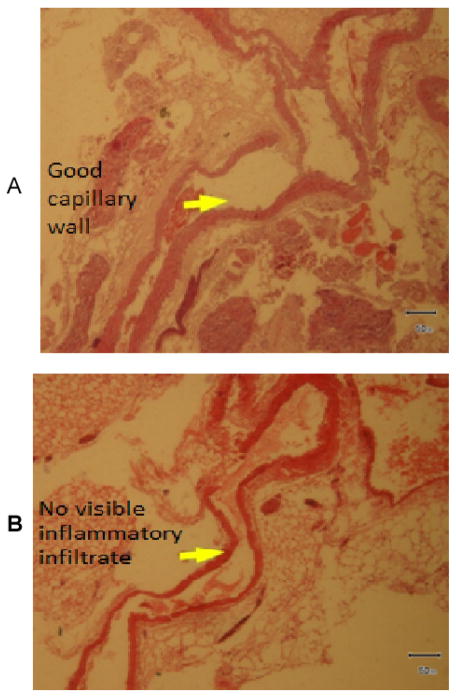
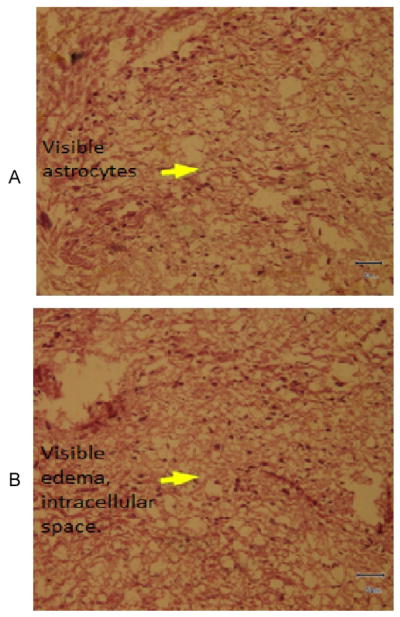
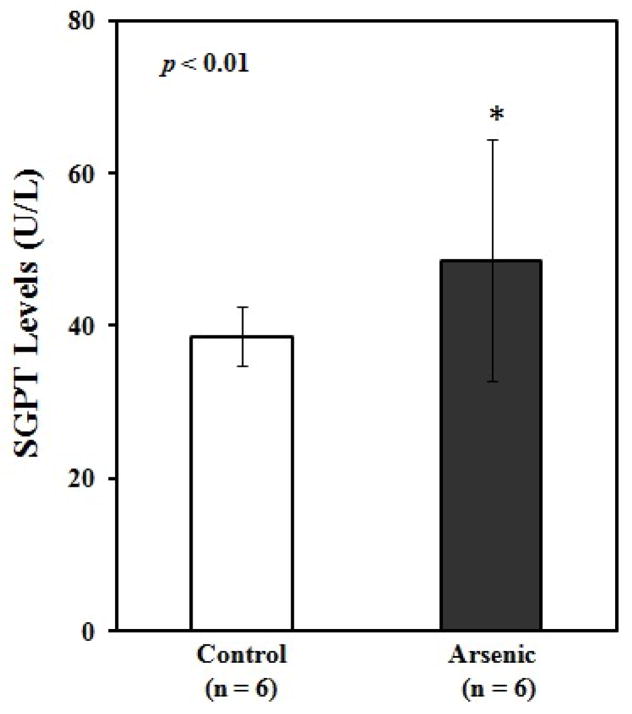
Deposition of arsenic in mice through groundwater is well documented but little is known about the histological changes of organs by the metalloid. Present study was designed to evaluate arsenic-induced histological alterations in kidney, liver, thoracic artery and brain of mice which are not well documented yet. Swiss albino male mice were divided into 2 groups and treated as follows: Group 1: control, 2: arsenic (sodium arsenite at 10 mg/kg b.w. orally for 8 wks). Group 2 showed marked degenerative changes in kidney, liver, thoracic artery, and brain whereas Group 1 did not reveal any abnormalities on histopathology. We therefore concluded that arsenic induces histological alterations in the tested organs.
通过地下水使小鼠体内沉积砷已有充分记录,但关于这种类金属对器官组织学变化的了解却很少。本研究旨在评估砷对小鼠肾脏、肝脏、胸主动脉和大脑的组织学改变,这些方面尚未有充分记录。将瑞士白化雄性小鼠分为两组并进行如下处理:第1组为对照组,第2组为砷处理组(口服10 mg/kg体重的亚砷酸钠,持续8周)。第2组在肾脏、肝脏、胸主动脉和大脑中显示出明显的退行性变化,而第1组在组织病理学上未发现任何异常。因此,我们得出结论,砷会引起受试器官的组织学改变。