de Castro Letícia S, de Assis Patrícia M, Siqueira Adriano F P, Hamilton Thais R S, Mendes Camilla M, Losano João D A, Nichi Marcílio, Visintin José A, Assumpção Mayra E O A
Laboratory of Spermatozoa Biology, Department of Animal Reproduction, School of Veterinary Medicine and Animal Science, University of Sao Paulo, Avenida Prof. Dr. Orlando Marques de Paiva 87, Cidade Universitária, 05508-270 Sao Paulo, SP, Brazil.
Laboratory of Spermatozoa Biology, Department of Animal Reproduction, School of Veterinary Medicine and Animal Science, University of Sao Paulo, Avenida Prof. Dr. Orlando Marques de Paiva 87, Cidade Universitária, 05508-270 Sao Paulo, SP, Brazil; Laboratory of In Vitro Fertilization, Cloning and Animal Transgenesis, Department of Animal Reproduction, School of Veterinary Medicine and Animal Science, University of Sao Paulo, Sao Paulo, Brazil.
Oxid Med Cell Longev. 2016;2016:8213071. doi: 10.1155/2016/8213071. Epub 2015 Dec 6.
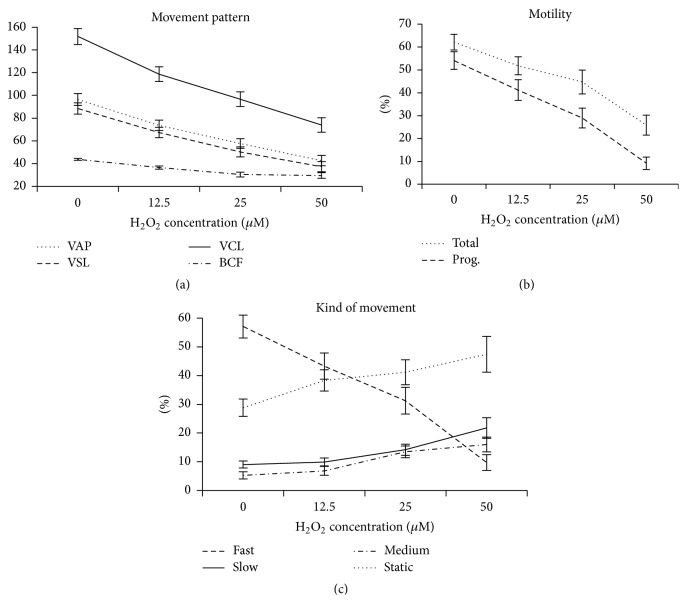
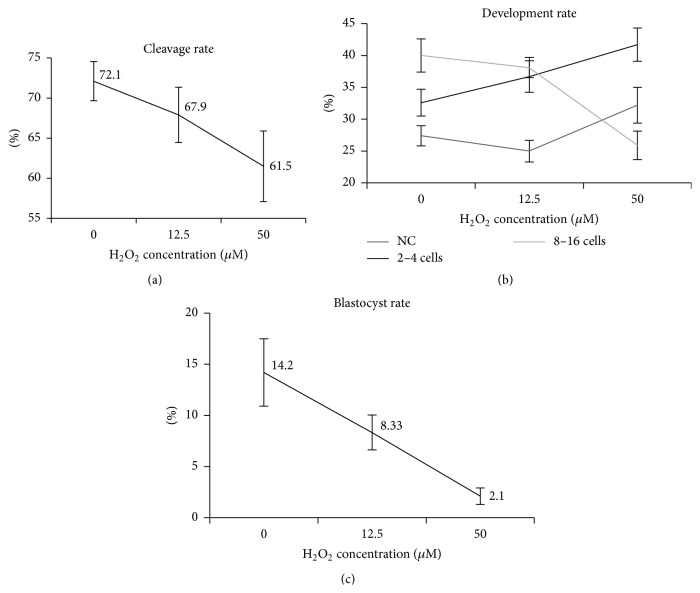
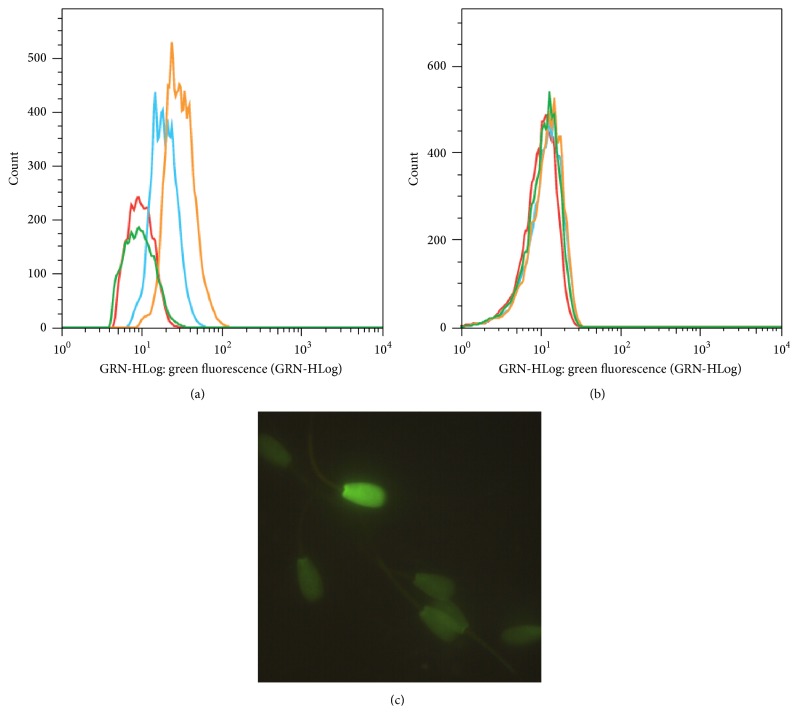
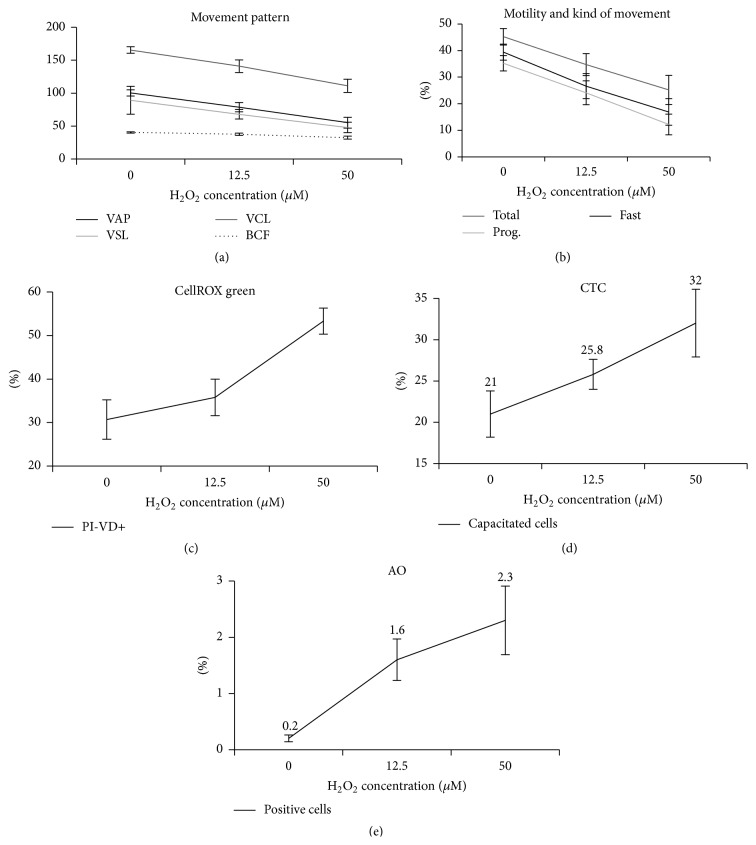
Our study aimed to assess the impact of sperm oxidative stress on embryo development by means of a dose-dependent model. In experiment 1, straws from five bulls were subjected to incubation with increasing H2O2 doses (0, 12.5, 25, and 50 μM). Motility parameters were evaluated by Computed Assisted System Analysis (CASA). Experiment 2 was designed to study a high (50 μM) and low dose (12.5 μM) of H2O2 compared to a control (0 μM). Samples were incubated and further used for in vitro fertilization. Analyses of motility (CASA), oxidative status (CellROX green and 2'-7' dichlorofluorescein diacetate), mitochondrial potential (JC-1), chromatin integrity (AO), and sperm capacitation status (chlortetracycline) were performed. Embryos were evaluated based on fast cleavage (30 h.p.i.), cleavage (D = 3), development (D = 5), and blastocyst rates (D = 8). We observed a dose-dependent deleterious effect of H2O2 on motility and increase on the percentages of positive cells for CellROX green, capacitated sperm, and AO. A decrease on cleavage and blastocyst rates was observed as H2O2 increased. Also, we detected a blockage on embryo development. We concluded that sperm when exposed to oxidative environment presents impaired motility traits, prooxidative status, and premature capacitation; such alterations resulting in embryo development fail.
我们的研究旨在通过剂量依赖性模型评估精子氧化应激对胚胎发育的影响。在实验1中,将来自五头公牛的细管与递增剂量的过氧化氢(0、12.5、25和50 μM)进行孵育。通过计算机辅助系统分析(CASA)评估运动参数。实验2旨在研究与对照(0 μM)相比,高剂量(50 μM)和低剂量(12.5 μM)的过氧化氢。样本进行孵育并进一步用于体外受精。进行了运动性(CASA)、氧化状态(CellROX green和二氯荧光素二乙酸酯)、线粒体电位(JC-1)、染色质完整性(AO)和精子获能状态(金霉素)的分析。根据快速分裂(授精后30小时)、分裂(第3天)、发育(第5天)和囊胚率(第8天)对胚胎进行评估。我们观察到过氧化氢对运动性具有剂量依赖性有害作用,并且CellROX green阳性细胞、获能精子和AO的百分比增加。随着过氧化氢浓度增加,观察到分裂率和囊胚率下降。此外,我们检测到胚胎发育受阻。我们得出结论,精子暴露于氧化环境时会出现运动特性受损、促氧化状态和过早获能;这些改变导致胚胎发育失败。