Pugholm Lotte Hatting, Revenfeld Anne Louise Schacht, Søndergaard Evo Kristina Lindersson, Jørgensen Malene Møller
Department of Clinical Immunology, Aalborg University Hospital, 9000 Aalborg, Denmark.
Biomed Res Int. 2015;2015:524817. doi: 10.1155/2015/524817. Epub 2015 Dec 3.
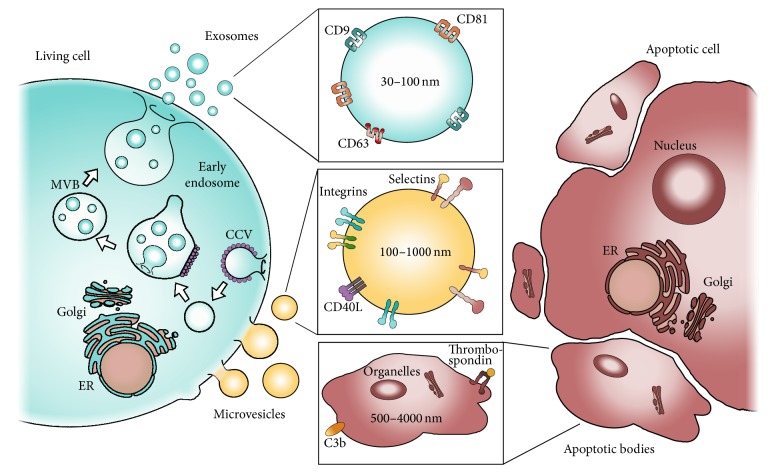
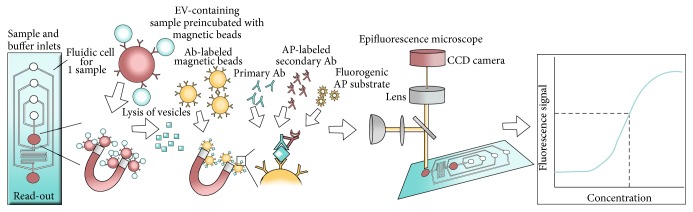
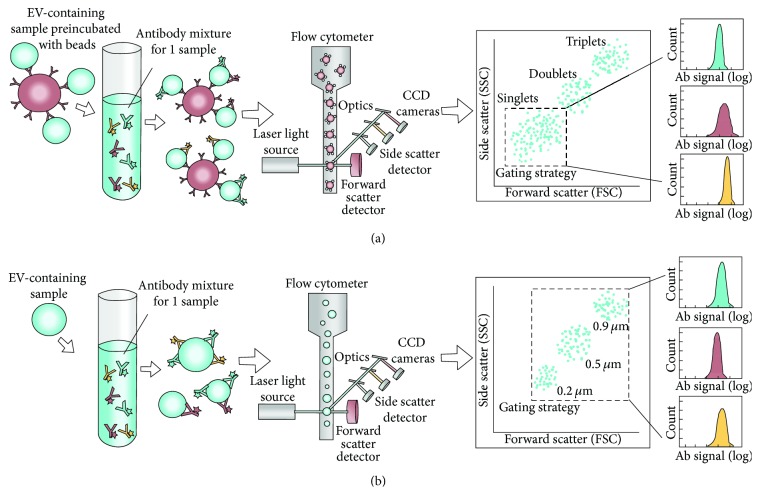
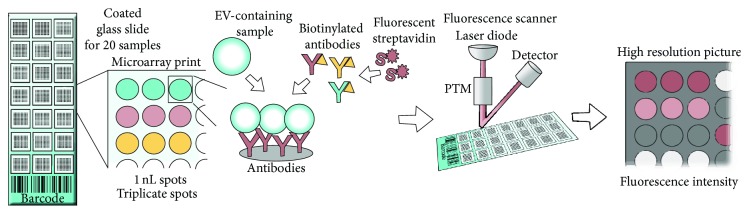
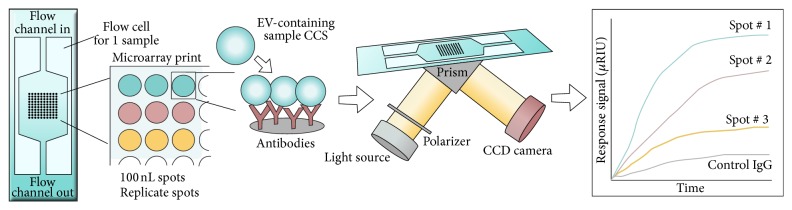
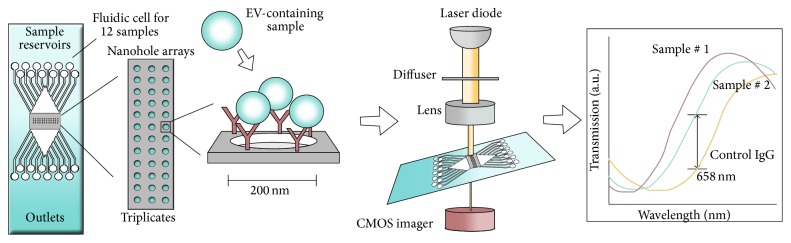
Extracellular vesicles (EVs) are a heterogeneous population of membrane-enclosed vesicles. EVs are recognized as important players in cell-to-cell communication and are described to be involved in numerous biological and pathological processes. The fact that EVs are involved in the development and progression of several diseases has formed the basis for the use of EV analysis in a clinical setting. As the interest in EVs has increased immensely, multiple techniques have been developed aiming at characterizing these vesicles. These techniques characterize different features of EVs, like the size distribution, enumeration, protein composition, and the intravesicular cargo (e.g., RNA). This review focuses on techniques that exploit the specificity and sensitivity associated with antibody-based assays to characterize the protein phenotype of EVs. The protein phenotype of EVs can provide information on the functionality of the vesicles and may be used for identification of disease-related biomarkers. Thus, protein profiling of EVs holds great diagnostic and prognostic potential.
细胞外囊泡(EVs)是一类异质性的膜包被囊泡群体。EVs被认为是细胞间通讯的重要参与者,并被描述为参与众多生物和病理过程。EVs参与多种疾病的发生和发展这一事实构成了在临床环境中使用EV分析的基础。随着对EVs的兴趣急剧增加,已经开发了多种技术来表征这些囊泡。这些技术可表征EVs的不同特征,如大小分布、计数、蛋白质组成以及囊泡内物质(如RNA)。本综述重点关注利用基于抗体检测的特异性和敏感性来表征EVs蛋白质表型的技术。EVs的蛋白质表型可以提供有关囊泡功能的信息,并可用于识别疾病相关生物标志物。因此,EVs的蛋白质谱分析具有巨大的诊断和预后潜力。