Buszard Tim, Reid Machar, Masters Rich, Farrow Damian
Institute of Sport, Exercise and Active Living/College of Sport and Exercise Science, Victoria University, PO Box 14428, Melbourne, VIC, 8001, Australia.
Tennis Australia, Private Bag 6060, Richmond, VIC, 3121, Australia.
Sports Med. 2016 Jun;46(6):829-43. doi: 10.1007/s40279-015-0452-2.
This review investigated the influence of scaling sports equipment and play area (e.g., field size) on children's motor skill acquisition.
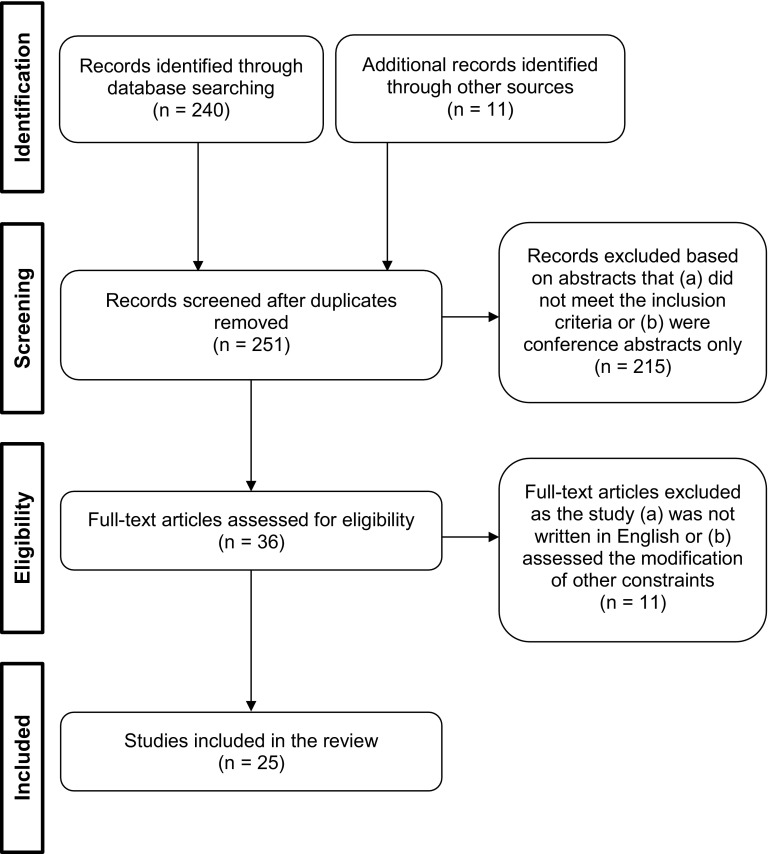
Peer-reviewed studies published prior to February 2015 were searched using SPORTDiscus and MEDLINE. Studies were included if the research (a) was empirical, (b) involved participants younger than 18 years, (c) assessed the efficacy of scaling in relation to one or more factors affecting skill learning (psychological factors, skill performance and skill acquisition factors, biomechanical factors, cognitive processing factors), and (d) had a sport or movement skills context. Risk of bias was assessed in relation to selection bias, detection bias, attrition bias, reporting bias and other bias.
Twenty-five studies involving 989 children were reviewed. Studies revealed that children preferred using scaled equipment over adult equipment (n = 3), were more engaged in the task (n = 1) and had greater self-efficacy to execute skills (n = 2). Eighteen studies demonstrated that children performed skills better when the equipment and play area were scaled. Children also acquired skills faster in such conditions (n = 2); albeit the practice interventions were relatively short. Five studies showed that scaling led to children adopting more desirable movement patterns, and one study associated scaling with implicit motor learning.
Most of the studies reviewed provide evidence in support of equipment and play area scaling. However, the conclusions are limited by the small number of studies that examined learning (n = 5), poor ecological validity and skills tests of few trials.
本综述研究了调整体育器材和运动场地(如场地大小)对儿童运动技能习得的影响。
使用SPORTDiscus和MEDLINE检索2015年2月之前发表的同行评审研究。纳入的研究需满足以下条件:(a)为实证研究;(b)涉及18岁以下参与者;(c)评估了在与一个或多个影响技能学习的因素(心理因素、技能表现和技能习得因素、生物力学因素、认知加工因素)相关的情况下调整器材和场地的效果;(d)具有体育或运动技能背景。从选择偏倚、检测偏倚、失访偏倚、报告偏倚和其他偏倚方面评估偏倚风险。
对涉及989名儿童的25项研究进行了综述。研究表明,儿童更喜欢使用尺寸合适的器材而非成人器材(n = 3),参与任务的积极性更高(n = 1),执行技能时的自我效能感更强(n = 2)。18项研究表明,当器材和运动场地尺寸合适时,儿童的技能表现更好。在这种情况下,儿童习得技能的速度也更快(n = 2);尽管练习干预相对较短。5项研究表明,尺寸合适能使儿童采用更理想的运动模式,1项研究将尺寸合适与内隐运动学习联系起来。
大多数综述研究提供了支持器材和运动场地尺寸合适的证据。然而,这些结论受到研究数量少(n = 5)、生态效度差以及技能测试次数少的限制。