Horita Yutaka, Takezawa Masanori, Kinjo Takuji, Nakawake Yo, Masuda Naoki
National Institute of Informatics, 2-1-2 Hitotsubashi, Chiyoda-ku, Tokyo 101-8430, Japan.
JST, ERATO, Kawarabayashi large graph project, c/o Global Research Center for Big Data Mathematics, NII, 2-1-2 Hitotsubashi, Chiyoda-ku, Tokyo 101-8430, Japan.
Sci Rep. 2016 Jan 20;6:19471. doi: 10.1038/srep19471.
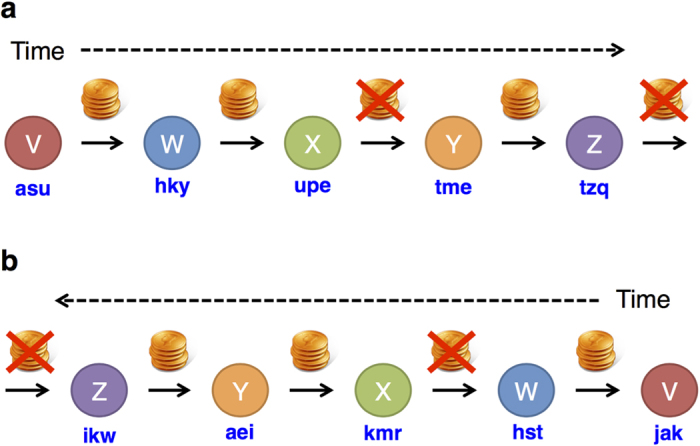
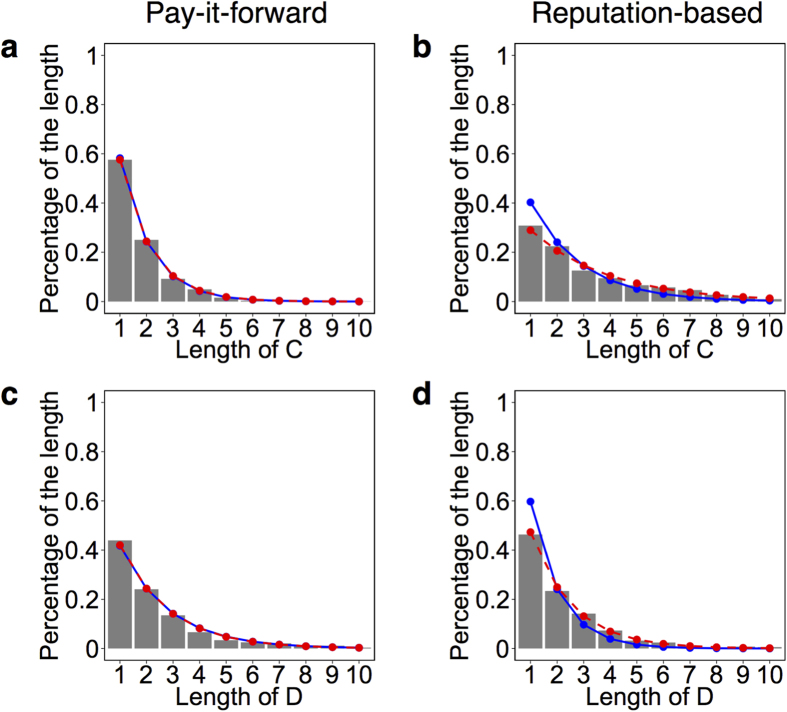
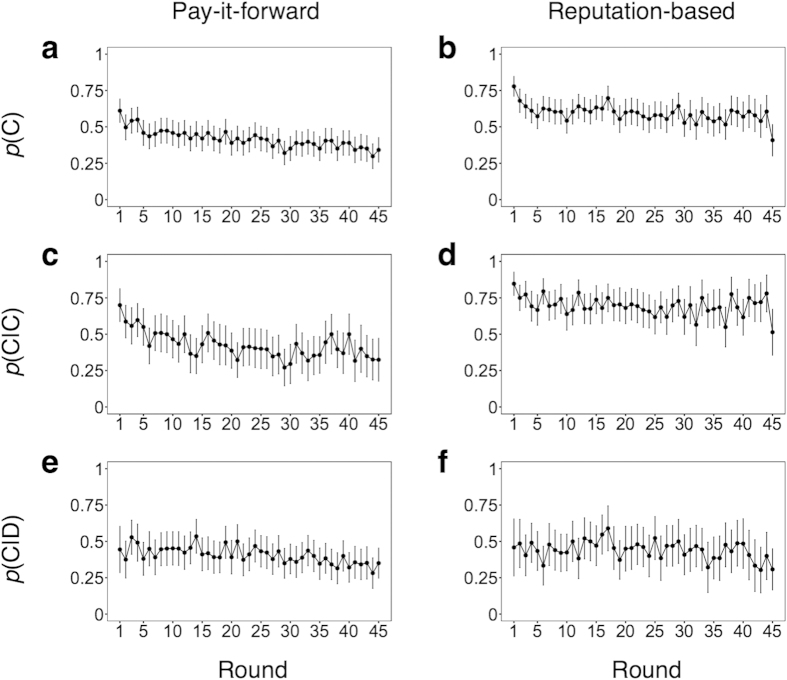
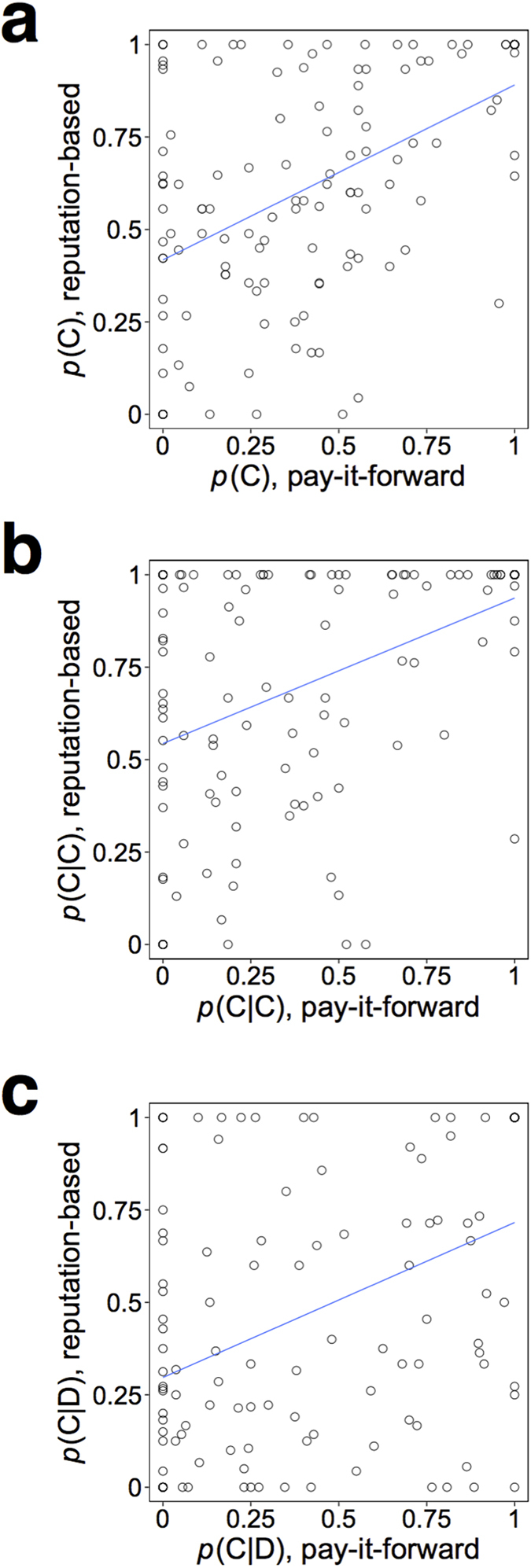
Humans often forward kindness received from others to strangers, a phenomenon called the upstream or pay-it-forward indirect reciprocity. Some field observations and laboratory experiments found evidence of pay-it-forward reciprocity in which chains of cooperative acts persist in social dilemma situations. Theoretically, however, cooperation based on pay-it-forward reciprocity is not sustainable. We carried out laboratory experiments of a pay-it-forward indirect reciprocity game (i.e., chained gift-giving game) on a large scale in terms of group size and time. We found that cooperation consistent with pay-it-forward reciprocity occurred only in a first few decisions per participant and that cooperation originated from inherent pro-sociality of individuals. In contrast, the same groups of participants showed persisting chains of cooperation in a different indirect reciprocity game in which participants earned reputation by cooperating. Our experimental results suggest that pay-it-forward reciprocity is transient and disappears when a person makes decisions repeatedly, whereas the reputation-based reciprocity is stable in the same situation.
人类常常会将从他人那里得到的善意传递给陌生人,这一现象被称为上游或“让爱传出去”的间接互惠。一些实地观察和实验室实验发现了“让爱传出去”互惠的证据,即在社会困境中合作行为链持续存在。然而,从理论上讲,基于“让爱传出去”互惠的合作是不可持续的。我们在群体规模和时间方面进行了大规模的“让爱传出去”间接互惠博弈(即链式送礼博弈)实验室实验。我们发现,与“让爱传出去”互惠一致的合作仅在每个参与者最初的几次决策中出现,且合作源于个体固有的亲社会性。相比之下,同一组参与者在另一种间接互惠博弈中表现出持续的合作链,在该博弈中参与者通过合作获得声誉。我们的实验结果表明,“让爱传出去”的互惠是短暂的,当一个人反复做决策时就会消失,而基于声誉的互惠在相同情况下是稳定的。