De-la-Rosa Víctor, Suárez-Delgado Esteban, Rangel-Yescas Gisela E, Islas León D
Departamento de Fisiología, Facultad de Medicina, Universidad Nacional Autónoma de México, México DF 04510, México.
Departamento de Fisiología, Facultad de Medicina, Universidad Nacional Autónoma de México, México DF 04510, México
J Gen Physiol. 2016 Feb;147(2):127-36. doi: 10.1085/jgp.201511496.
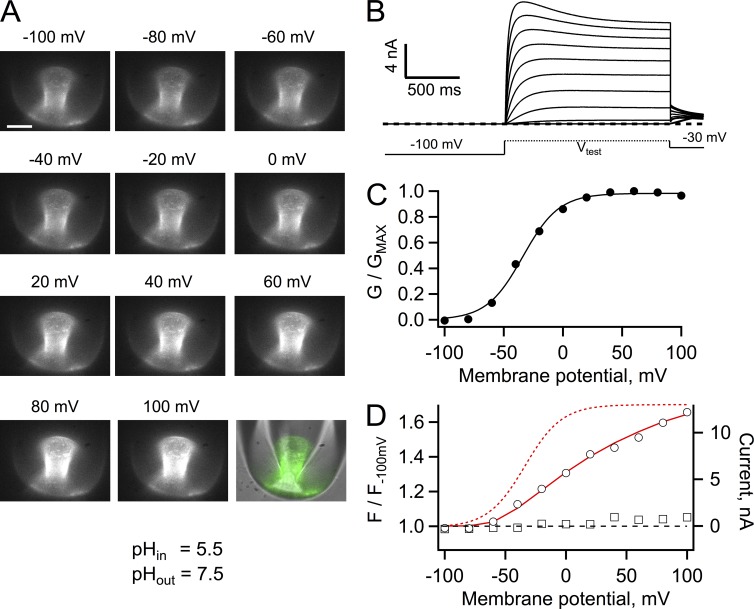
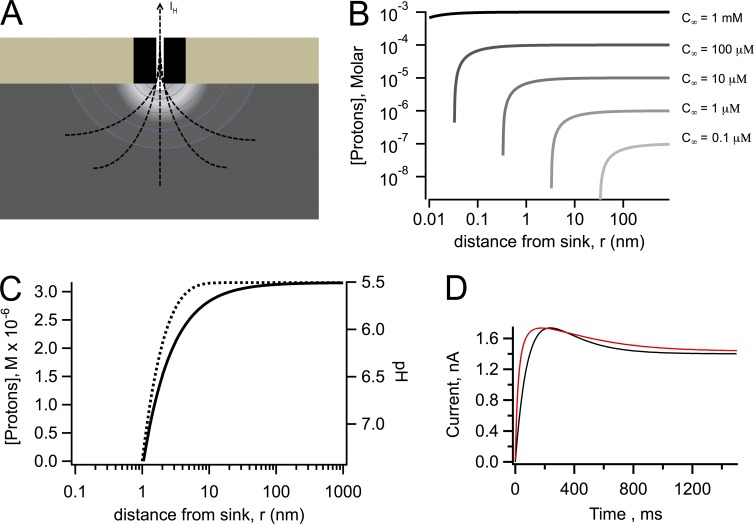
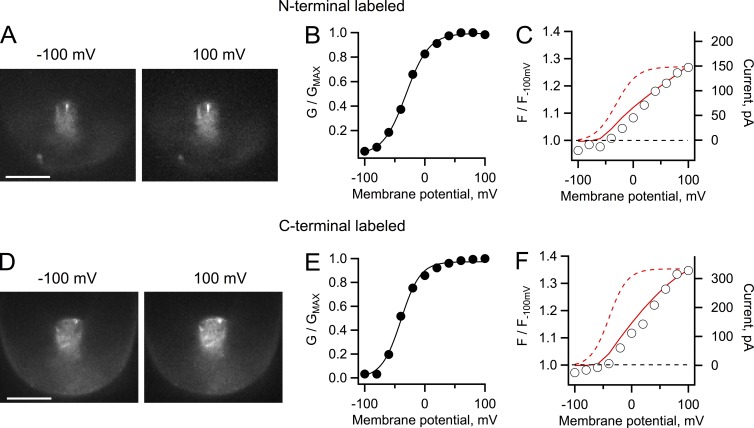
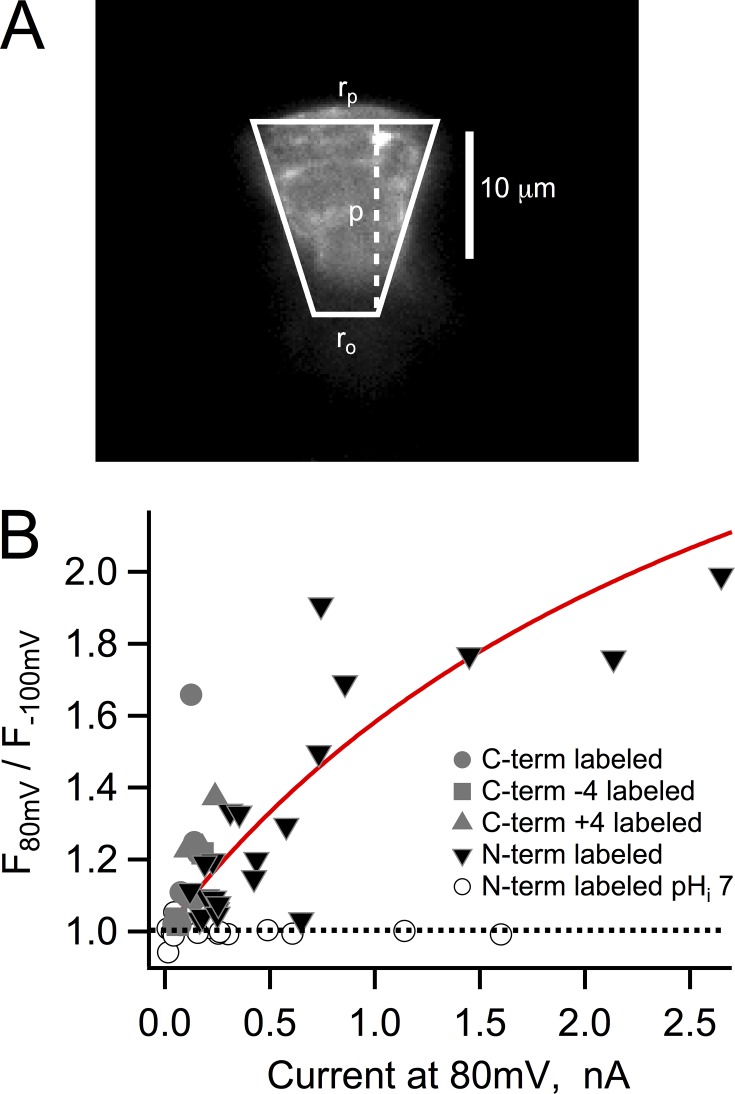
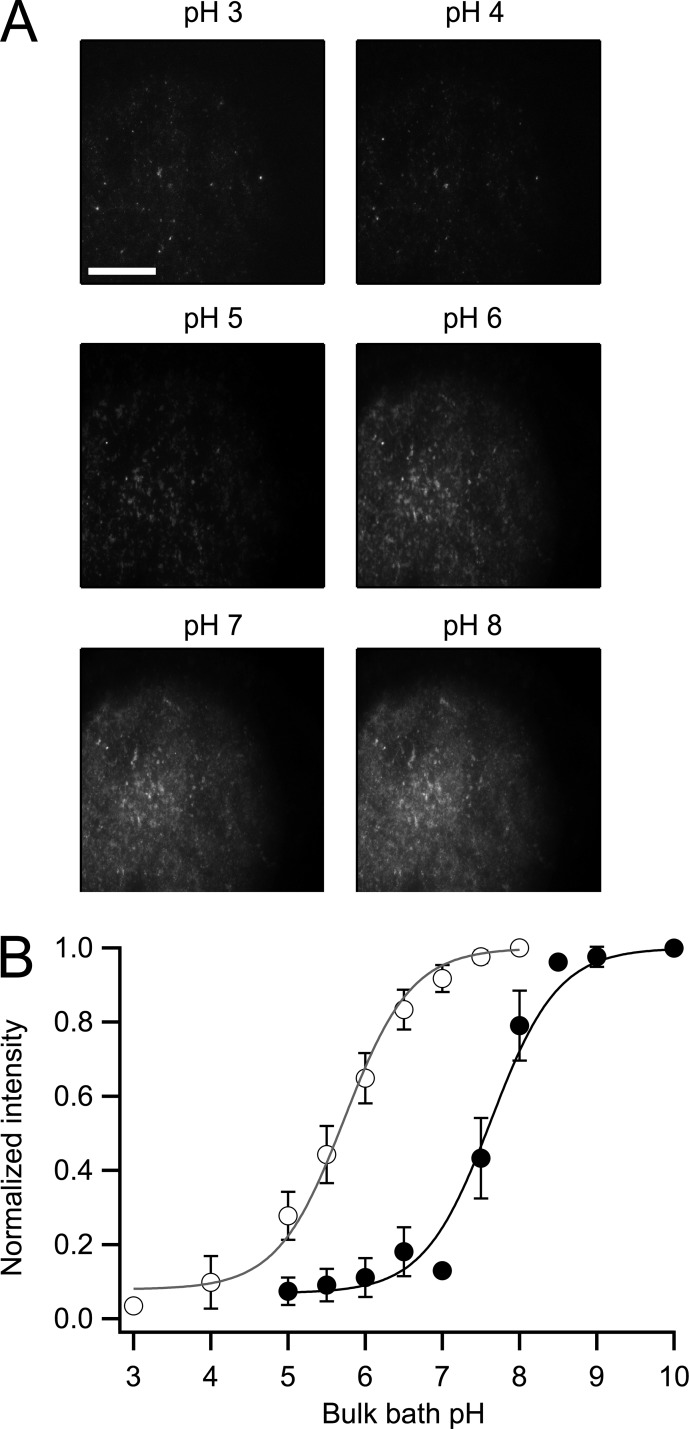
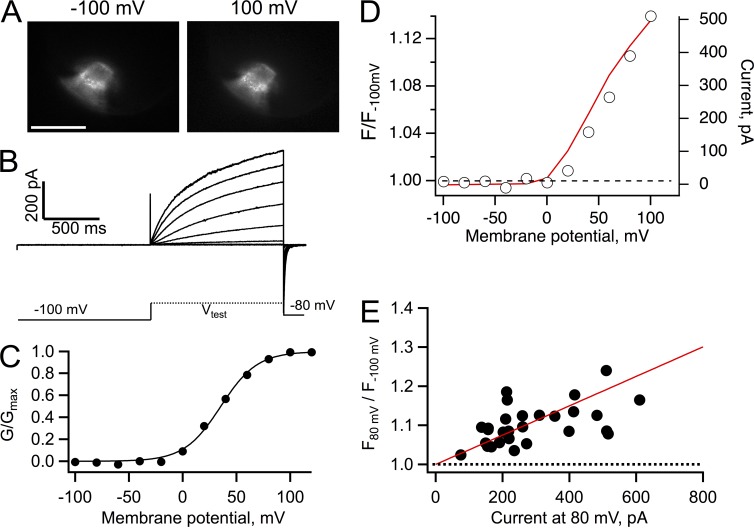
Proton channels have evolved to provide a pH regulatory mechanism, affording the extrusion of protons from the cytoplasm at all membrane potentials. Previous evidence has suggested that channel-mediated acid extrusion could significantly change the local concentration of protons in the vicinity of the channel. In this work, we directly measure the proton depletion caused by activation of Hv1 proton channels using patch-clamp fluorometry recordings from channels labeled with the Venus fluorescent protein at intracellular domains. The fluorescence of the Venus protein is very sensitive to pH, thus behaving as a genetically encoded sensor of local pH. Eliciting outward proton currents increases the fluorescence intensity of Venus. This dequenching is related to the magnitude of the current and not to channel gating and is dependent on the pH gradient. Our results provide direct evidence of local proton depletion caused by flux through the proton-selective channel.
质子通道已经进化出一种pH调节机制,能够在所有膜电位下将质子从细胞质中挤出。先前的证据表明,通道介导的酸外排可以显著改变通道附近质子的局部浓度。在这项研究中,我们使用膜片钳荧光测量技术,直接测量了在细胞内结构域标记有金星荧光蛋白的通道激活Hv1质子通道所引起的质子消耗。金星蛋白的荧光对pH非常敏感,因此可作为一种基因编码的局部pH传感器。引发外向质子电流会增加金星的荧光强度。这种去淬灭与电流大小有关,而与通道门控无关,并且依赖于pH梯度。我们的结果提供了直接证据,证明质子选择性通道的通量会导致局部质子消耗。