Janssens Steven B, Vandelook Filip, De Langhe Edmond, Verstraete Brecht, Smets Erik, Vandenhouwe Ines, Swennen Rony
Botanic Garden Meise, Nieuwelaan 38, Meise, BE-1860, Belgium.
Laboratory of Tropical Crop Improvement, Willem de Croylaan 42, Leuven, BE-3001, Belgium.
New Phytol. 2016 Jun;210(4):1453-65. doi: 10.1111/nph.13856. Epub 2016 Feb 1.
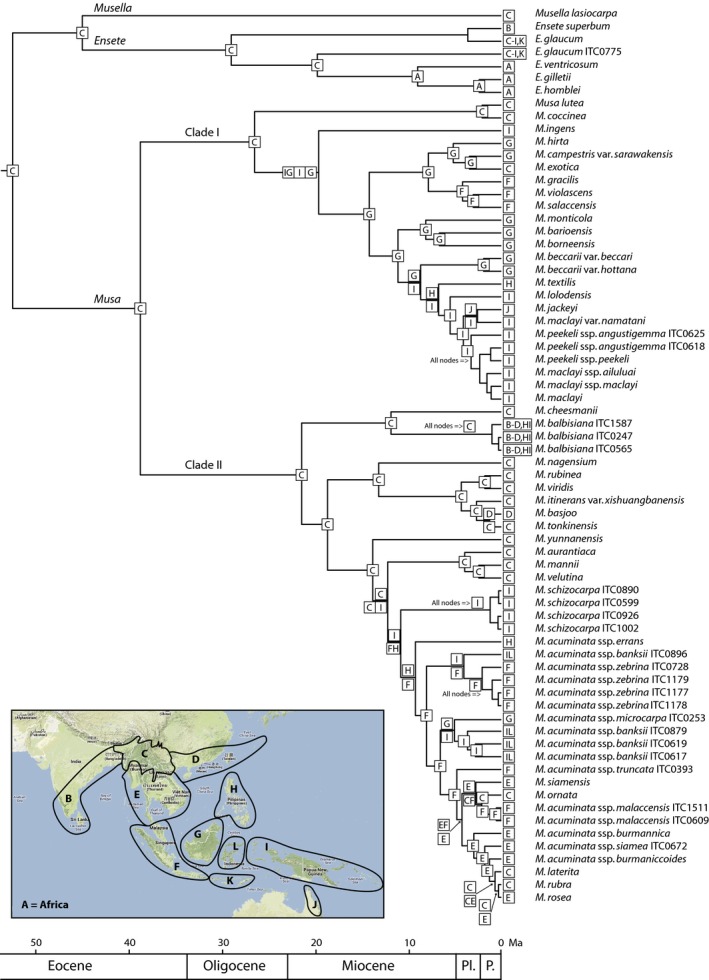
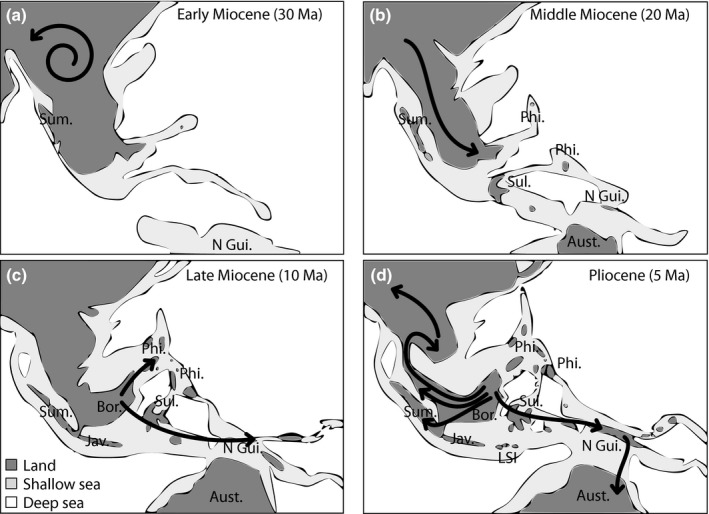
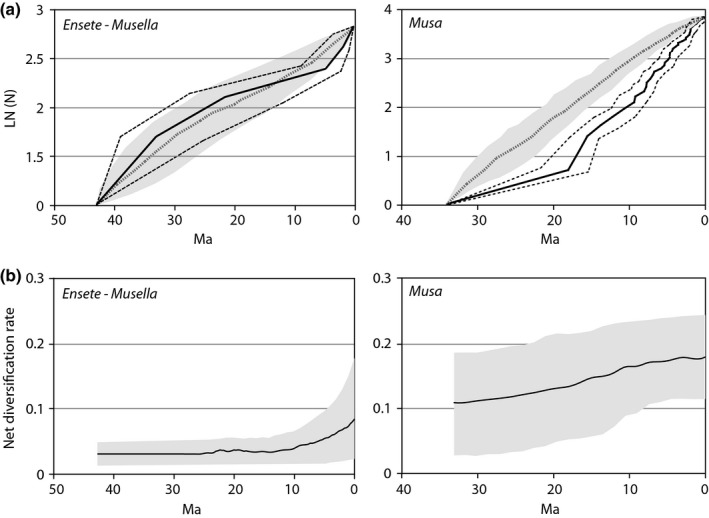
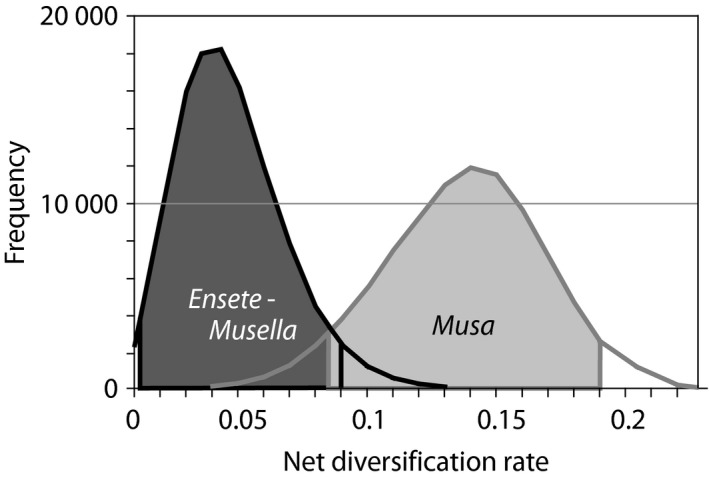
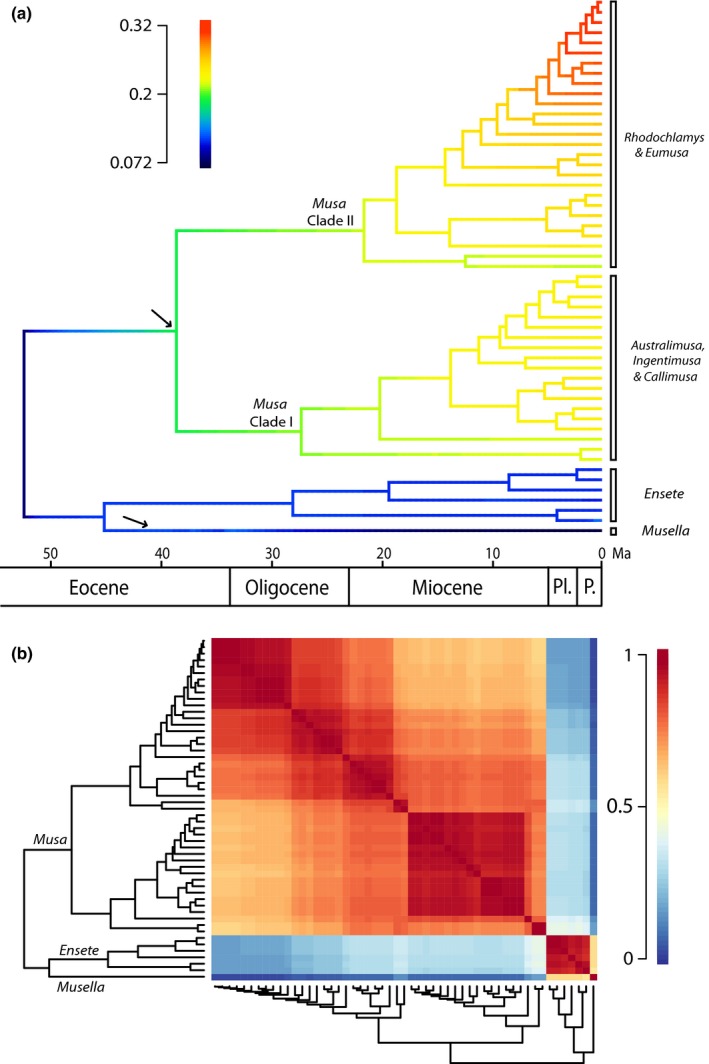
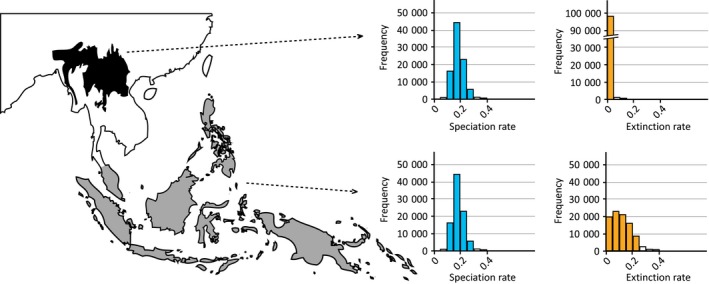
Tropical Southeast Asia, which harbors most of the Musaceae biodiversity, is one of the most species-rich regions in the world. Its high degree of endemism is shaped by the region's tectonic and climatic history, with large differences between northern Indo-Burma and the Malayan Archipelago. Here, we aim to find a link between the diversification and biogeography of Musaceae and geological history of the Southeast Asian subcontinent. The Musaceae family (including five Ensete, 45 Musa and one Musella species) was dated using a large phylogenetic framework encompassing 163 species from all Zingiberales families. Evolutionary patterns within Musaceae were inferred using ancestral area reconstruction and diversification rate analyses. All three Musaceae genera - Ensete, Musa and Musella - originated in northern Indo-Burma during the early Eocene. Musa species dispersed from 'northwest to southeast' into Southeast Asia with only few back-dispersals towards northern Indo-Burma. Musaceae colonization events of the Malayan Archipelago subcontinent are clearly linked to the geological and climatic history of the region. Musa species were only able to colonize the region east of Wallace's line after the availability of emergent land from the late Miocene onwards.
拥有芭蕉科大部分生物多样性的热带东南亚地区,是世界上物种最为丰富的地区之一。该地区高度的特有性是由其构造和气候历史塑造而成的,印度 - 缅甸北部与马来群岛之间存在巨大差异。在此,我们旨在探寻芭蕉科的多样化与生物地理学和东南亚次大陆地质历史之间的联系。利用包含姜目所有科163个物种的大型系统发育框架,对芭蕉科(包括5个象腿蕉属、45个芭蕉属和1个地涌金莲属物种)进行了年代测定。通过祖先区域重建和多样化速率分析,推断了芭蕉科内部的进化模式。所有三个芭蕉科属——象腿蕉属、芭蕉属和地涌金莲属——均起源于始新世早期的印度 - 缅甸北部。芭蕉属物种从“西北向东南”扩散至东南亚,仅有少数向印度 - 缅甸北部反向扩散。马来群岛次大陆的芭蕉科定殖事件与该地区的地质和气候历史明显相关。直到中新世晚期出现新陆地后,芭蕉属物种才得以定殖到华莱士线以东地区。