Maneeton Narong, Maneeton Benchalak, Woottiluk Pakapan, Likhitsathian Surinporn, Suttajit Sirijit, Boonyanaruthee Vudhichai, Srisurapanont Manit
Department of Psychiatry, Faculty of Medicine, Chiang Mai University, Chiang Mai, Thailand.
Psychiatric Nursing Division, Faculty of Nursing, Chiang Mai University, Chiang Mai, Thailand.
Drug Des Devel Ther. 2016 Jan 12;10:259-76. doi: 10.2147/DDDT.S89485. eCollection 2016.
Some studies have indicated the efficacy of quetiapine in the treatment of generalized anxiety disorder (GAD).
The purpose of this study was to systematically review the efficacy, acceptability, and tolerability of quetiapine in adult patients with GAD.
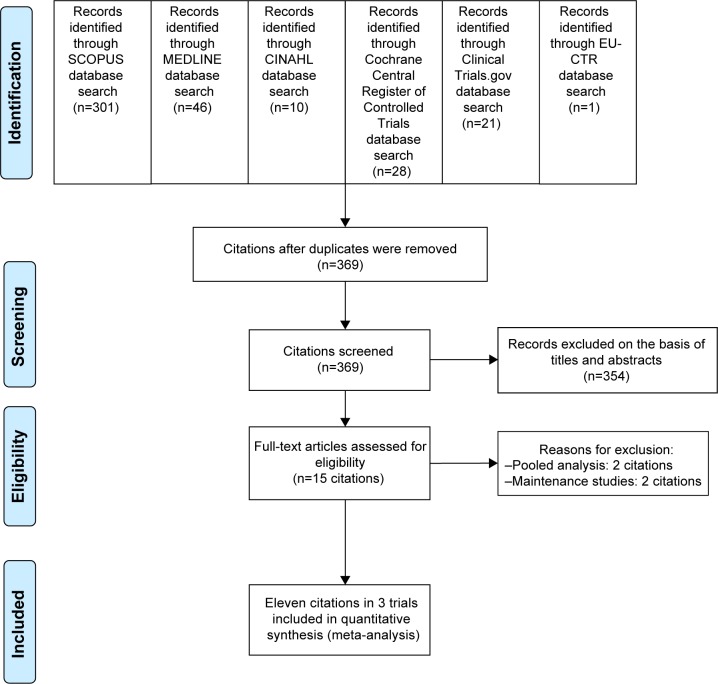
The SCOPUS, MEDLINE, CINAHL, Cochrane Central Register of Controlled Trials, and ClinicalTrials.gov databases were searched in April 2015. All randomized controlled trials (RCTs) of GAD were considered to be included in this meta-analysis. All RCTs of quetiapine in GAD patients providing endpoint outcomes relevant to severity of anxiety, response rate, remission rate, overall discontinuation rate, or discontinuation rate due to adverse events were included. The version reports from suitable clinical studies were explored, and the important data were extracted. Measurement for efficacy outcomes consisted of the mean-changed scores of the rating scales for anxiety, and response rate.
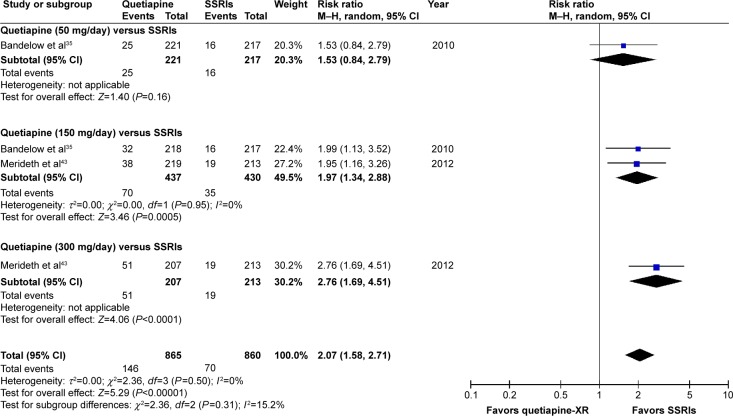
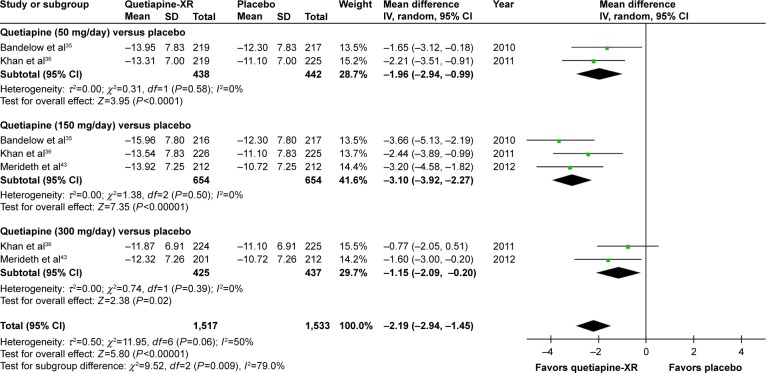
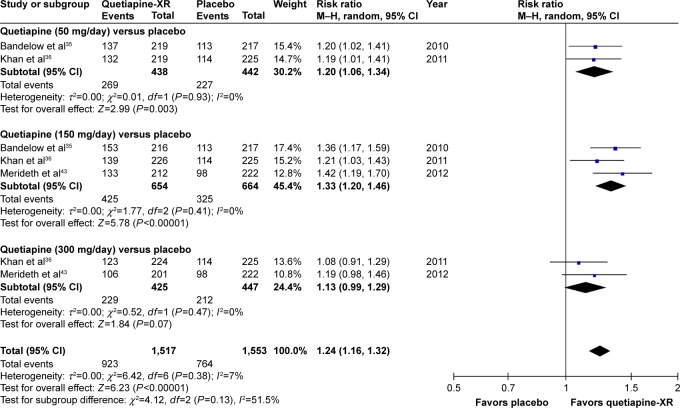
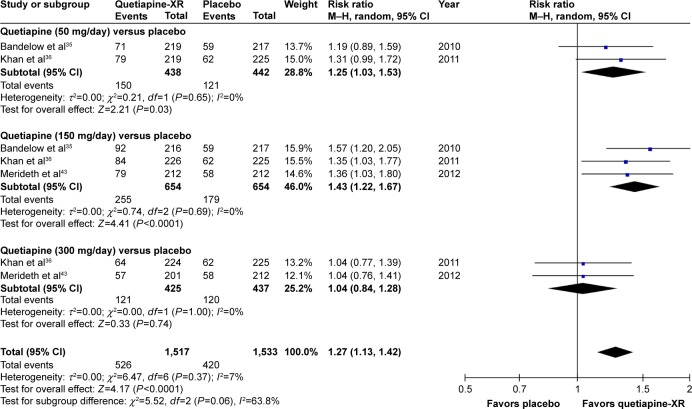
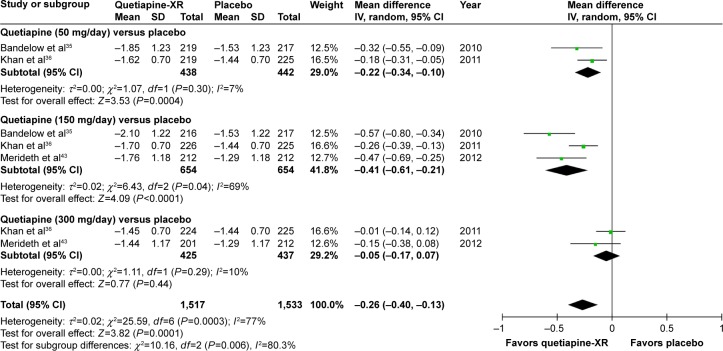
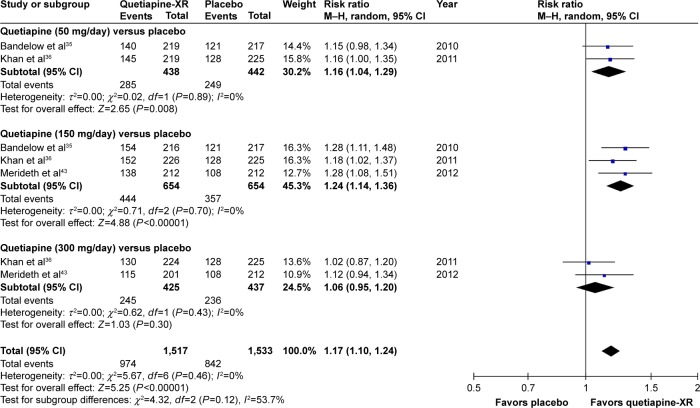
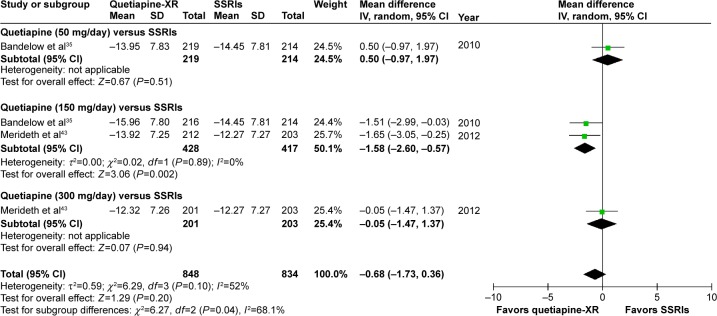
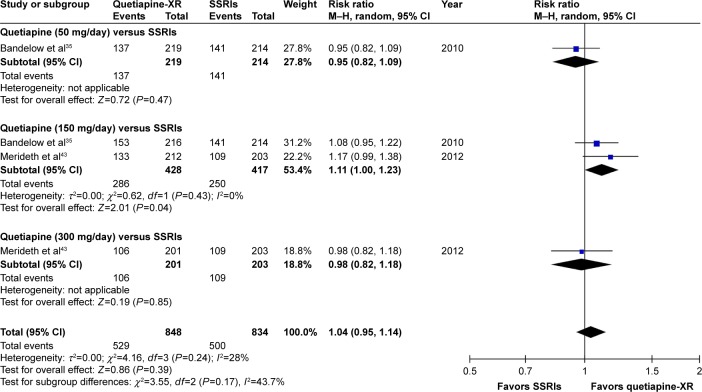
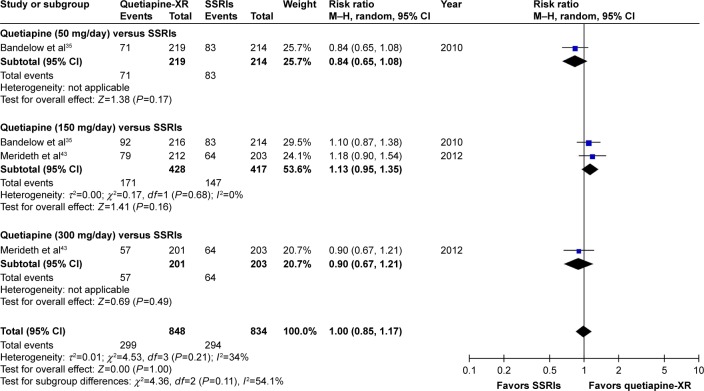
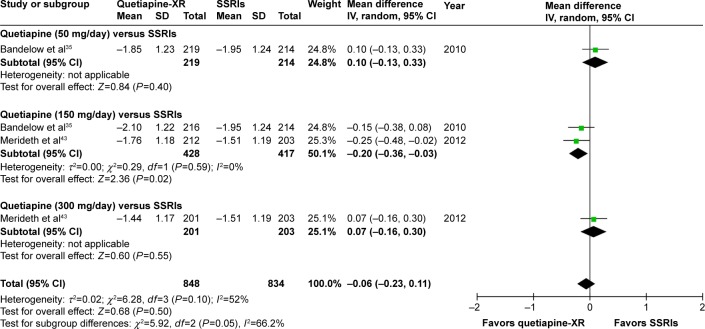
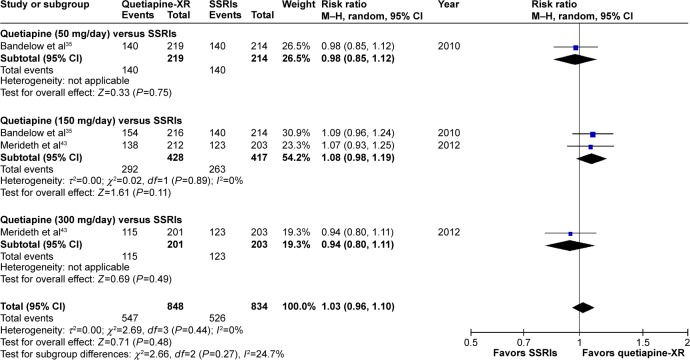
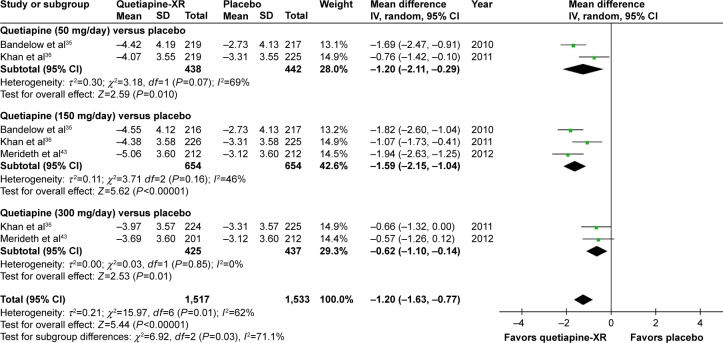
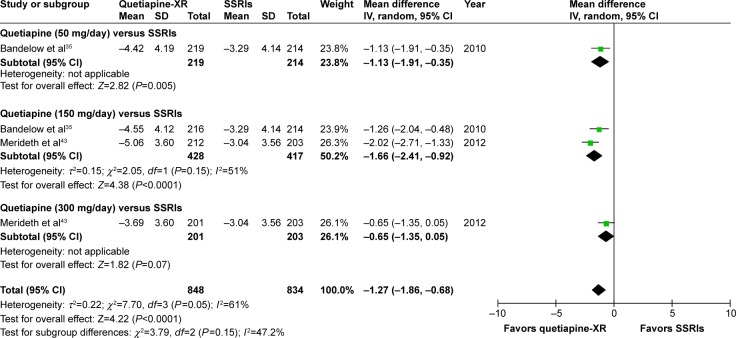
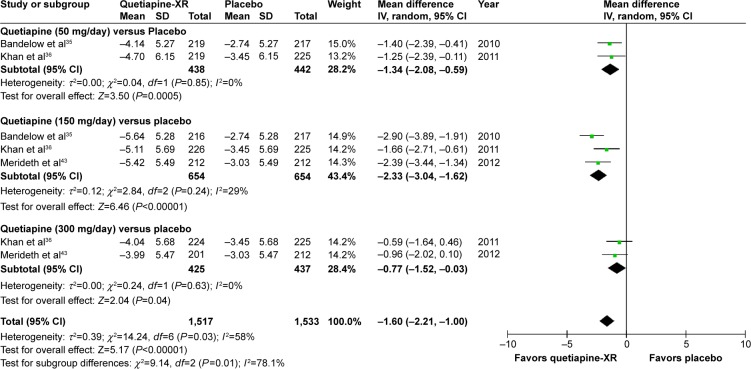
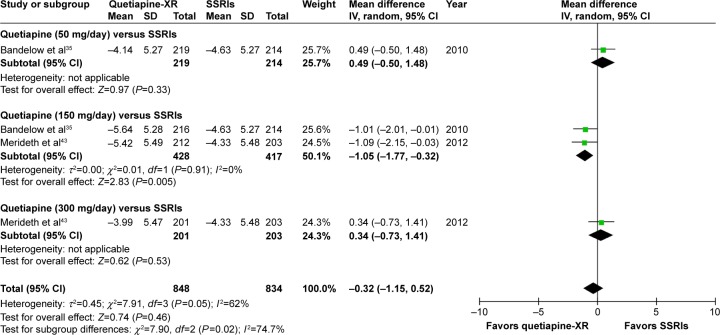
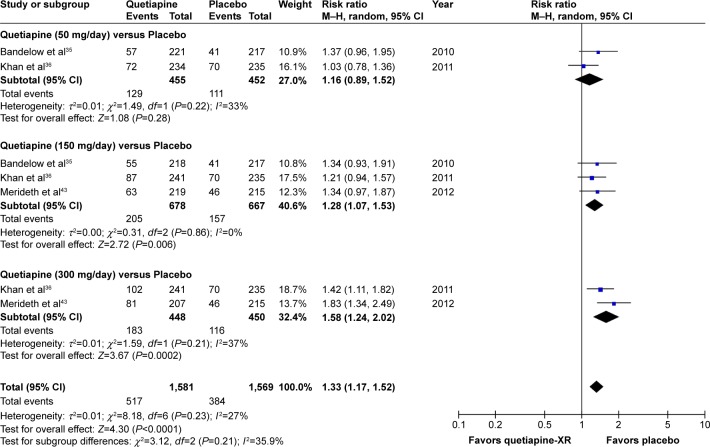
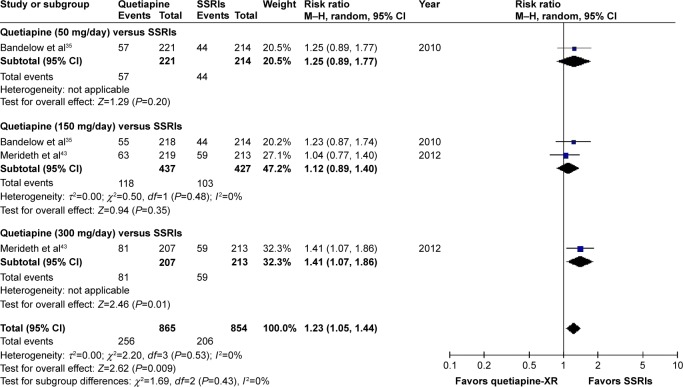
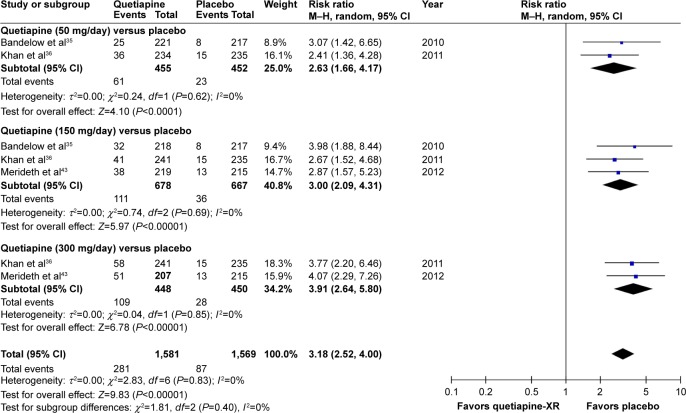
A total of 2,248 randomized participants in three RCTs were included. The pooled mean-changed score of the quetiapine-treated group was greater than that of the placebo-treated group and comparable to selective serotonin reuptake inhibitors (SSRIs). Unfortunately, the response and the remission rates in only 50 and 150 mg/day of quetiapine-XR (extended-release) were better than those of the placebo. Their response and remission rates were comparable to SSRIs. The rates of pooled overall discontinuation and discontinuation due to adverse events of quetiapine-XR were greater than placebo. Only the overall discontinuation rate of quetiapine-XR at 50 and 150 mg/day and the discontinuation rate due to adverse events of quetiapine-XR at 50 mg/day were comparable to SSRIs.
Based on this meta-analysis, quetiapine-XR is efficacious in the treatment of GAD in adult patients. Despite its low acceptability and tolerability, the use of 50-150 mg/day quetiapine-XR for adult GAD patients may be considered as an alternative treatment. Further well-defined studies should be conducted to warrant these outcomes.
一些研究表明喹硫平治疗广泛性焦虑症(GAD)有效。
本研究旨在系统评价喹硫平治疗成年广泛性焦虑症患者的疗效、可接受性和耐受性。
2015年4月检索了SCOPUS、MEDLINE、CINAHL、Cochrane对照试验中央注册库和ClinicalTrials.gov数据库。所有广泛性焦虑症的随机对照试验(RCT)均被纳入本荟萃分析。纳入所有提供与焦虑严重程度、缓解率、缓解率、总体停药率或不良事件停药率相关终点结果的广泛性焦虑症患者喹硫平随机对照试验。查阅了合适临床研究的版本报告,并提取了重要数据。疗效结果的测量包括焦虑评定量表的平均变化分数和缓解率。
三项随机对照试验共纳入2248名随机参与者。喹硫平治疗组的合并平均变化分数高于安慰剂治疗组,且与选择性5-羟色胺再摄取抑制剂(SSRI)相当。遗憾的是,仅喹硫平缓释片(XR)50和150mg/天的缓解率和缓解率优于安慰剂。它们的缓解率和缓解率与SSRI相当。喹硫平缓释片的总体停药率和因不良事件导致的停药率高于安慰剂。仅喹硫平缓释片50和150mg/天的总体停药率以及喹硫平缓释片50mg/天因不良事件导致的停药率与SSRI相当。
基于这项荟萃分析,喹硫平缓释片治疗成年广泛性焦虑症患者有效。尽管其可接受性和耐受性较低,但对于成年广泛性焦虑症患者,使用50-150mg/天的喹硫平缓释片可被视为一种替代治疗方法。应进行进一步明确的研究以证实这些结果。