Nhi Dang My, Huy Nguyen Tien, Ohyama Kaname, Kimura Daisuke, Lan Nguyen Thi Phuong, Uchida Leo, Thuong Nguyen Van, Nhon Cao Thi My, Phuc Le Hong, Mai Nguyen Thi, Mizukami Shusaku, Bao Lam Quoc, Doan Nguyen Ngoc, Binh Nguyen Van Thanh, Quang Luong Chan, Karbwang Juntra, Yui Katsuyuki, Morita Kouichi, Huong Vu Thi Que, Hirayama Kenji
Department of Immunogenetics, Institute of Tropical Medicine (NEKKEN), and Graduate School of Biomedical Sciences, Nagasaki University, Nagasaki, Japan.
Department of Clinical Product Development, Institute of Tropical Medicine (NEKKEN), and Graduate School of Biomedical Sciences, Nagasaki University, Nagasaki, Japan.
PLoS Negl Trop Dis. 2016 Feb 19;10(2):e0004435. doi: 10.1371/journal.pntd.0004435. eCollection 2016 Feb.
Severe dengue with severe plasma leakage (SD-SPL) is the most frequent of dengue severe form. Plasma biomarkers for early predictive diagnosis of SD-SPL are required in the primary clinics for the prevention of dengue death.
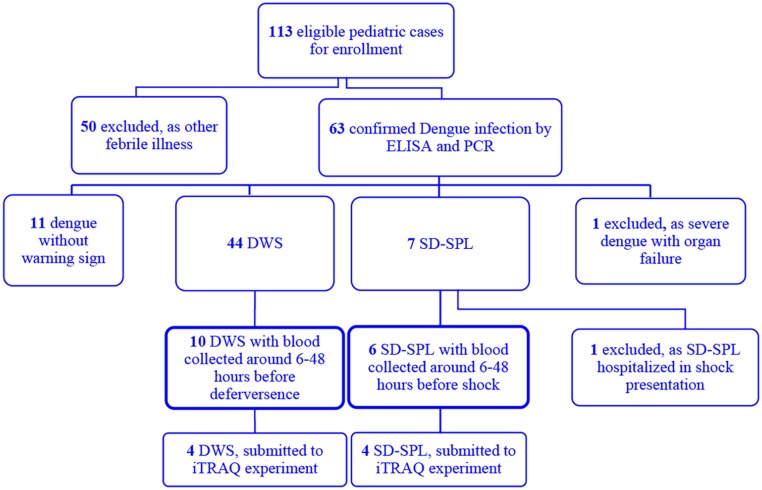
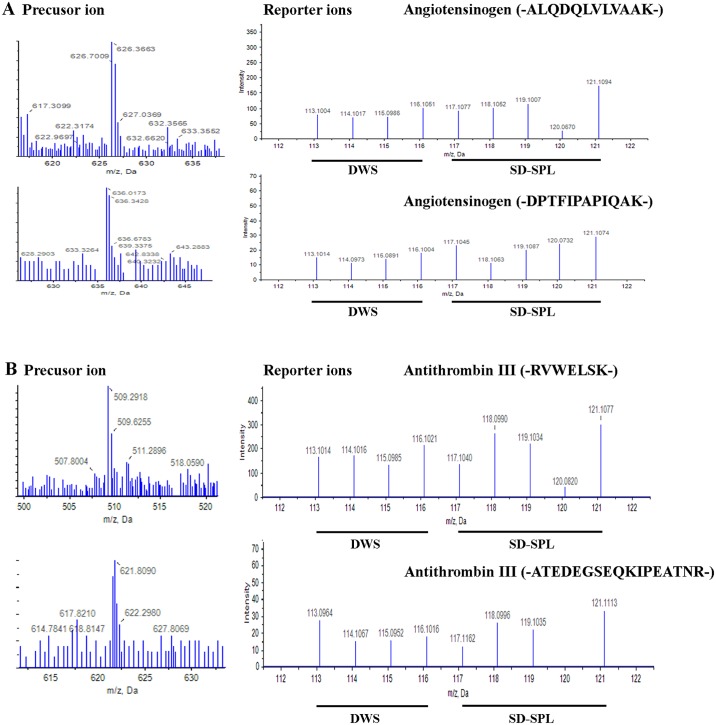
Among 63 confirmed dengue pediatric patients recruited, hospital based longitudinal study detected six SD-SPL and ten dengue with warning sign (DWS). To identify the specific proteins increased or decreased in the SD-SPL plasma obtained 6-48 hours before the shock compared with the DWS, the isobaric tags for relative and absolute quantification (iTRAQ) technology was performed using four patients each group. Validation was undertaken in 6 SD-SPL and 10 DWS patients.
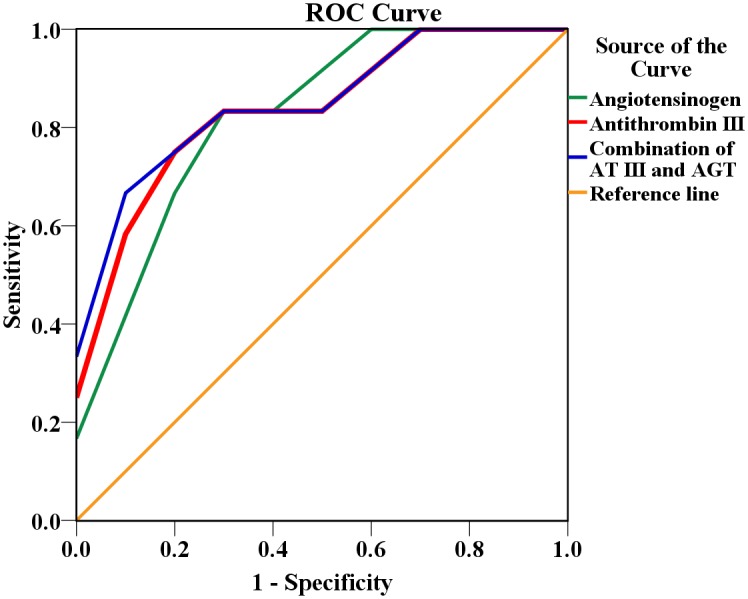
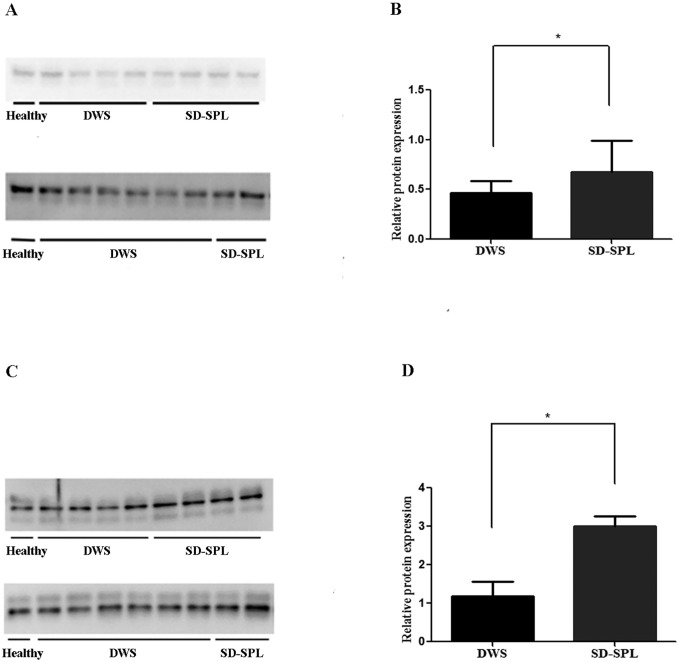
Nineteen plasma proteins exhibited significantly different relative concentrations (p<0.05), with five over-expressed and fourteen under-expressed in SD-SPL compared with DWS. The individual protein was classified to either blood coagulation, vascular regulation, cellular transport-related processes or immune response. The immunoblot quantification showed angiotensinogen and antithrombin III significantly increased in SD-SPL whole plasma of early stage compared with DWS subjects. Even using this small number of samples, antithrombin III predicted SD-SPL before shock occurrence with accuracy.
Proteins identified here may serve as candidate predictive markers to diagnose SD-SPL for timely clinical management. Since the number of subjects are small, so further studies are needed to confirm all these biomarkers.
伴有严重血浆渗漏的重症登革热(SD-SPL)是最常见的登革热重症形式。基层诊所需要用于早期预测诊断SD-SPL的血浆生物标志物,以预防登革热死亡。
在招募的63例确诊登革热儿科患者中,基于医院的纵向研究检测到6例SD-SPL和10例有警示体征的登革热(DWS)。为了确定与DWS相比,在休克前6 - 48小时获得的SD-SPL血浆中增加或减少的特定蛋白质,每组使用4例患者进行相对和绝对定量的等压标签(iTRAQ)技术检测。在6例SD-SPL和10例DWS患者中进行了验证。
19种血浆蛋白表现出显著不同的相对浓度(p<0.05),与DWS相比,SD-SPL中有5种蛋白过表达,14种蛋白低表达。单个蛋白质被归类为凝血、血管调节、细胞转运相关过程或免疫反应。免疫印迹定量显示,与DWS受试者相比,SD-SPL早期全血浆中的血管紧张素原和抗凝血酶III显著增加。即使使用少量样本,抗凝血酶III在休克发生前就能准确预测SD-SPL。
此处鉴定的蛋白质可能作为候选预测标志物用于诊断SD-SPL,以便及时进行临床管理。由于受试者数量较少,因此需要进一步研究来确认所有这些生物标志物。