Seong Ki Moon, Seo Songwon, Lee Dalnim, Kim Min-Jeong, Lee Seung-Sook, Park Sunhoo, Jin Young Woo
Laboratory of Radiation Exposure & Therapeutics, National Radiation Emergency Medical Center, Korea Institute of Radiological & Medical Sciences, Seoul, Korea .
J Korean Med Sci. 2016 Feb;31 Suppl 1(Suppl 1):S10-23. doi: 10.3346/jkms.2016.31.S1.S10. Epub 2016 Jan 28.
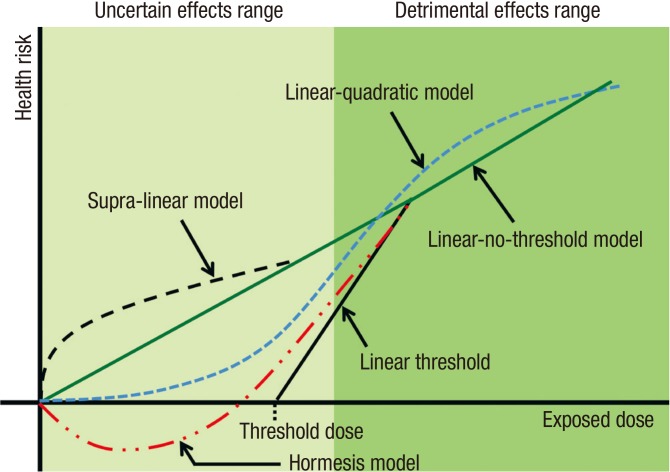
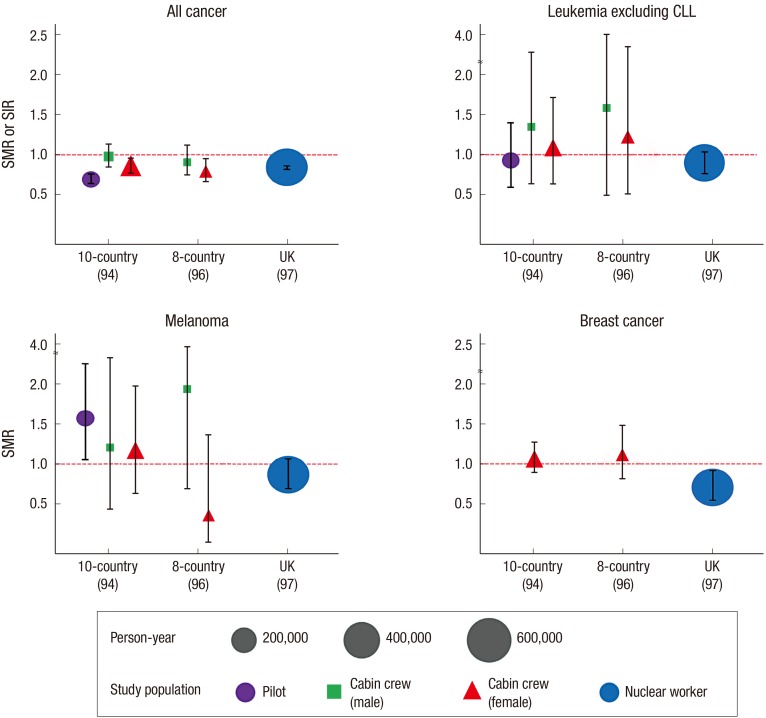
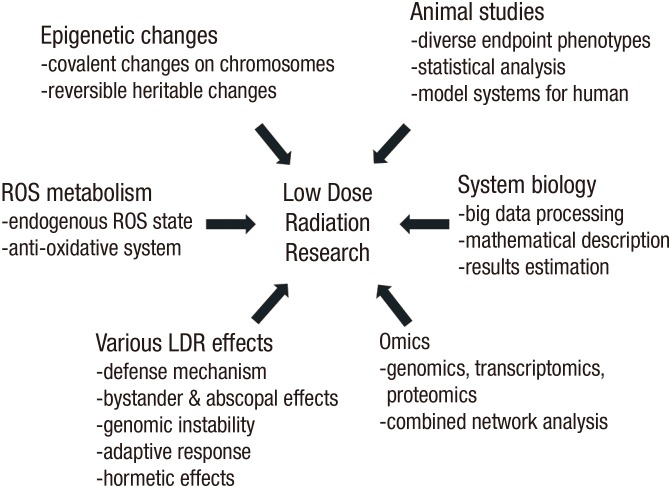
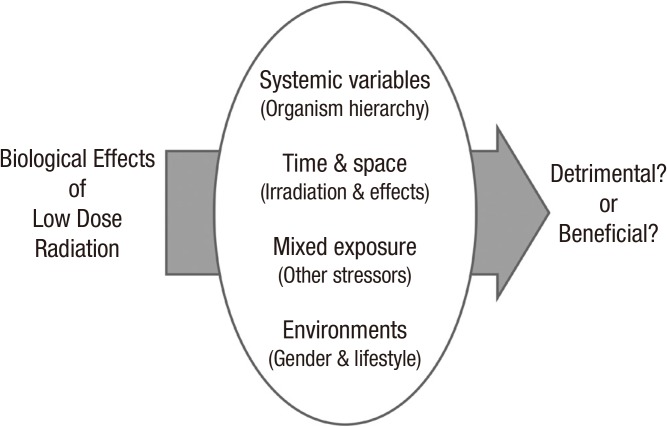
Inevitable human exposure to ionizing radiation from man-made sources has been increased with the proceeding of human civilization and consequently public concerns focus on the possible risk to human health. Moreover, Fukushima nuclear power plant accidents after the 2011 East-Japan earthquake and tsunami has brought the great fear and anxiety for the exposure of radiation at low levels, even much lower levels similar to natural background. Health effects of low dose radiation less than 100 mSv have been debated whether they are beneficial or detrimental because sample sizes were not large enough to allow epidemiological detection of excess effects and there was lack of consistency among the available experimental data. We have reviewed an extensive literature on the low dose radiation effects in both radiation biology and epidemiology, and highlighted some of the controversies therein. This article could provide a reasonable view of utilizing radiation for human life and responding to the public questions about radiation risk. In addition, it suggests the necessity of integrated studies of radiobiology and epidemiology at the national level in order to collect more systematic and profound information about health effects of low dose radiation.
随着人类文明的发展,人类不可避免地会接触到来自人造源的电离辐射,因此公众关注的焦点集中在对人类健康可能产生的风险上。此外,2011年东日本地震和海啸后发生的福岛核电站事故,引发了人们对低水平辐射暴露的巨大恐惧和焦虑,甚至是与自然本底相当的更低水平辐射。低于100毫希沃特的低剂量辐射对健康的影响,一直存在有益还是有害的争论,因为样本量不够大,无法通过流行病学检测到额外影响,而且现有实验数据之间缺乏一致性。我们回顾了大量关于辐射生物学和流行病学中低剂量辐射影响的文献,并强调了其中的一些争议。本文可为利用辐射改善人类生活以及回应公众关于辐射风险的问题提供合理的观点。此外,它还表明有必要在国家层面开展放射生物学和流行病学的综合研究,以便收集关于低剂量辐射对健康影响的更系统、更深入的信息。