Escobar Luis E, Qiao Huijie, Peterson A Townsend
Veterinary Population Medicine, College of Veterinary Medicine, University of Minnesota, St. Paul, MN, USA.
Minnesota Aquatic Invasive Species Research Center, University of Minnesota, St. Paul, MN, USA.
Parasit Vectors. 2016 Feb 29;9:112. doi: 10.1186/s13071-016-1403-y.
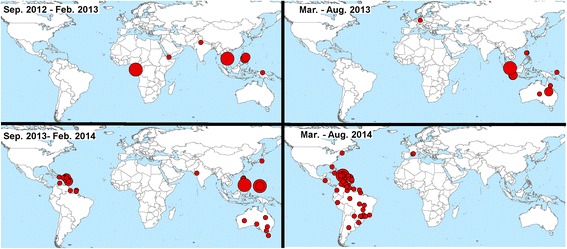
Chikungunya virus (CHIKV) is endemic to Africa and Asia, but the Asian genotype invaded the Americas in 2013. The fast increase of human infections in the American epidemic emphasized the urgency of developing detailed predictions of case numbers and the potential geographic spread of this disease.
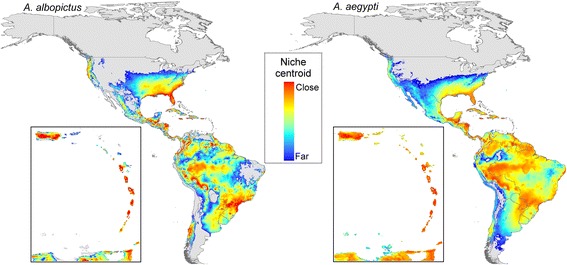
We developed a simple model incorporating cases generated locally and cases imported from other countries, and forecasted transmission hotspots at the level of countries and at finer scales, in terms of ecological features.
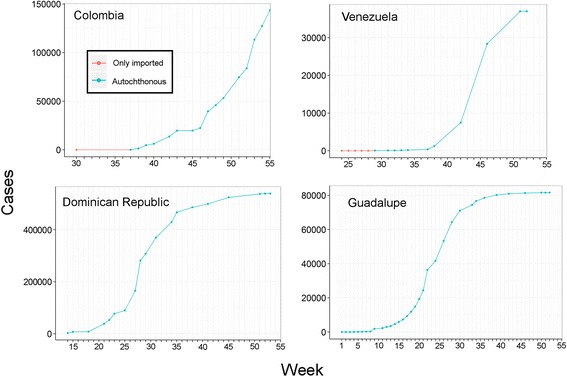
By late January 2015, >1.2 M CHIKV cases were reported from the Americas, with country-level prevalences between nil and more than 20 %. In the early stages of the epidemic, exponential growth in case numbers was common; later, however, poor and uneven reporting became more common, in a phenomenon we term "surveillance fatigue." Economic activity of countries was not associated with prevalence, but diverse social factors may be linked to surveillance effort and reporting.
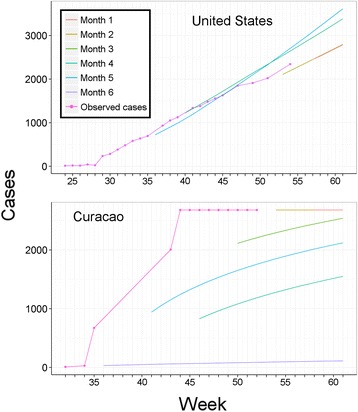
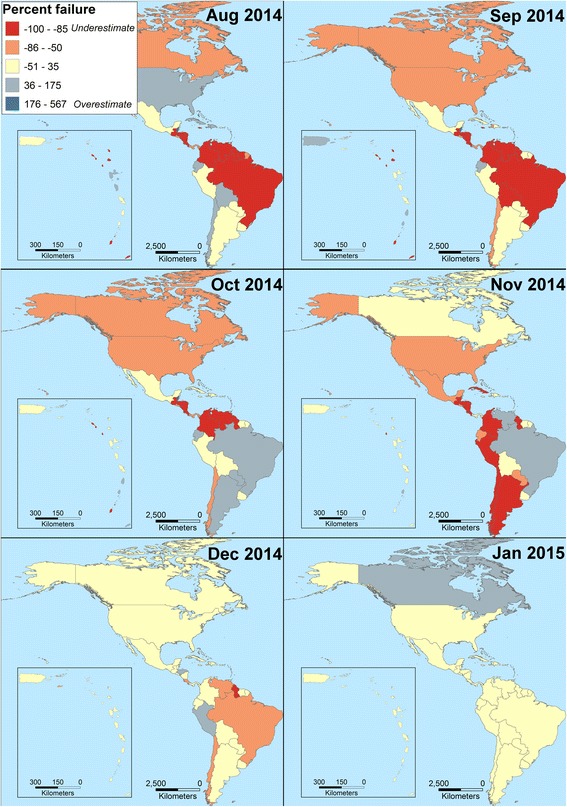
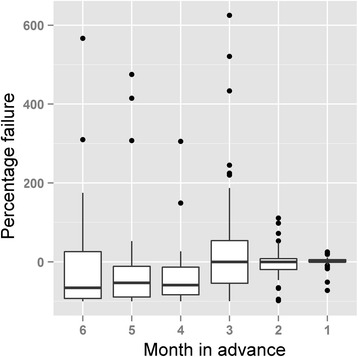
Our model predictions were initially quite inaccurate, but improved markedly as more data accumulated within the Americas. The data-driven methodology explored in this study provides an opportunity to generate descriptive and predictive information on spread of emerging diseases in the short-term under simple models based on open-access tools and data that can inform early-warning systems and public health intelligence.
基孔肯雅病毒(CHIKV)在非洲和亚洲为地方性流行,但亚洲基因型于2013年侵入美洲。美洲疫情中人类感染的快速增加凸显了详细预测病例数及该疾病潜在地理传播范围的紧迫性。
我们开发了一个简单模型,纳入本地产生的病例和从其他国家输入的病例,并根据生态特征在国家层面及更精细尺度上预测传播热点地区。
截至2015年1月底,美洲报告的基孔肯雅病毒病例超过120万例,各国的患病率从无到超过20%不等。在疫情早期,病例数呈指数增长较为常见;然而,后来报告不足和不均衡的情况变得更为普遍,我们将这种现象称为“监测疲劳”。各国的经济活动与患病率无关,但多种社会因素可能与监测工作和报告情况有关。
我们的模型预测最初相当不准确,但随着美洲积累了更多数据,预测准确性显著提高。本研究中探索的数据驱动方法提供了一个机会,可在基于开放获取工具和数据的简单模型下,短期内生成有关新发疾病传播的描述性和预测性信息,为早期预警系统和公共卫生情报提供参考。