Twente Water Centre, University of Twente, Drienerlolaan 5, 7522 NB Enschede, Netherlands.
Sci Adv. 2016 Feb 12;2(2):e1500323. doi: 10.1126/sciadv.1500323. eCollection 2016 Feb.
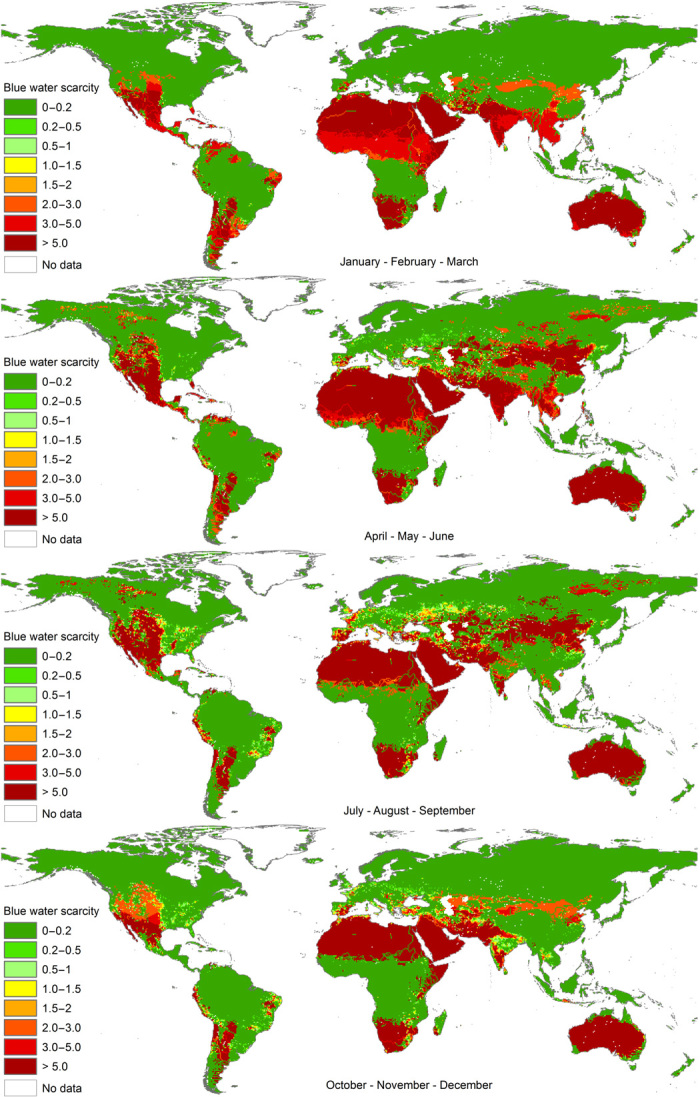
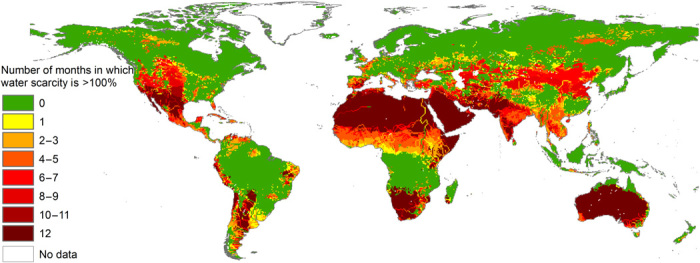
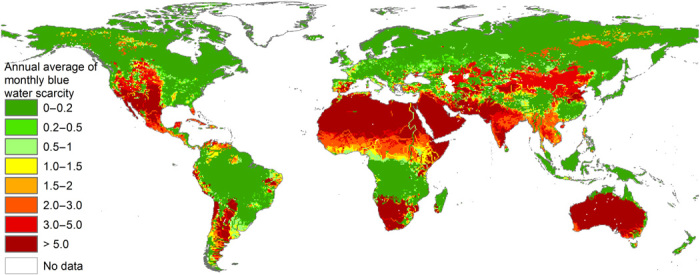
Freshwater scarcity is increasingly perceived as a global systemic risk. Previous global water scarcity assessments, measuring water scarcity annually, have underestimated experienced water scarcity by failing to capture the seasonal fluctuations in water consumption and availability. We assess blue water scarcity globally at a high spatial resolution on a monthly basis. We find that two-thirds of the global population (4.0 billion people) live under conditions of severe water scarcity at least 1 month of the year. Nearly half of those people live in India and China. Half a billion people in the world face severe water scarcity all year round. Putting caps to water consumption by river basin, increasing water-use efficiencies, and better sharing of the limited freshwater resources will be key in reducing the threat posed by water scarcity on biodiversity and human welfare.
淡水短缺正日益被视为一种全球性的系统性风险。之前的全球水资源短缺评估每年进行一次,由于未能捕捉到水资源消耗和供应的季节性波动,从而低估了实际面临的水资源短缺情况。我们以高空间分辨率每月评估全球范围内的蓝水短缺情况。我们发现,全球三分之二的人口(40 亿人)每年至少有 1 个月处于严重缺水状态。其中近一半人口生活在印度和中国。全球有 5 亿人全年面临严重的水资源短缺。通过流域限制用水、提高用水效率和更好地共享有限的淡水资源,将是减少水资源短缺对生物多样性和人类福祉造成威胁的关键。