Spasojevic Nada, Vasilj Ivan, Hrabac Boris, Celik Damir
Faculty of Health Sciences, University of Mostar, Mostar, Bosnia and Herzegovina.
Faculty of Health Sciences, University of Mostar, Mostar, Bosnia and Herzegovina; Faculty of Medicine, University of Mostar, Mostar, Bosnia and Herzegovina.
Mater Sociomed. 2015 Dec;27(6):409-11. doi: 10.5455/msm.2015.27.409-411.
To determine the rural-urban differences in primary care practice, hospital inpatient care and total services.
This cross-sectional study used data from Zenica-Doboj Canton in Federation of Bosnia and Herzegovina (FBiH). The overall sample size for the study was 1,995. Individual interviews were conducted in one randomly selected day of the week, except Monday and Friday, on the basis of EUROPEP (European Task Force on Patient Evaluations of General Practice Care) standardized questionnaire.
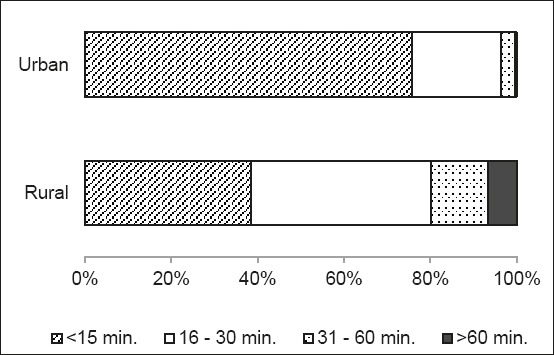
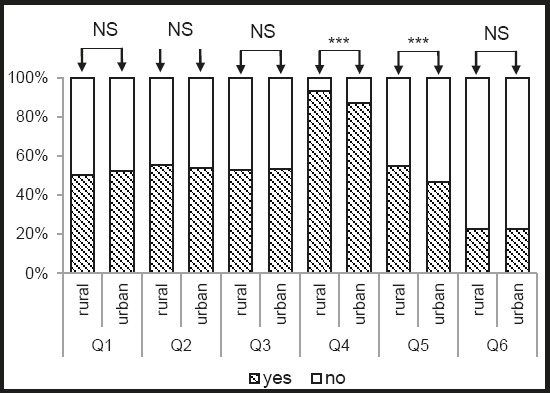
Out of total number (n=1 995), 47.9% was urban population and median of age was 42 years for both populations. The most of urban residents (81.4%) had finished high school or higher education compared with rural residents (58.5%) (p < 0.001). There are significant differences in employment status between rural and urban population (p < 0.001). Rural residents are more likely to travel more than 15 minutes to see their health facilities compared with urban residents (61.7% vs. 24.4%, respectively). Median of distance (kilometers) from residence location to the nearest hospital was statistically significantly higher in rural Me = 8.0 (5.0 do 14.5) km compared to urban population Me = 1.5 (1.0 to 3.0) km (p < 0.001). The rural population was more likely to buy drugs for medical treatment (p < 0.001) and parenteral injections in primary care practice (p < 0.001).
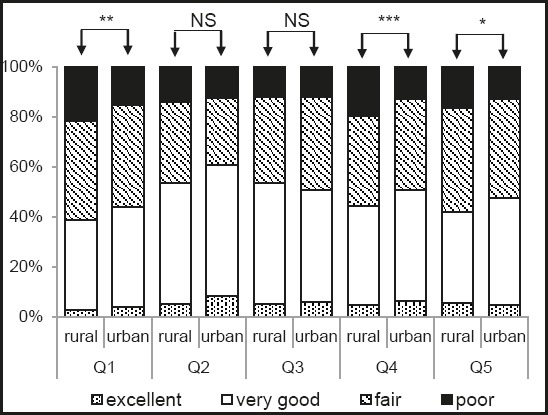
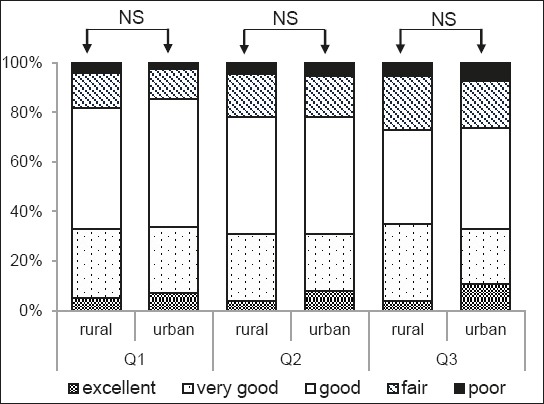
There are significant differences in the overall health care assessment of rural populations as compared to urban populations.
确定初级保健服务、医院住院治疗及整体医疗服务中的城乡差异。
本横断面研究使用了波斯尼亚和黑塞哥维那联邦泽尼察-多博伊县的数据。研究的总样本量为1995人。除周一和周五外,在一周中随机选择的一天,根据欧洲全科医疗患者评估工作组(EUROPEP)的标准化问卷进行个人访谈。
在总数(n = 1995)中,47.9%为城市人口,两个群体的年龄中位数均为42岁。与农村居民(58.5%)相比,大多数城市居民(81.4%)完成了高中或更高层次的教育(p < 0.001)。农村和城市人口的就业状况存在显著差异(p < 0.001)。与城市居民相比,农村居民前往医疗设施就诊的路途时间更有可能超过15分钟(分别为61.7%和24.4%)。从居住地点到最近医院的距离中位数(公里)在农村地区为Me = 8.0(5.0至14.5)公里,显著高于城市人口的Me = 1.5(1.0至3.0)公里(p < 0.001)。农村人口在初级保健服务中购买药物治疗(p < 0.001)和接受非肠道注射(p < 0.001)的可能性更大。
与城市人口相比,农村人口的整体医疗保健评估存在显著差异。