Jurašin Darija Domazet, Ćurlin Marija, Capjak Ivona, Crnković Tea, Lovrić Marija, Babič Michal, Horák Daniel, Vinković Vrček Ivana, Gajović Srećko
Division of Physical Chemistry, Ruđer Bošković Institute, Bijenička cesta 54, 10 000 Zagreb, Croatia.
School of Medicine, Croatian Institute for Brain Research, University of Zagreb, Šalata 3, 10 000 Zagreb, Croatia.
Beilstein J Nanotechnol. 2016 Feb 15;7:246-62. doi: 10.3762/bjnano.7.23. eCollection 2016.
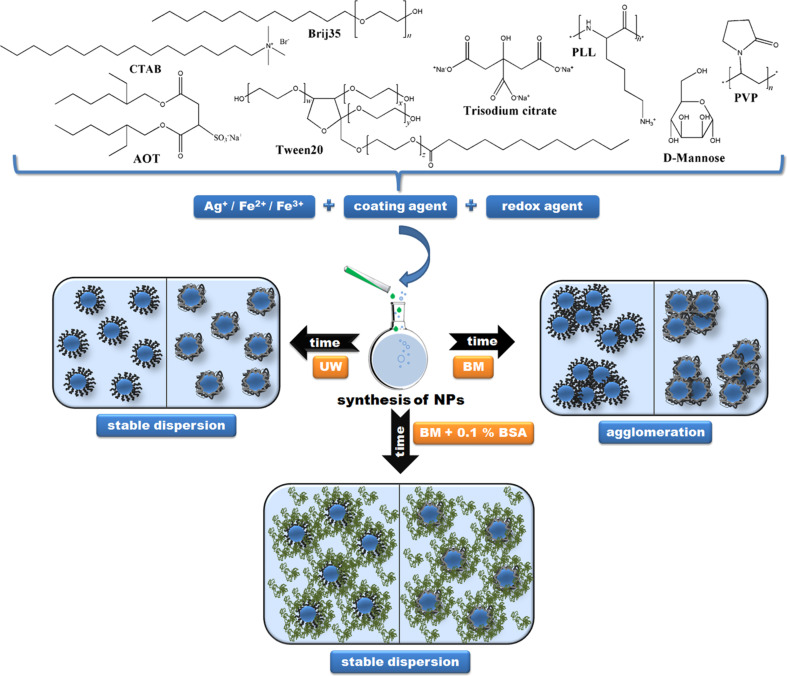
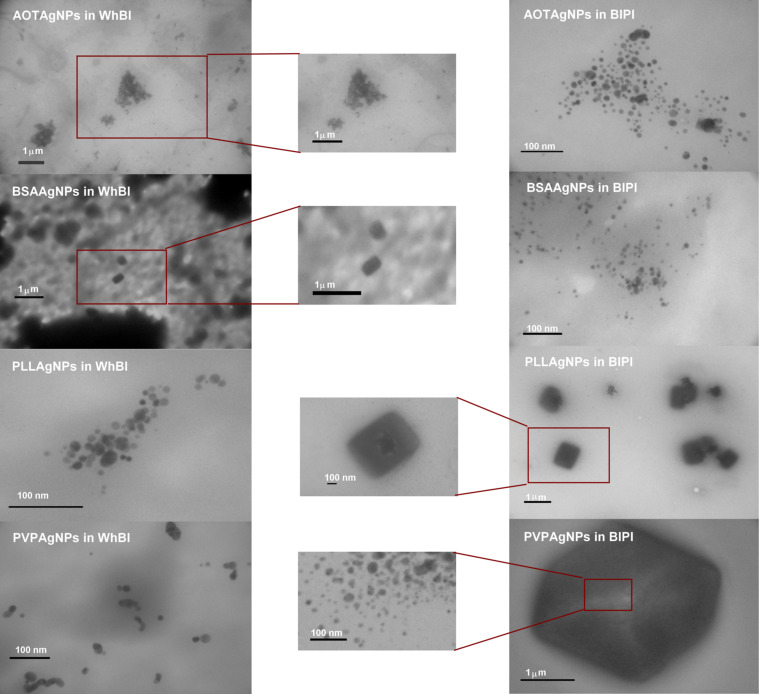
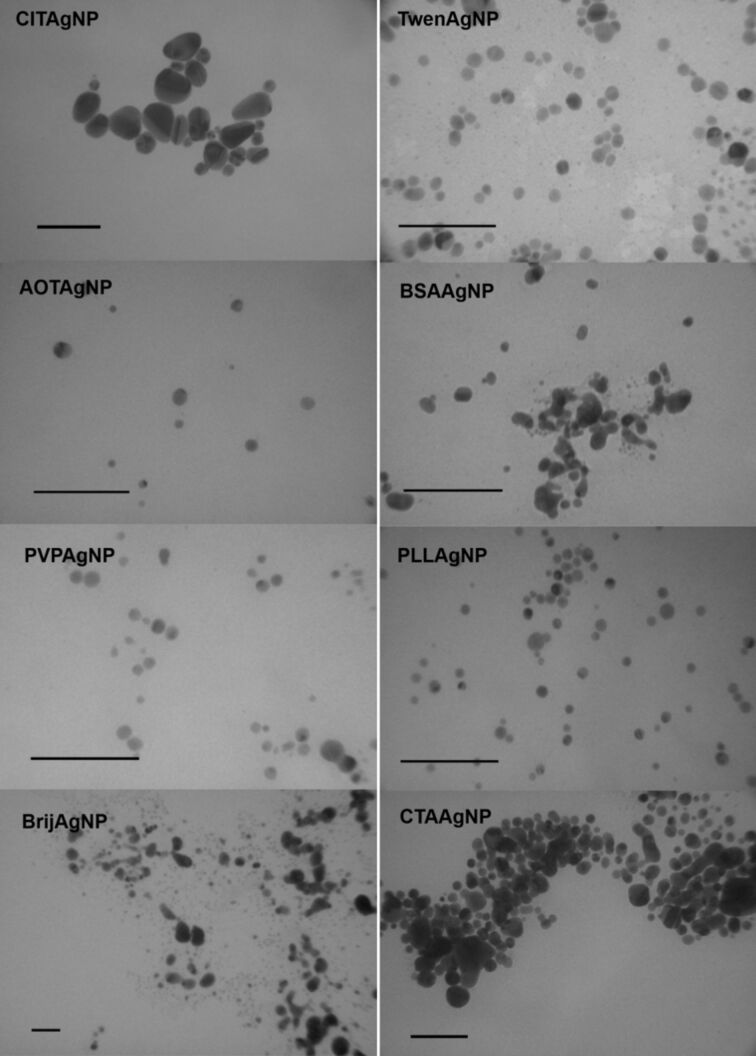
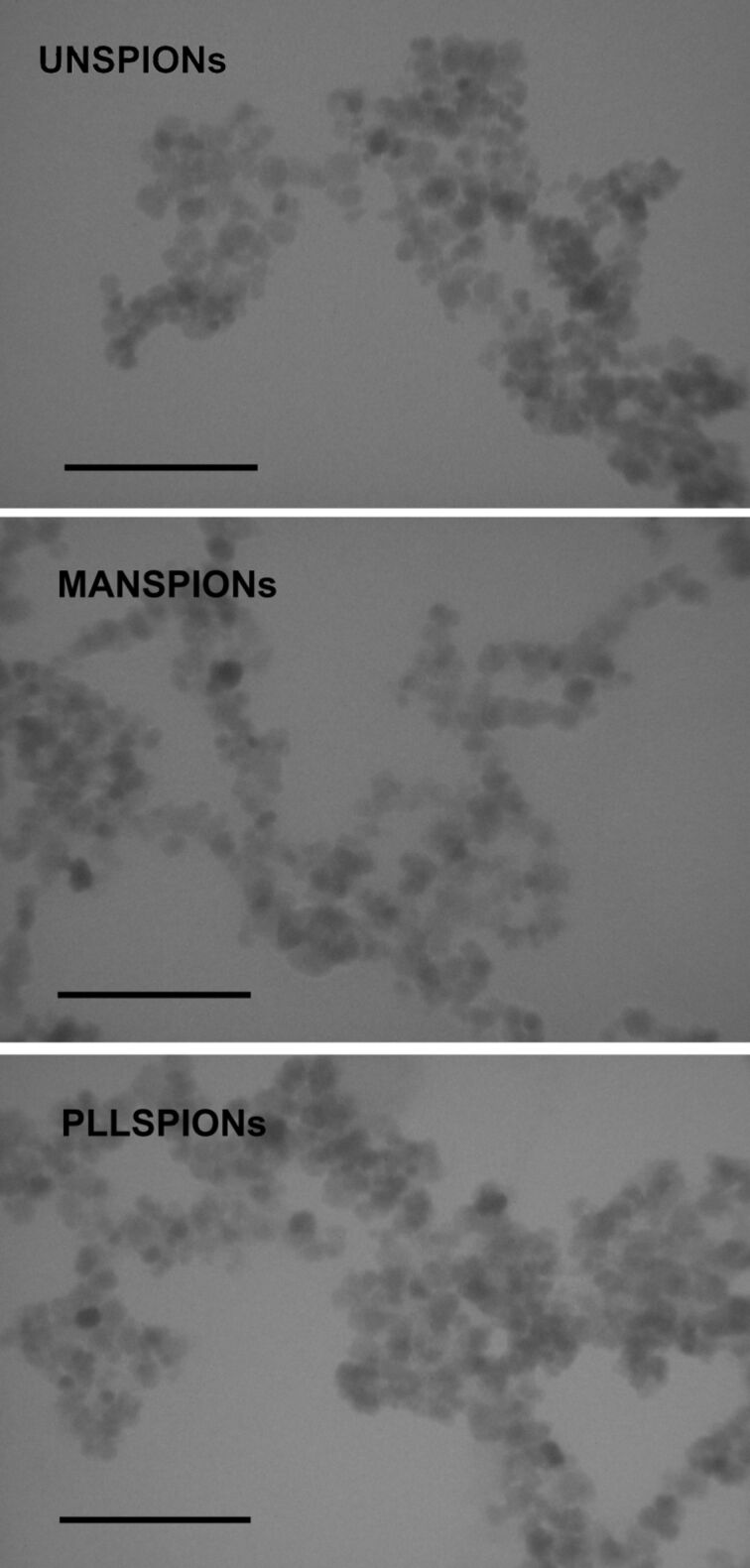
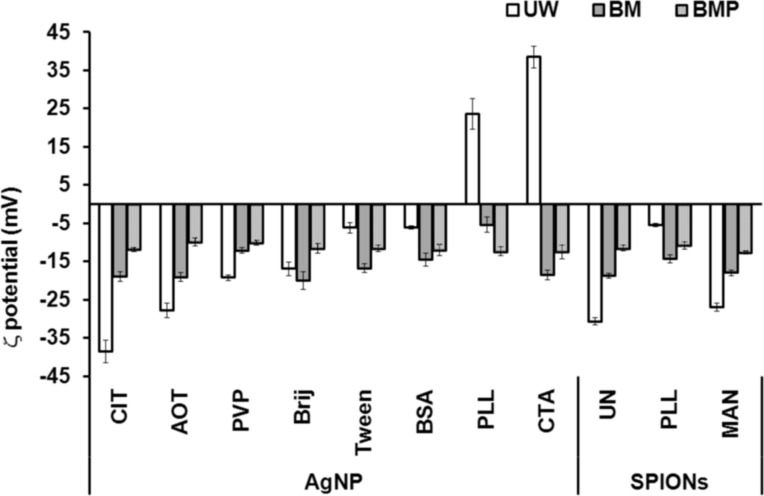
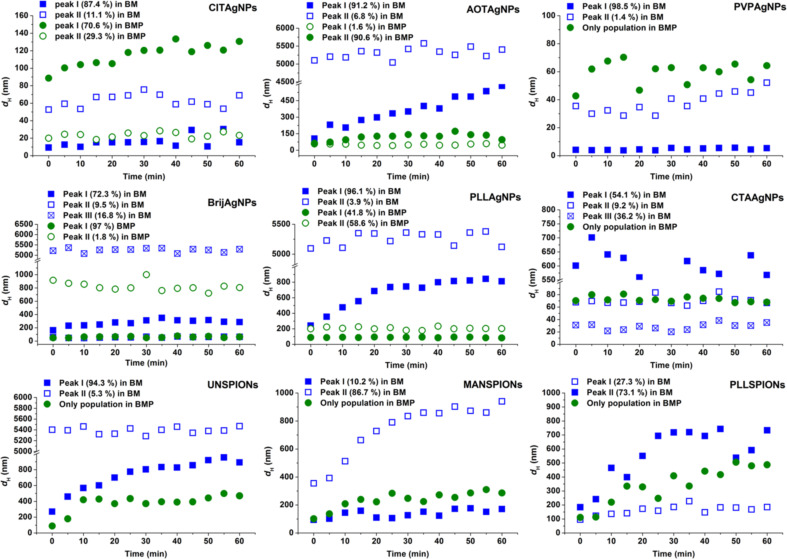
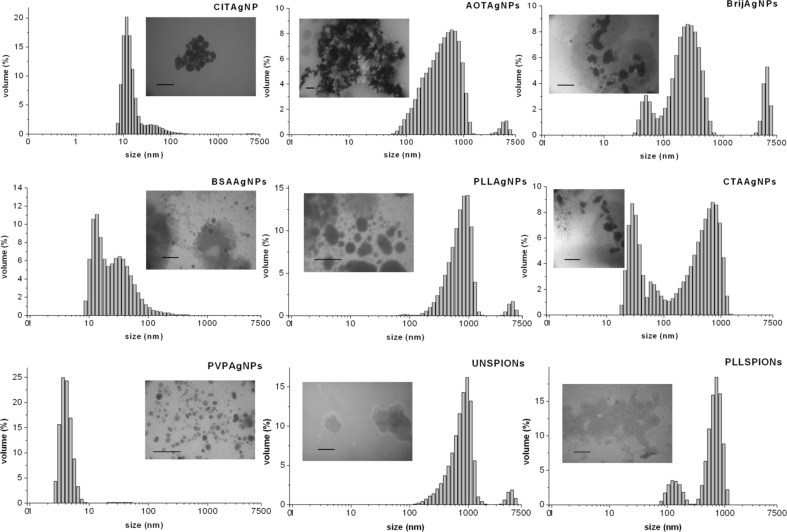
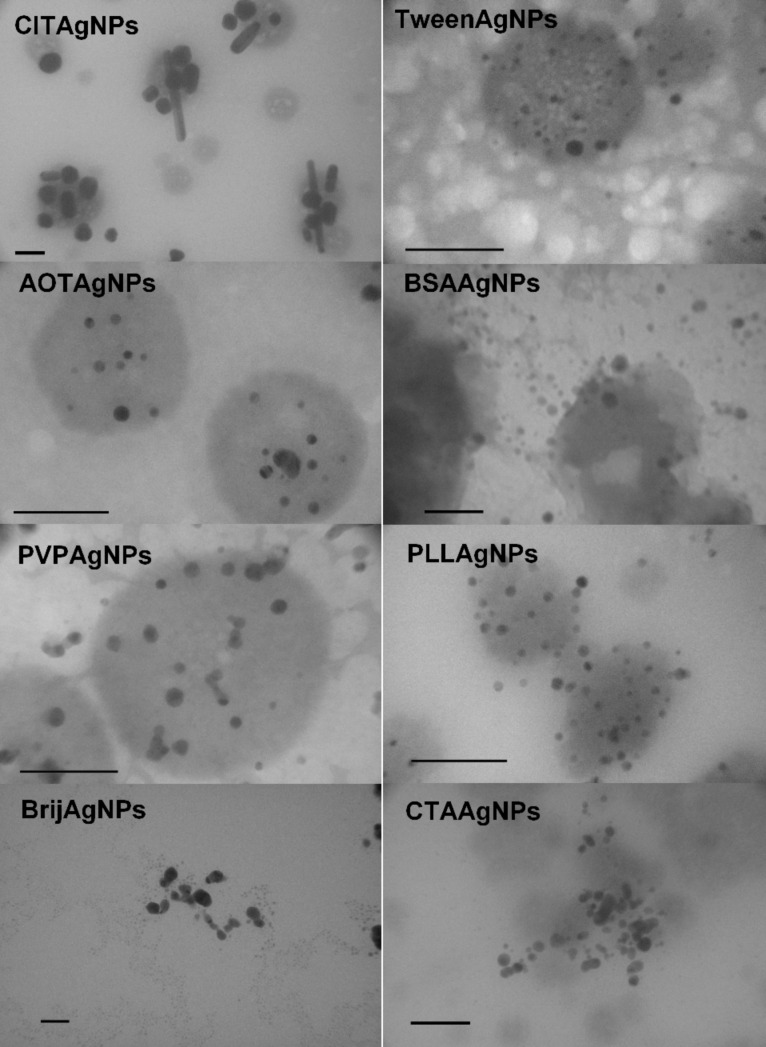
Silver (AgNPs) and maghemite, i.e., superparamagnetic iron oxide nanoparticles (SPIONs) are promising candidates for new medical applications, which implies the need for strict information regarding their physicochemical characteristics and behavior in a biological environment. The currently developed AgNPs and SPIONs encompass a myriad of sizes and surface coatings, which affect NPs properties and may improve their biocompatibility. This study is aimed to evaluate the effects of surface coating on colloidal stability and behavior of AgNPs and SPIONs in modelled biological environments using dynamic and electrophoretic light scattering techniques, as well as transmission electron microscopy to visualize the behavior of the NP. Three dispersion media were investigated: ultrapure water (UW), biological cell culture medium without addition of protein (BM), and BM supplemented with common serum protein (BMP). The obtained results showed that different coating agents on AgNPs and SPIONs produced different stabilities in the same biological media. The combination of negative charge and high adsorption strength of coating agents proved to be important for achieving good stability of metallic NPs in electrolyte-rich fluids. Most importantly, the presence of proteins provided colloidal stabilization to metallic NPs in biological fluids regardless of their chemical composition, surface structure and surface charge. In addition, an assessment of AgNP and SPION behavior in real biological fluids, rat whole blood (WhBl) and blood plasma (BlPl), revealed that the composition of a biological medium is crucial for the colloidal stability and type of metallic NP transformation. Our results highlight the importance of physicochemical characterization and stability evaluation of metallic NPs in a variety of biological systems including as many NP properties as possible.
银(AgNPs)和磁赤铁矿,即超顺磁性氧化铁纳米颗粒(SPIONs),是新型医学应用的有潜力的候选材料,这意味着需要有关其物理化学特性以及在生物环境中行为的严格信息。目前开发的AgNPs和SPIONs有各种各样的尺寸和表面涂层,这会影响纳米颗粒的性质,并可能提高其生物相容性。本研究旨在使用动态光散射和电泳光散射技术以及透射电子显微镜来观察纳米颗粒的行为,以评估表面涂层对AgNPs和SPIONs在模拟生物环境中的胶体稳定性和行为的影响。研究了三种分散介质:超纯水(UW)、不添加蛋白质的生物细胞培养基(BM)以及添加了常见血清蛋白的BM(BMP)。所得结果表明,AgNPs和SPIONs上不同的涂层剂在相同的生物介质中产生不同的稳定性。涂层剂的负电荷和高吸附强度的组合被证明对于在富含电解质的流体中实现金属纳米颗粒的良好稳定性很重要。最重要的是,无论金属纳米颗粒的化学成分、表面结构和表面电荷如何,蛋白质的存在都能为生物流体中的金属纳米颗粒提供胶体稳定性。此外,对AgNP和SPION在真实生物流体、大鼠全血(WhBl)和血浆(BlPl)中的行为评估表明,生物介质的组成对于胶体稳定性和金属纳米颗粒转化的类型至关重要。我们的结果强调了在包括尽可能多的纳米颗粒性质的各种生物系统中对金属纳米颗粒进行物理化学表征和稳定性评估的重要性。