• 文献检索
  • 文档翻译
  • 深度研究
  • 学术资讯
  • Suppr Zotero 插件Zotero 插件
  • 邀请有礼
  • 套餐&价格
  • 历史记录
应用&插件
Suppr Zotero 插件Zotero 插件浏览器插件Mac 客户端Windows 客户端微信小程序
定价
高级版会员购买积分包购买API积分包
服务
文献检索文档翻译深度研究API 文档MCP 服务
关于我们
关于 Suppr公司介绍联系我们用户协议隐私条款
关注我们

Suppr 超能文献

核心技术专利:CN118964589B侵权必究
粤ICP备2023148730 号-1Suppr @ 2026

文献检索

告别复杂PubMed语法,用中文像聊天一样搜索,搜遍4000万医学文献。AI智能推荐,让科研检索更轻松。

立即免费搜索

文件翻译

保留排版,准确专业,支持PDF/Word/PPT等文件格式,支持 12+语言互译。

免费翻译文档

深度研究

AI帮你快速写综述,25分钟生成高质量综述,智能提取关键信息,辅助科研写作。

立即免费体验

光动力疗法对金黄色葡萄球菌毒力因子的影响

Effect of Photodynamic Therapy on the Virulence Factors of Staphylococcus aureus.

作者信息

Bartolomeu Maria, Rocha Sónia, Cunha Ângela, Neves M G P M S, Faustino Maria A F, Almeida Adelaide

机构信息

Departamento de Biologia and Centro de Estudos do Ambiente e do Mar, University of Aveiro Aveiro, Portugal.

Departamento de Química and Unidade de Investigação em Química Orgânica, Produtos Naturais e Agroalimentares, University of Aveiro Aveiro, Portugal.

出版信息

Front Microbiol. 2016 Mar 7;7:267. doi: 10.3389/fmicb.2016.00267. eCollection 2016.

DOI:10.3389/fmicb.2016.00267
PMID:27014198
原文链接:https://pmc.ncbi.nlm.nih.gov/articles/PMC4780358/
Abstract

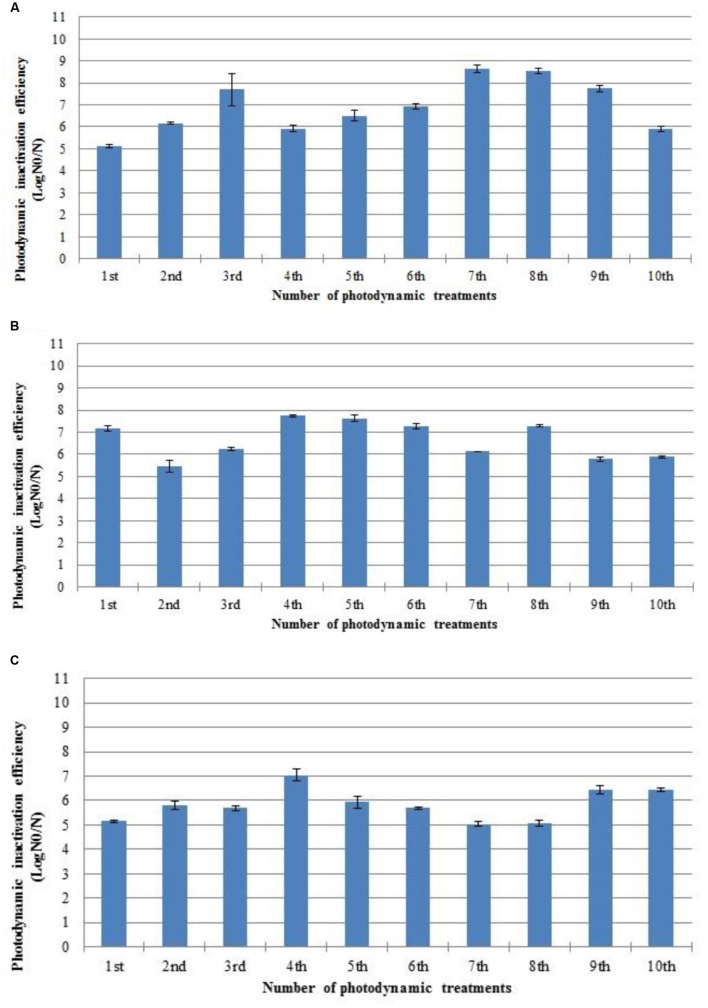
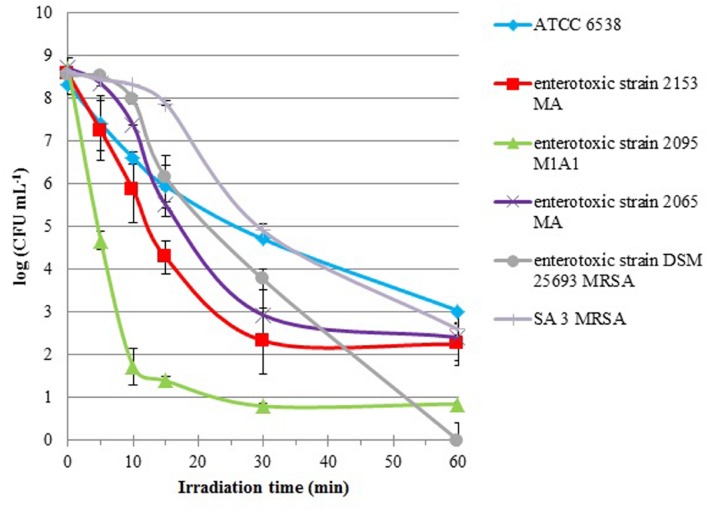
Staphylococcus aureus is a Gram-positive bacterium that is present in the human microbiota. Nevertheless, these bacteria can be pathogenic to the humans. Due to the increasing occurrence of antibiotic-resistant S. aureus strains, new approaches to control this pathogen are necessary. The antimicrobial photodynamic inactivation (PDI) process is based in the combined use of light, oxygen, and an intermediary agent (a photosensitizer). These three components interact to generate cytotoxic reactive oxygen species that irreversibly damage vital constituents of the microbial cells and ultimately lead to cell death. Although PDI is being shown to be a promising alternative to the antibiotic approach for the inactivation of pathogenic microorganisms, information on effects of photosensitization on particular virulence factors is strikingly scarce. The objective of this work was to evaluate the effect of PDI on virulence factors of S. aureus and to assess the potential development of resistance of this bacterium as well as the recovery of the expression of the virulence factors after successive PDI cycles. For this, the photosensitizer 5,10,15,20-tetrakis(1-methylpyridinium-4-yl)porphyrin tetra-iodide (Tetra-Py(+)-Me) and six strains of S. aureus [one reference strain, one strain with one enterotoxin, two strains with three enterotoxins and two methicillin resistant strains (MRSA) - one with five enterotoxins and the other without enterotoxins] were used. The effect of photosensitization on catalase activity, beta hemolysis, lipases, thermonuclease, enterotoxins, coagulase production, and resistance/susceptibility to methicillin was tested. To assess the development of resistance after successive cycles of treatment, three strains of S. aureus (ATCC 6538, 2065 MA, and SA 3 MRSA) were used. The surviving colonies of a first cycle of PDI were collected from the solid medium and subjected to further nine consecutive cycles of PDI. The results indicate that the expression of some external virulence factors is affected by PDI and enterotoxin producing strains were more susceptible to PDI than non-toxigenic strains. The surviving bacteria did not develop resistance. PDI, contrarily to traditional antibiotics, inhibited the expression of virulence factors, efficiently inactivating either highly virulent strains and low virulent S. aureus strains, inactivating also antibiotic susceptible and resistant strains, without development of photoresistance after at least 10 consecutive cycles of treatment, and so this therapy may become a strong promising alternative to antibiotics to control pathogenic microorganisms.

摘要

金黄色葡萄球菌是一种存在于人类微生物群中的革兰氏阳性细菌。然而,这些细菌可能对人类致病。由于耐抗生素金黄色葡萄球菌菌株的出现日益增多,因此需要新的方法来控制这种病原体。抗菌光动力灭活(PDI)过程基于光、氧和一种中间剂(一种光敏剂)的联合使用。这三种成分相互作用产生细胞毒性活性氧,不可逆地损伤微生物细胞的重要成分,最终导致细胞死亡。尽管PDI已被证明是一种有前景的替代抗生素方法用于灭活致病微生物,但关于光致敏对特定毒力因子影响的信息却极为匮乏。这项工作的目的是评估PDI对金黄色葡萄球菌毒力因子的影响,并评估该细菌耐药性的潜在发展以及在连续PDI循环后毒力因子表达的恢复情况。为此,使用了光敏剂5,10,15,20-四(1-甲基吡啶鎓-4-基)卟啉四碘化物(四吡啶(+)-甲基)和六株金黄色葡萄球菌[一株参考菌株、一株产一种肠毒素的菌株、两株产三种肠毒素的菌株以及两株耐甲氧西林菌株(MRSA)——一株产五种肠毒素,另一株不产肠毒素]。测试了光致敏对过氧化氢酶活性、β溶血、脂肪酶、耐热核酸酶、肠毒素、凝固酶产生以及对甲氧西林的耐药性/敏感性的影响。为了评估连续治疗循环后耐药性的发展,使用了三株金黄色葡萄球菌(ATCC 6538、2065 MA和SA 3 MRSA)。从固体培养基中收集第一个PDI循环的存活菌落,并对其进行另外九个连续的PDI循环。结果表明,一些外部毒力因子的表达受PDI影响,产肠毒素菌株比不产毒菌株对PDI更敏感。存活的细菌未产生耐药性。与传统抗生素相反,PDI抑制毒力因子的表达,能有效灭活高毒力菌株和低毒力金黄色葡萄球菌菌株,也能灭活抗生素敏感和耐药菌株,在至少连续10个治疗循环后未产生光耐药性,因此这种疗法可能成为控制致病微生物的一种非常有前景的替代抗生素的方法。
https://cdn.ncbi.nlm.nih.gov/pmc/blobs/e8c1/4780358/110fe7d30f0a/fmicb-07-00267-g002.jpg
https://cdn.ncbi.nlm.nih.gov/pmc/blobs/e8c1/4780358/f9d5f3a720fb/fmicb-07-00267-g001.jpg
https://cdn.ncbi.nlm.nih.gov/pmc/blobs/e8c1/4780358/110fe7d30f0a/fmicb-07-00267-g002.jpg
https://cdn.ncbi.nlm.nih.gov/pmc/blobs/e8c1/4780358/f9d5f3a720fb/fmicb-07-00267-g001.jpg
https://cdn.ncbi.nlm.nih.gov/pmc/blobs/e8c1/4780358/110fe7d30f0a/fmicb-07-00267-g002.jpg

相似文献

1
Effect of Photodynamic Therapy on the Virulence Factors of Staphylococcus aureus.光动力疗法对金黄色葡萄球菌毒力因子的影响
Front Microbiol. 2016 Mar 7;7:267. doi: 10.3389/fmicb.2016.00267. eCollection 2016.
2
Superoxide dismutase is upregulated in Staphylococcus aureus following protoporphyrin-mediated photodynamic inactivation and does not directly influence the response to photodynamic treatment.超氧化物歧化酶在原卟啉介导的光动力失活后在金黄色葡萄球菌中上调,并且不会直接影响对光动力处理的反应。
BMC Microbiol. 2010 Dec 17;10:323. doi: 10.1186/1471-2180-10-323.
3
Multiresistant strains are as susceptible to photodynamic inactivation as their naïve counterparts: protoporphyrin IX-mediated photoinactivation reveals differences between methicillin-resistant and methicillin-sensitive Staphylococcus aureus strains.多重耐药菌株与其未接触过抗菌药物的对应菌株对光动力失活同样敏感:原卟啉IX介导的光失活揭示了耐甲氧西林金黄色葡萄球菌菌株和甲氧西林敏感金黄色葡萄球菌菌株之间的差异。
Photomed Laser Surg. 2014 Mar;32(3):121-9. doi: 10.1089/pho.2013.3663. Epub 2014 Feb 14.
4
Photodynamic inactivation of Staphylococcus aureus and methicillin-resistant Staphylococcus aureus with Ru(II)-based type I/type II photosensitizers.基于 Ru(II)的 I/II 型光敏剂对金黄色葡萄球菌和耐甲氧西林金黄色葡萄球菌的光动力灭活作用。
Photodiagnosis Photodyn Ther. 2013 Dec;10(4):615-25. doi: 10.1016/j.pdpdt.2013.07.001. Epub 2013 Aug 5.
5
Target-oriented photofunctional nanoparticles (TOPFNs) for selective photodynamic inactivation of Methicillin-resistant Staphylococcus aureus (MRSA).靶向光功能纳米颗粒 (TOPFNs) 用于选择性光动力灭活耐甲氧西林金黄色葡萄球菌 (MRSA)。
J Photochem Photobiol B. 2018 Jun;183:184-190. doi: 10.1016/j.jphotobiol.2018.04.037. Epub 2018 Apr 24.
6
Evaluation of resistance development and viability recovery by toxigenic and non-toxigenic Staphylococcus aureus strains after repeated cycles of high hydrostatic pressure.高压重复循环后产毒和非产毒金黄色葡萄球菌菌株的耐药性发展和生存能力恢复评估。
Food Microbiol. 2015 Apr;46:515-520. doi: 10.1016/j.fm.2014.09.016. Epub 2014 Oct 7.
7
Occurrence and characteristics of methicillin-resistant and -susceptible Staphylococcus aureus and methicillin-resistant coagulase-negative staphylococci from Japanese retail ready-to-eat raw fish.日本零售即食生鱼片中外源凝固酶阴性葡萄球菌和耐甲氧西林凝固酶阴性葡萄球菌及耐甲氧西林金黄色葡萄球菌的发生和特征
Int J Food Microbiol. 2012 Jun 1;156(3):286-9. doi: 10.1016/j.ijfoodmicro.2012.03.022. Epub 2012 Mar 28.
8
Effects of toluidine blue O (TBO)-photodynamic inactivation on community-associated methicillin-resistant Staphylococcus aureus isolates.甲苯胺蓝 O(TBO)光动力灭活对社区相关耐甲氧西林金黄色葡萄球菌分离株的影响。
J Microbiol Immunol Infect. 2017 Feb;50(1):46-54. doi: 10.1016/j.jmii.2014.12.007. Epub 2015 Jan 10.
9
Bactericidal effect of photodynamic inactivation against methicillin-resistant and methicillin-susceptible Staphylococcus aureus is strain-dependent.光动力灭活对耐甲氧西林和甲氧西林敏感金黄色葡萄球菌的杀菌作用具有菌株依赖性。
J Photochem Photobiol B. 2008 Jan 30;90(1):57-63. doi: 10.1016/j.jphotobiol.2007.11.002. Epub 2007 Nov 13.
10
Comparative photodynamic inactivation of antibiotic resistant bacteria by first and second generation cationic photosensitizers.第一代和第二代阳离子型光动力敏化剂对耐抗生素细菌的光动力灭活比较。
Photochem Photobiol Sci. 2012 Dec;11(12):1905-13. doi: 10.1039/c2pp25113b.

引用本文的文献

1
Photodynamic Inactivation as a New Weapon Against Plant Fire Blight Disease: Proof of a New Dawn of Environmentally Friendly Crop Protection.光动力灭活作为对抗植物火疫病的新武器:环保作物保护新篇章的证明
J Agric Food Chem. 2025 Aug 13;73(32):19958-19973. doi: 10.1021/acs.jafc.5c02074. Epub 2025 Aug 1.
2
Clinical investigation of levels of lipopolysaccharides and lipoteichoic acid after antimicrobial photodynamic therapy in teeth with secondary endodontic infection: an observational study.抗菌光动力疗法治疗继发牙髓感染牙齿后脂多糖和脂磷壁酸水平的临床研究:一项观察性研究。
Lasers Med Sci. 2025 Jun 10;40(1):267. doi: 10.1007/s10103-025-04523-7.
3

本文引用的文献

1
Dye Sensitizers for Photodynamic Therapy.用于光动力疗法的染料敏化剂
Materials (Basel). 2013 Mar 6;6(3):817-840. doi: 10.3390/ma6030817.
2
Global antibacterial resistance: The never-ending story.全球抗菌药物耐药性:永无休止的故事。
J Glob Antimicrob Resist. 2013 Jun;1(2):63-69. doi: 10.1016/j.jgar.2013.03.010. Epub 2013 Apr 30.
3
Photodynamic inactivation of bacteria: finding the effective targets.细菌的光动力失活:寻找有效靶点。
Photoinactivation of Multidrug-Resistant -Positive Using PCPDTBT Conjugated Polymer Nanoparticles under White Light.
基于 PCPDTBT 共轭聚合物纳米粒子的白光下对多药耐药阳性菌的光灭活作用。
ACS Appl Bio Mater. 2024 Nov 18;7(11):7404-7412. doi: 10.1021/acsabm.4c01049. Epub 2024 Oct 18.
4
Can Porphyrin-Triphenylphosphonium Conjugates Enhance the Photosensitizer Performance Toward Bacterial Strains?卟啉-三苯基膦盐缀合物能否提高光动力杀菌效果?
ACS Appl Bio Mater. 2024 Aug 19;7(8):5541-5552. doi: 10.1021/acsabm.4c00659. Epub 2024 Jul 15.
5
Quenching of quorum sensing in multi-drug resistant Pseudomonas aeruginosa: insights on halo-bacterial metabolites and gamma irradiation as channels inhibitors.多药耐药铜绿假单胞菌群体感应淬灭:卤细菌代谢物和γ辐射作为通道抑制剂的见解。
Ann Clin Microbiol Antimicrob. 2024 Apr 10;23(1):31. doi: 10.1186/s12941-024-00684-5.
6
Photodynamic Action of Curcumin and Methylene Blue against Bacteria and SARS-CoV-2-A Review.姜黄素和亚甲蓝对细菌和新冠病毒的光动力作用——综述
Pharmaceuticals (Basel). 2023 Dec 25;17(1):34. doi: 10.3390/ph17010034.
7
A Combination of Blue Light at 460 nm and HO for the Safe and Effective Eradication of in an Infected Mouse Skin Abrasion Model.在感染小鼠皮肤擦伤模型中,460纳米蓝光与次氯酸联合用于安全有效地根除[此处原文缺失具体内容]
Microorganisms. 2023 Dec 8;11(12):2946. doi: 10.3390/microorganisms11122946.
8
Efficient Strategies to Use β-Cationic Porphyrin-Imidazolium Derivatives in the Photoinactivation of Methicillin-Resistant .高效策略:β-阳离子卟啉-咪唑衍生物在耐甲氧西林金黄色葡萄球菌光灭活中的应用。
Int J Mol Sci. 2023 Nov 4;24(21):15970. doi: 10.3390/ijms242115970.
9
Effect of 5-Aminolevulinic Acid Photodynamic Therapy on Aspergillus fumigatus Biofilms in Vitro.5-氨基酮戊酸光动力疗法对体外烟曲霉生物膜的影响。
Curr Microbiol. 2023 Sep 2;80(10):334. doi: 10.1007/s00284-023-03351-8.
10
Photoactivated Gallium Porphyrin Reduces Colonization on the Skin and Suppresses Its Ability to Produce Enterotoxin C and TSST-1.光活化镓卟啉减少皮肤定植并抑制其产生肠毒素C和TSST-1的能力。
Mol Pharm. 2023 Oct 2;20(10):5108-5124. doi: 10.1021/acs.molpharmaceut.3c00399. Epub 2023 Aug 31.
Future Med Chem. 2015;7(10):1221-4. doi: 10.4155/fmc.15.59.
4
Protein profiles of Escherichia coli and Staphylococcus warneri are altered by photosensitization with cationic porphyrins.用阳离子卟啉进行光致敏作用会改变大肠杆菌和沃氏葡萄球菌的蛋白质谱。
Photochem Photobiol Sci. 2015 Jun;14(6):1169-78. doi: 10.1039/c4pp00194j.
5
Some Virulence Factors of Staphylococci Isolated From Wound and Skin Infections in Shahrekord, IR Iran.从伊朗设拉子伤口和皮肤感染中分离出的葡萄球菌的一些毒力因子
Jundishapur J Microbiol. 2014 Apr;7(4):e9225. doi: 10.5812/jjm.9225. Epub 2014 Apr 1.
6
Photodynamic inactivation of bacterial and yeast biofilms with a cationic porphyrin.用阳离子卟啉对细菌和酵母生物膜进行光动力灭活
Photochem Photobiol. 2014 Nov-Dec;90(6):1387-96. doi: 10.1111/php.12331. Epub 2014 Sep 22.
7
Biofilm dispersion and quorum sensing.生物膜分散与群体感应。
Curr Opin Microbiol. 2014 Apr;18:96-104. doi: 10.1016/j.mib.2014.02.008. Epub 2014 Mar 20.
8
Photodynamic oxidation of Escherichia coli membrane phospholipids: new insights based on lipidomics.大肠杆菌膜磷脂的光动力氧化:基于脂质组学的新见解。
Rapid Commun Mass Spectrom. 2013 Dec 15;27(23):2717-28. doi: 10.1002/rcm.6739.
9
Photodynamic inactivation of multidrug-resistant bacteria in hospital wastewaters: influence of residual antibiotics.医院废水中多重耐药菌的光动力灭活:残留抗生素的影响
Photochem Photobiol Sci. 2014 Apr;13(4):626-33. doi: 10.1039/c3pp50195g.
10
An insight on bacterial cellular targets of photodynamic inactivation.光动力灭活的细菌细胞靶标研究进展。
Future Med Chem. 2014 Feb;6(2):141-64. doi: 10.4155/fmc.13.211.