He Fan, Hua Lu, Gao Li-Jian
Department of Mechanics, School of Science, Beijing University of Civil Engineering and Architecture, Beijing 100044, China.
Key Laboratory of Clinical Trial Research in Cardiovascular Drugs, Ministry of Health, Fuwai Hospital, National Center for Cardiovascular Diseases, Chinese Academy of Medical Sciences, and Peking Union Medical College, Beijing 100037, China.
Appl Bionics Biomech. 2015;2015:213236. doi: 10.1155/2015/213236. Epub 2015 Mar 16.
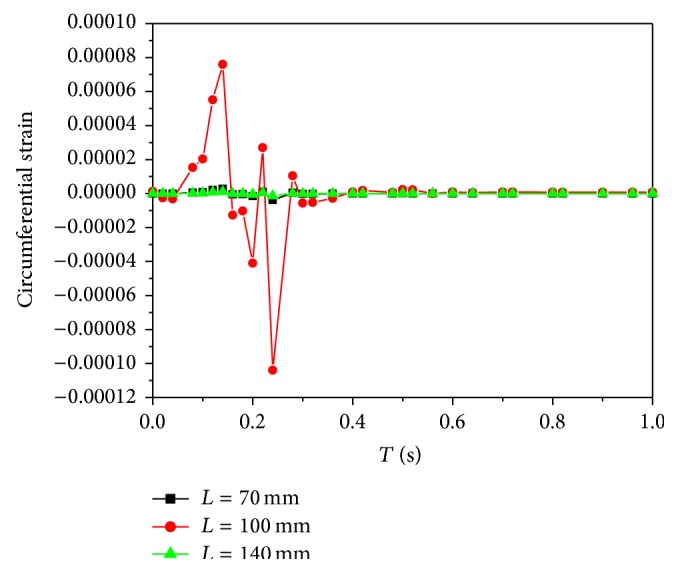
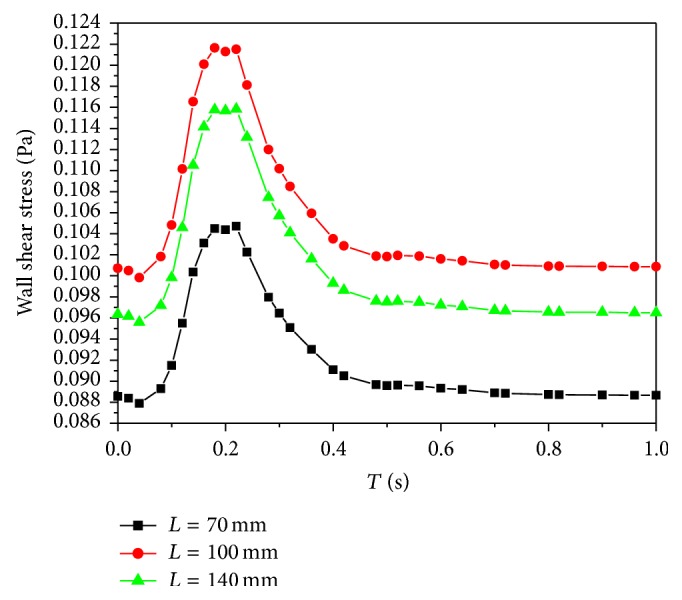
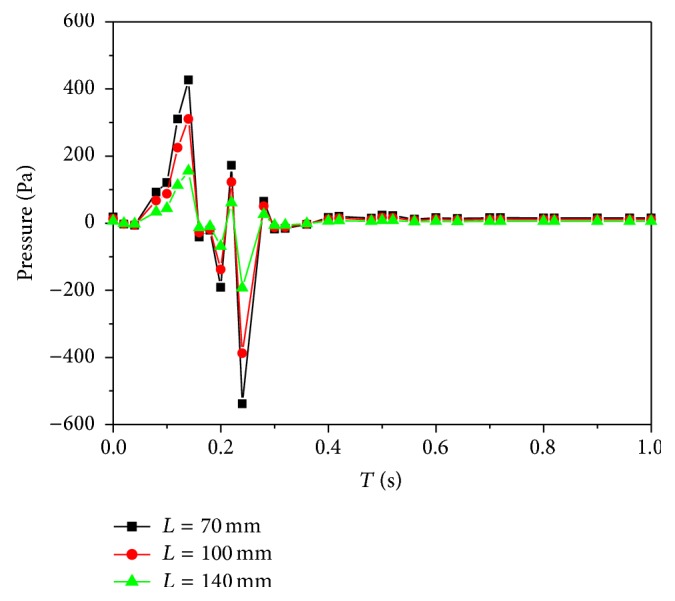
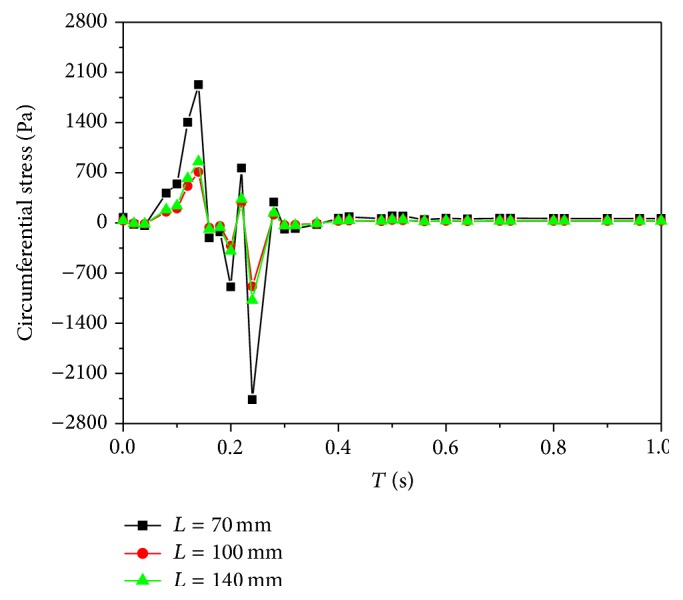
Background. Compliance mismatch is a negative factor and it needs to be considered in arterial bypass grafting. Objective. A computational model was employed to investigate the effects of arterial compliance mismatch on blood flow, wall stress, and deformation. Methods. The unsteady blood flow was assumed to be laminar, Newtonian, viscous, and incompressible. The vessel wall was assumed to be linear elastic, isotropic, and incompressible. The fluid-wall interaction scheme was constructed using the finite element method. Results. The results show that there are identical wall shear stress waveforms, wall stress, and strain waveforms at different locations. The comparison of the results demonstrates that wall shear stresses and wall strains are higher while wall stresses are lower at the more compliant section. The differences promote the probability of intimal thickening at some locations. Conclusions. The model is effective and gives satisfactory results. It could be extended to all kinds of arteries with complicated geometrical and material factors.
背景。顺应性不匹配是一个负面因素,在动脉旁路移植术中需要予以考虑。目的。采用一个计算模型来研究动脉顺应性不匹配对血流、壁面应力和变形的影响。方法。假设非定常血流为层流、牛顿流体、粘性且不可压缩。假设血管壁为线弹性、各向同性且不可压缩。采用有限元法构建流固相互作用方案。结果。结果表明,不同位置存在相同的壁面剪应力波形、壁面应力和应变波形。结果比较表明,在顺应性更高的节段,壁面剪应力和壁面应变更高,而壁面应力更低。这些差异增加了某些位置内膜增厚的可能性。结论。该模型有效且给出了令人满意的结果。它可扩展到具有复杂几何和材料因素的各类动脉。