Hughes Jasmine Hannah, Kumar Sanjay
Department of Bioengineering, University of California, Berkeley, United States; UC Berkeley - UCSF Graduate Program in Bioengineering, United States.
Department of Bioengineering, University of California, Berkeley, United States.
Curr Opin Biotechnol. 2016 Aug;40:82-89. doi: 10.1016/j.copbio.2016.03.004. Epub 2016 Mar 26.
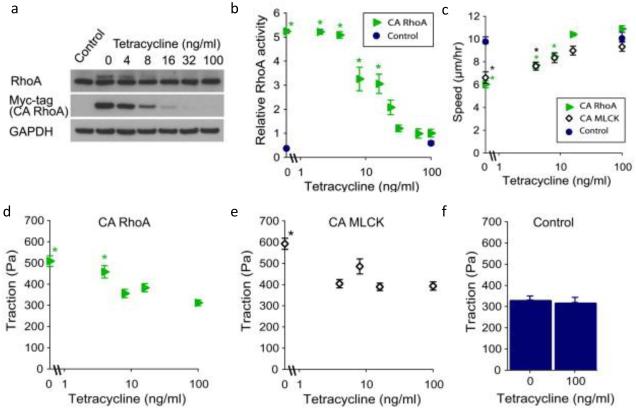
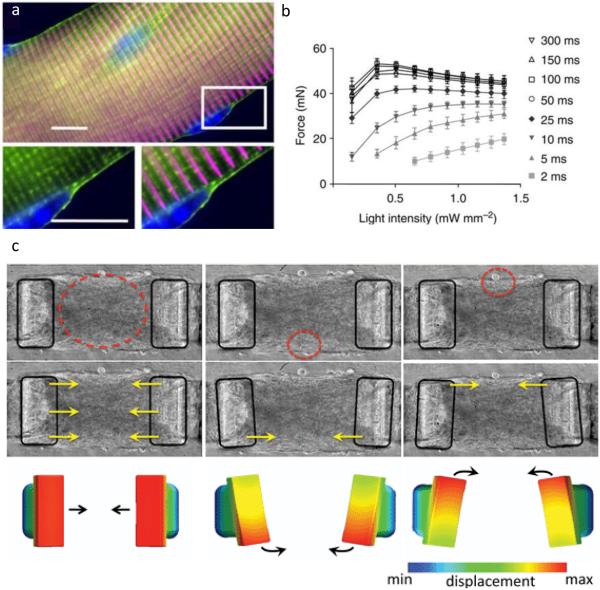
Mechanobiology seeks to understand and control mechanical and related biophysical communication between cells and their surroundings. While experimental efforts in this field have traditionally emphasized manipulation of the extracellular force environment, a new suite of approaches has recently emerged in which cell phenotype and signaling are controlled by directly engineering the cell itself. One route is to control cell behavior by modulating gene expression using conditional promoters. Alternatively, protein activity can be actuated directly using synthetic protein ligands, chemically induced protein dimerization, optogenetic strategies, or functionalized magnetic nanoparticles. Proof-of-principle studies are already demonstrating the translational potential of these approaches, and future technological development will permit increasingly precise control over cell mechanobiology and improve our understanding of the underlying signaling events.
力学生物学旨在理解并控制细胞与其周围环境之间的机械及相关生物物理通讯。虽然该领域的实验工作传统上侧重于对细胞外力学环境的操控,但最近出现了一套新方法,即通过直接对细胞本身进行工程改造来控制细胞表型和信号传导。一种途径是利用条件启动子调节基因表达来控制细胞行为。或者,可使用合成蛋白配体、化学诱导蛋白二聚化、光遗传学策略或功能化磁性纳米颗粒直接激活蛋白活性。原理验证研究已证明这些方法的转化潜力,未来的技术发展将使我们能够对细胞力学生物学进行越来越精确的控制,并增进我们对潜在信号事件的理解。