Cardona Pere-Joan, Prats Clara
Unitat de Tuberculosi Experimental, Fundació Institut d'Investigació en Ciències de la Salut Germans Trias i Pujol, Universitat Autònoma de Barcelona, CIBERES Badalona, Spain.
Escola Superior d'Agricultura de Barcelona, Departament de Física, Universitat Politècnica de Catalunya - BarcelonaTech Castelldefels, Spain.
Front Microbiol. 2016 Mar 29;7:354. doi: 10.3389/fmicb.2016.00354. eCollection 2016.
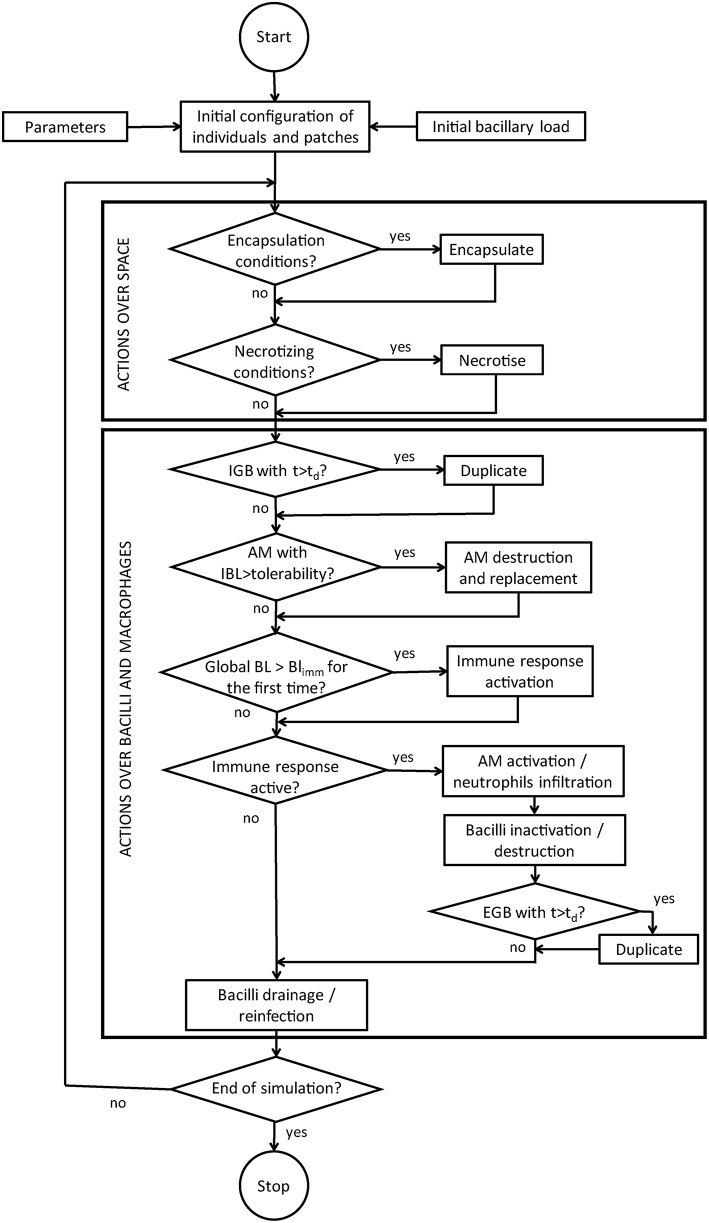
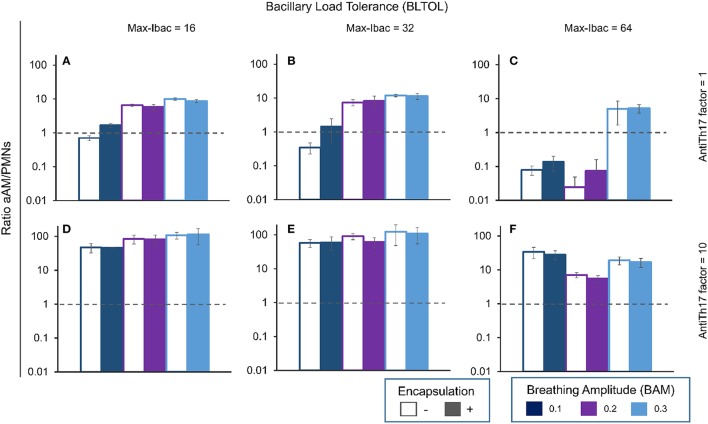
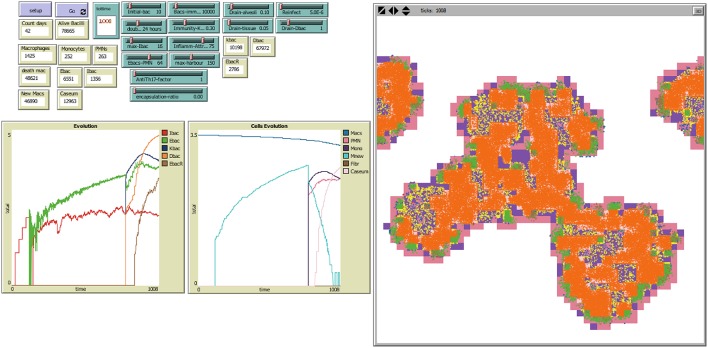
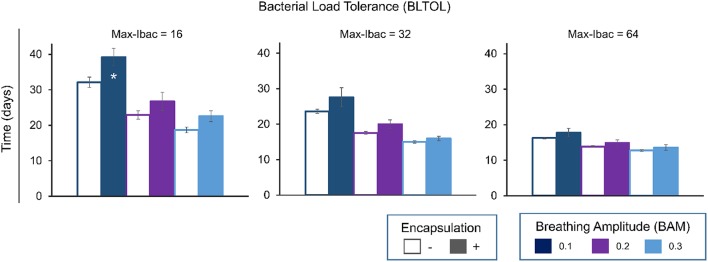
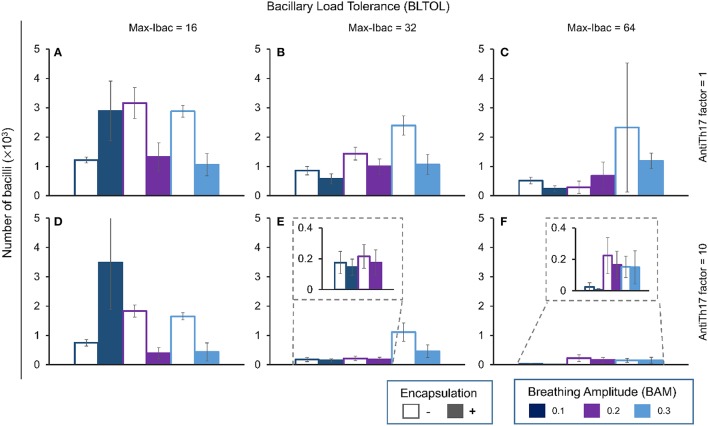
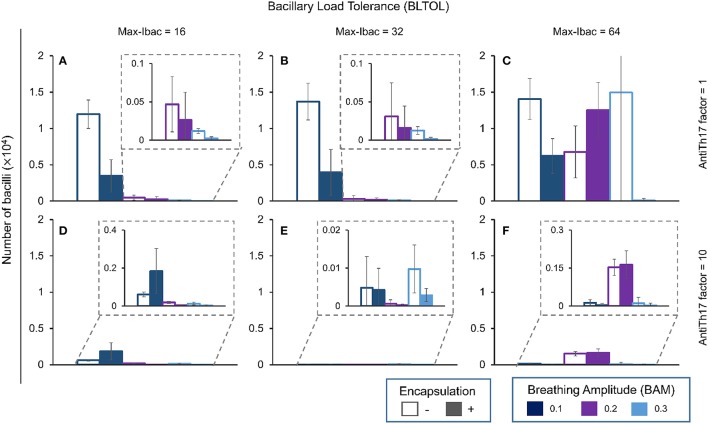
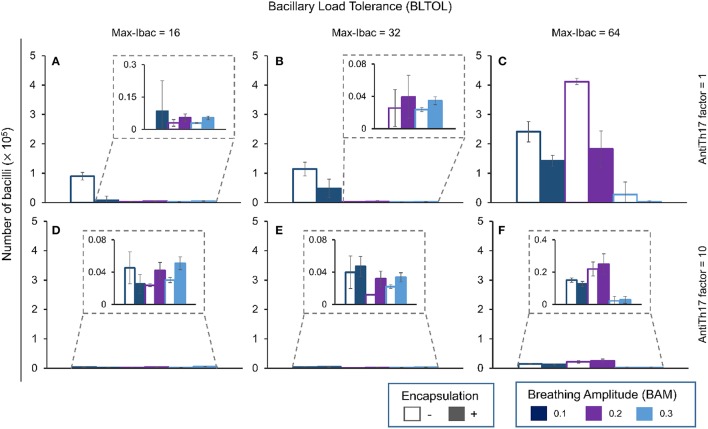
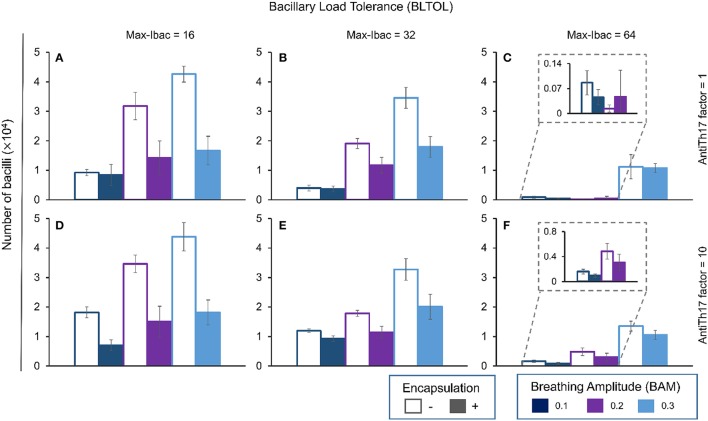
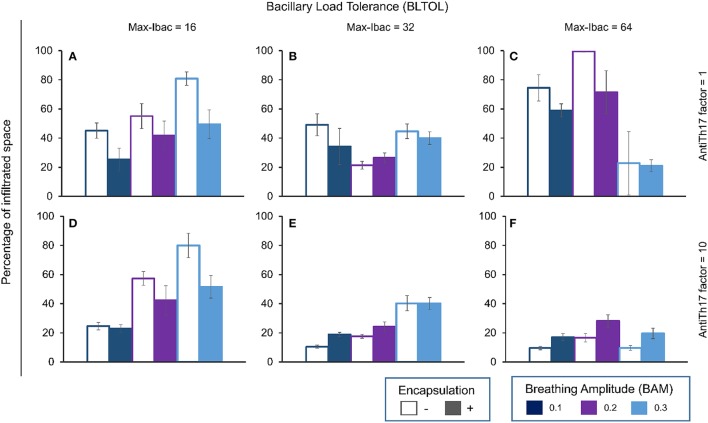
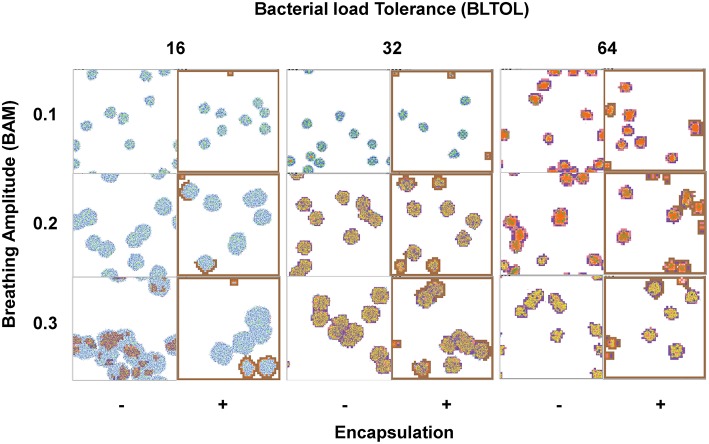
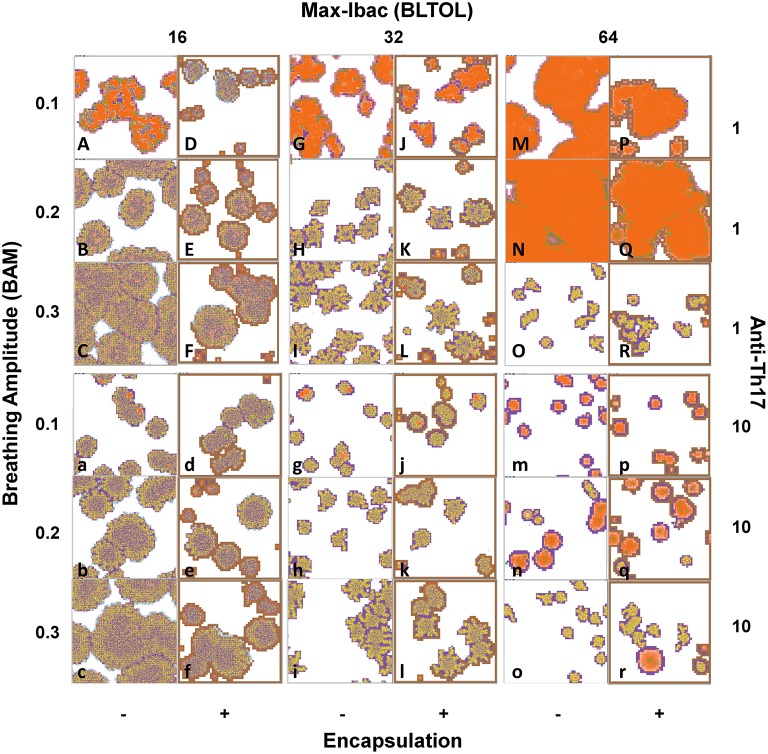
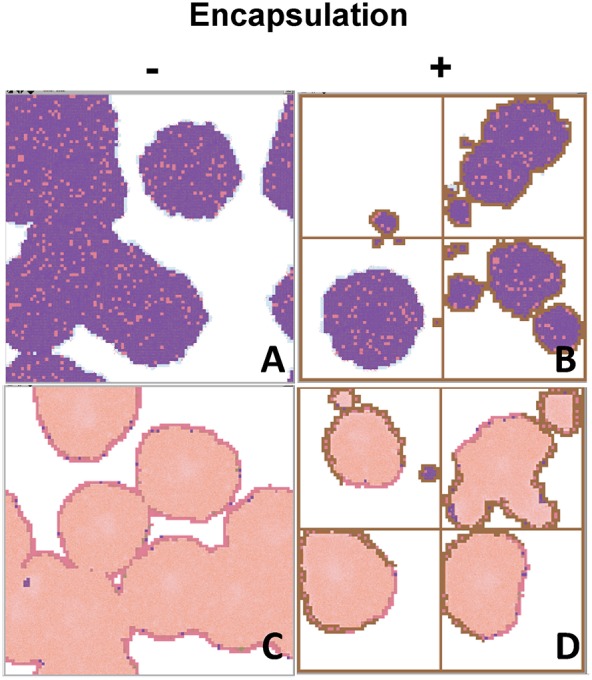
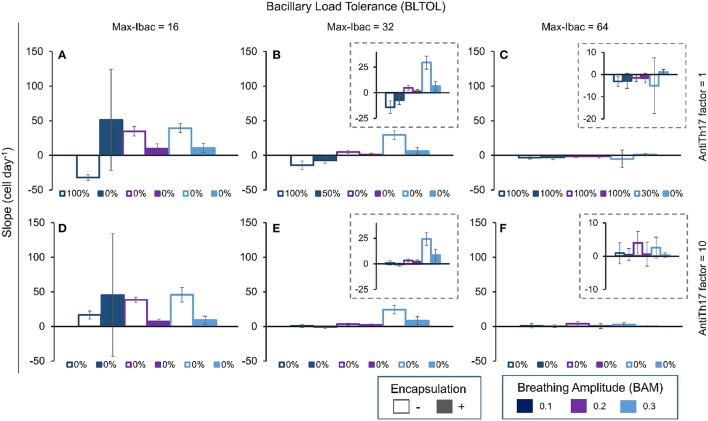
Infection with Mycobacterium tuberculosis (Mtb) can induce two kinds of lesions, namely proliferative and exudative. The former are based on the presence of macrophages with controlled induction of intragranulomatous necrosis, and are even able to stop its physical progression, thus avoiding the induction of active tuberculosis (TB). In contrast, the most significant characteristic of exudative lesions is their massive infiltration with polymorphonuclear neutrophils (PMNs), which favor enlargement of the lesions and extracellular growth of the bacilli. We have built an individual-based model (IBM) (known as "TBPATCH") using the NetLogo interface to better understand the progression from Mtb infection to TB. We have tested four main factors previously identified as being able to favor the infiltration of Mtb-infected lesions with PMNs, namely the tolerability of infected macrophages to the bacillary load; the capacity to modulate the Th17 response; the breathing amplitude (BAM) (large or small in the lower and upper lobes respectively), which influences bacillary drainage at the alveoli; and the encapsulation of Mtb-infected lesions by the interlobular septae that structure the pulmonary parenchyma into secondary lobes. Overall, although all the factors analyzed play some role, the small BAM is the major factor determining whether Mtb-infected lesions become exudative, and thus induce TB, thereby helping to understand why this usually takes place in the upper lobes. This information will be very useful for the design of future prophylactic and therapeutic approaches against TB.
结核分枝杆菌(Mtb)感染可诱发两种病变,即增殖性病变和渗出性病变。前者基于存在巨噬细胞且肉芽肿内坏死诱导受控制,甚至能够阻止其物理进展,从而避免活动性结核病(TB)的诱发。相比之下,渗出性病变最显著的特征是多形核中性粒细胞(PMN)大量浸润,这有利于病变扩大和杆菌的细胞外生长。我们使用NetLogo界面构建了一个基于个体的模型(IBM)(称为“TBPATCH”),以更好地理解从Mtb感染到结核病的进展。我们测试了先前确定的能够促进PMN浸润Mtb感染病变的四个主要因素,即被感染巨噬细胞对杆菌负荷的耐受性;调节Th17反应的能力;呼吸幅度(BAM)(分别在下叶和上叶中为大或小),其影响肺泡处的杆菌引流;以及由将肺实质构建成次级肺叶的小叶间隔对Mtb感染病变的包裹。总体而言,尽管所分析的所有因素都起一定作用,但小的BAM是决定Mtb感染病变是否变为渗出性从而诱发结核病的主要因素,从而有助于理解为什么这通常发生在上叶。这些信息对于设计未来预防和治疗结核病的方法将非常有用。