Figueroa Amparo L, Takx Richard A P, MacNabb Megan H, Abdelbaky Amr, Lavender Zachary R, Kaplan Rebecca S, Truong Quynh A, Lo Janet, Ghoshhajra Brian B, Grinspoon Steven K, Hoffmann Udo, Tawakol Ahmed
From the Cardiac MR PET CT Program, Department of Imaging and Division of Cardiology (A.L.F., R.A.P.T., M.H.M., A.A., Z.R.L., R.S.K., B.B.G., U.H., A.T.), Program in Nutritional Metabolism (J.L., S.K.G.), and Division of Cardiology, Department of Medicine (A.T.), Massachusetts General Hospital and Harvard Medical School, Boston; Department of Radiology, University Medical Center Utrecht, Utrecht, the Netherlands (R.A.P.T.); and Department of Radiology, Weill Cornell College of Medicine, New York, NY (Q.A.T.).
Circ Cardiovasc Imaging. 2016 Apr;9(4):e004043. doi: 10.1161/CIRCIMAGING.115.004043.
The objective of this study was to evaluate how different measures of adiposity are related to both arterial inflammation and the risk of subsequent cardiovascular events.
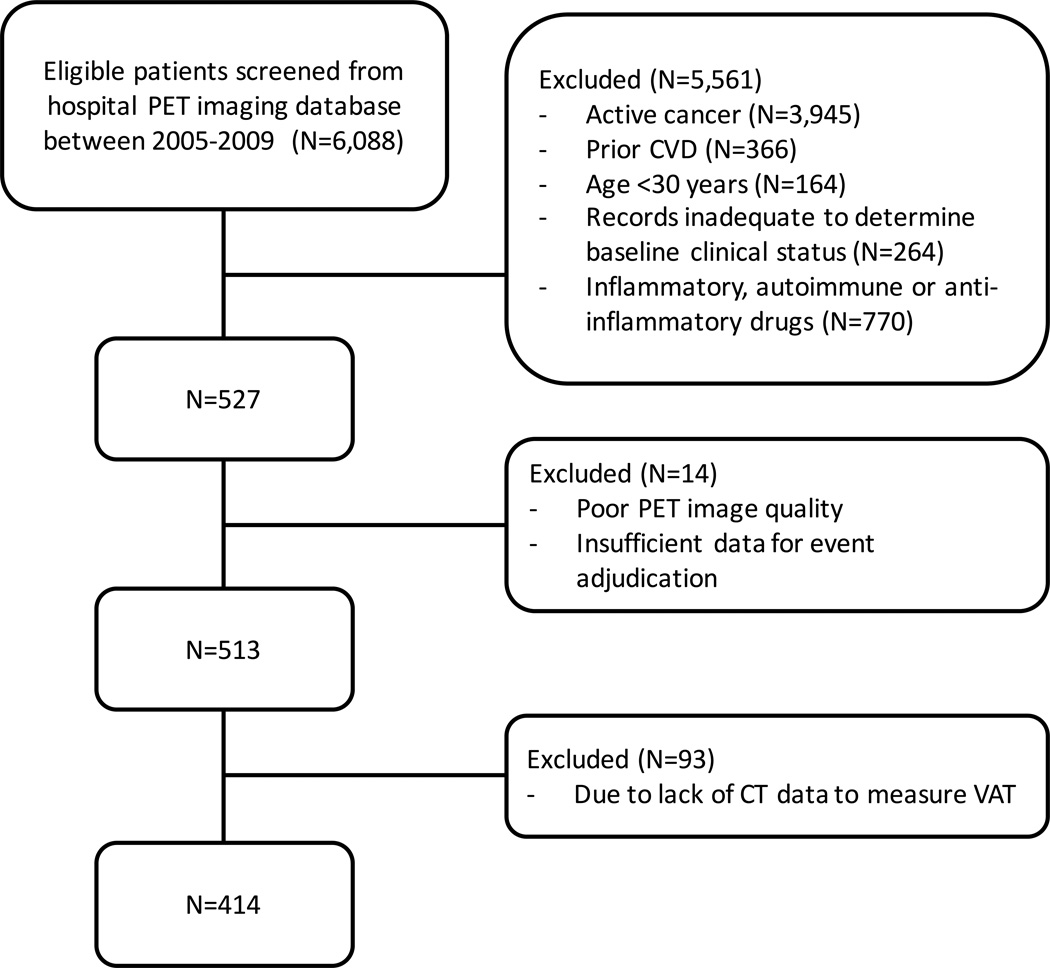
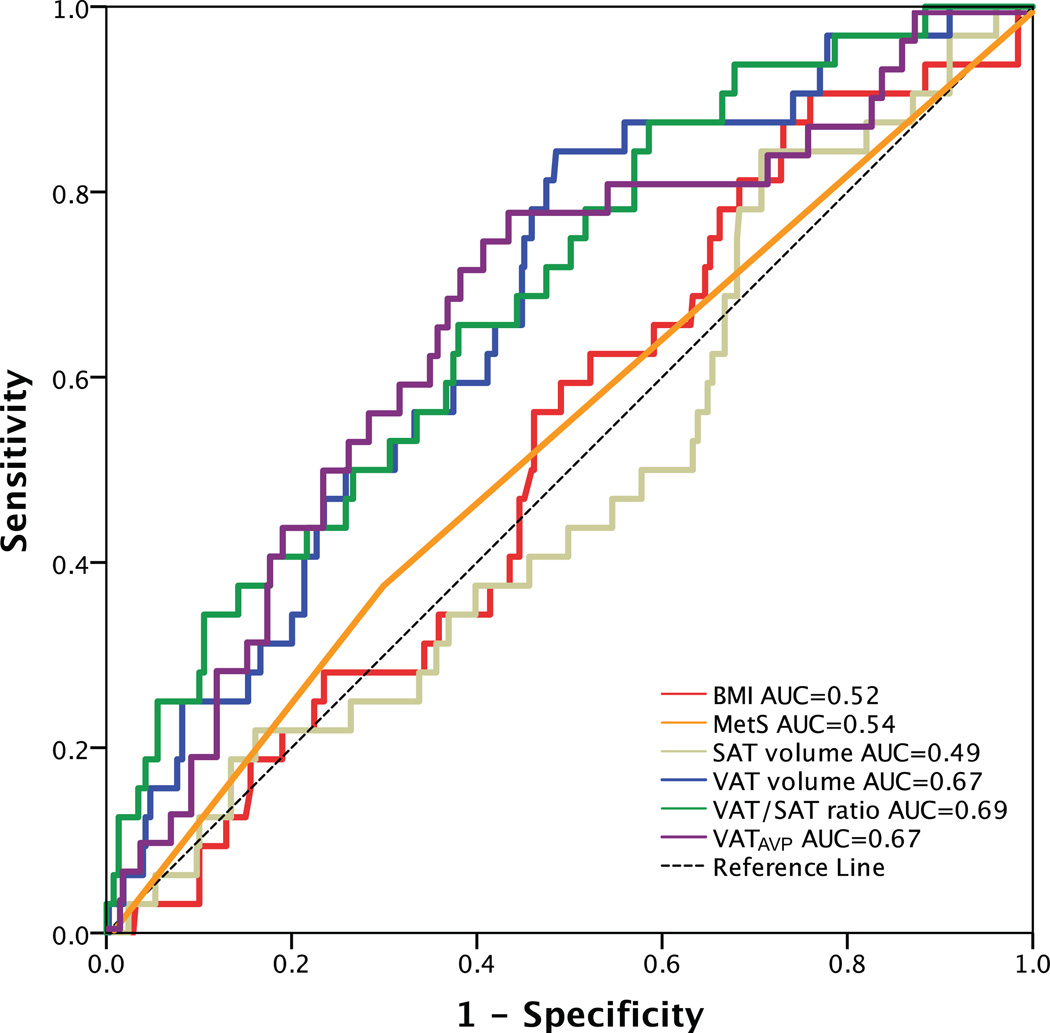
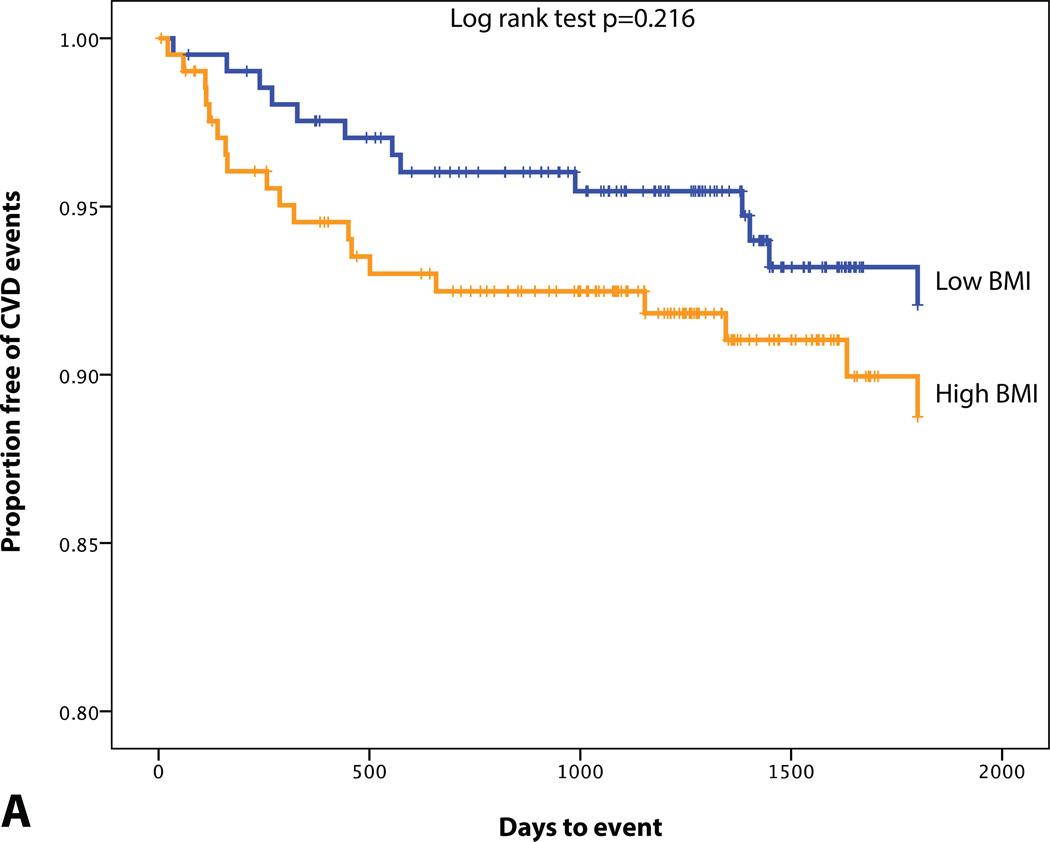
We included individuals who underwent (18)F-fluorodeoxyglucose positron emission tomography/computed tomography imaging for oncological evaluation. Subcutaneous adipose tissue (SAT) volume, visceral adipose tissue (VAT) volume, and VAT/SAT ratio were determined. Additionally, body mass index, metabolic syndrome, and aortic (18)F-fluorodeoxyglucose uptake (a measure of arterial inflammation) were determined. Subsequent development of cardiovascular disease (CVD) events was adjudicated. The analysis included 415 patients with a median age of 55 (P25-P75: 45-65) and a median body mass index of 26.4 (P25-P75: 23.4-30.9) kg/m(2). VAT and SAT volume were significantly higher in obese individuals. VAT volume (r=0.290; P<0.001) and VAT/SAT ratio (r=0.208; P<0.001) were positively correlated with arterial inflammation. Thirty-two subjects experienced a CVD event during a median follow-up of 4 years. Cox proportional hazard models showed that VAT volume and VAT/SAT ratio were associated with CVD events (hazard ratio [95% confidence interval]: 1.15 [1.06-1.25]; P<0.001; 3.60 [1.88-6.92]; P<0.001, respectively). Body mass index, metabolic syndrome, and SAT were not predictive of CVD events.
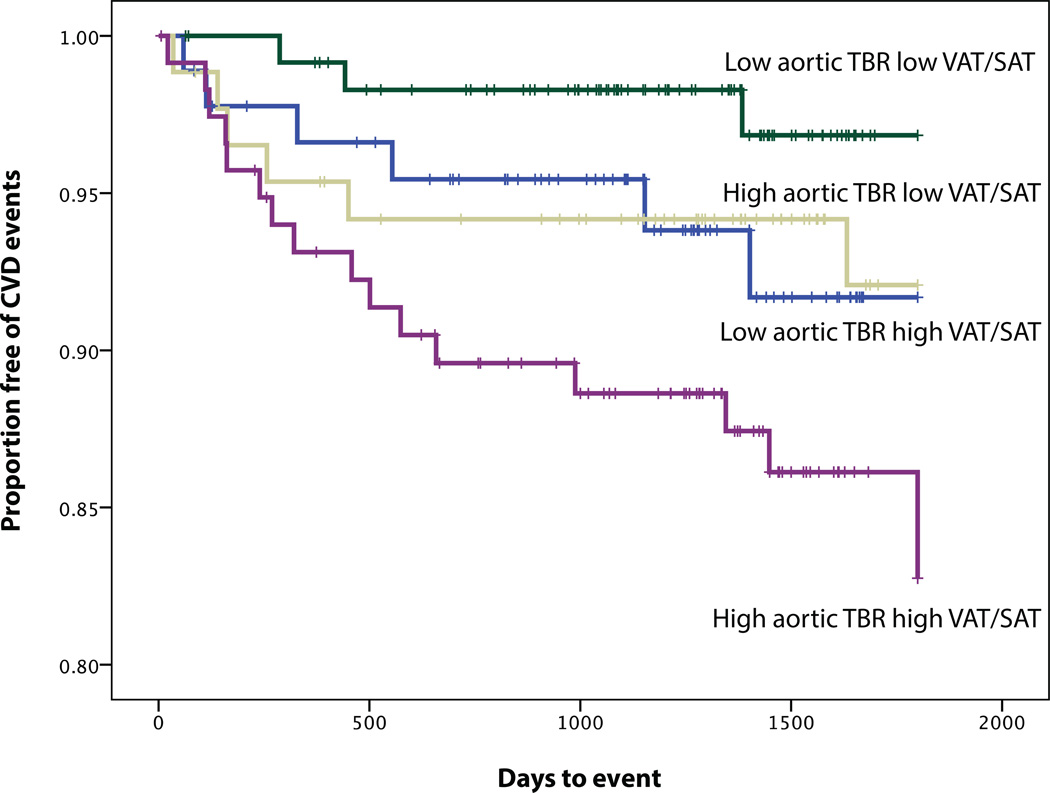
Measures of visceral fat are positively related to arterial inflammation and are independent predictors of subsequent CVD events. Individuals with higher measures of visceral fat as well as elevated arterial inflammation are at highest risk for subsequent CVD events. The findings suggest that arterial inflammation may explain some of the CVD risk associated with adiposity.
本研究的目的是评估不同的肥胖测量指标与动脉炎症以及随后发生心血管事件风险之间的关系。
我们纳入了因肿瘤评估而接受(18)F-氟脱氧葡萄糖正电子发射断层扫描/计算机断层扫描成像的个体。测定了皮下脂肪组织(SAT)体积、内脏脂肪组织(VAT)体积以及VAT/SAT比值。此外,还测定了体重指数、代谢综合征以及主动脉(18)F-氟脱氧葡萄糖摄取量(一种动脉炎症测量指标)。对随后心血管疾病(CVD)事件的发生情况进行了判定。分析纳入了415例患者,中位年龄为55岁(第25-75百分位数:45-65岁),中位体重指数为26.4 kg/m²(第25-75百分位数:23.4-30.9 kg/m²)。肥胖个体的VAT和SAT体积显著更高。VAT体积(r=0.290;P<0.001)和VAT/SAT比值(r=0.208;P<0.001)与动脉炎症呈正相关。在中位随访4年期间,32名受试者发生了CVD事件。Cox比例风险模型显示,VAT体积和VAT/SAT比值与CVD事件相关(风险比[95%置信区间]:1.15[1.06-1.25];P<0.001;3.60[1.88-6.92];P<0.001)。体重指数、代谢综合征和SAT不能预测CVD事件。
内脏脂肪测量指标与动脉炎症呈正相关,并且是随后CVD事件的独立预测因素。内脏脂肪测量指标较高以及动脉炎症升高的个体发生随后CVD事件的风险最高。这些发现表明,动脉炎症可能解释了与肥胖相关的部分CVD风险。