Yoon N, Park M S, Shigemoto T, Peltier G, Lee R H
Texas A&M University Health Science Center, College of Medicine, Institute for Regenerative Medicine, Temple, TX, USA.
Cell Death Dis. 2016 Apr 14;7(4):e2191. doi: 10.1038/cddis.2016.90.
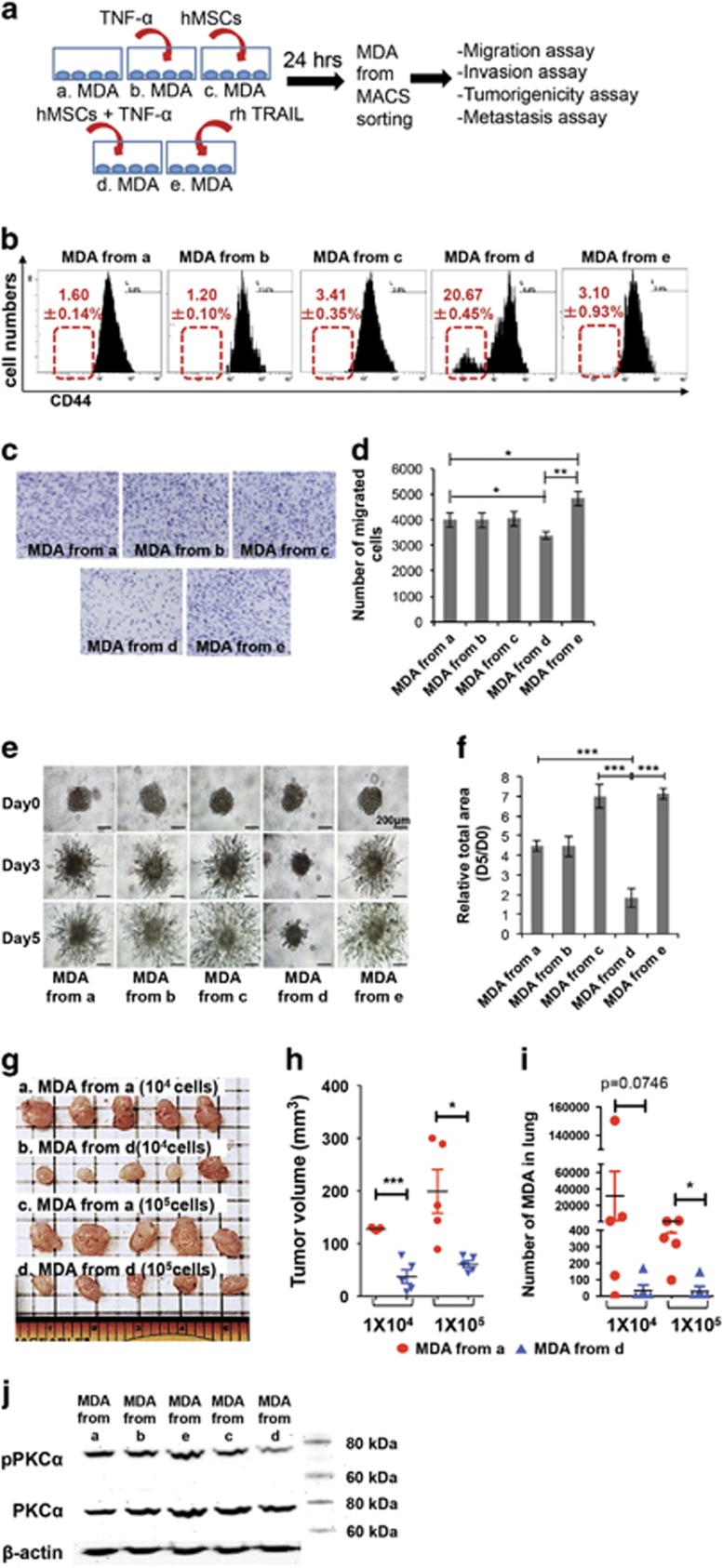
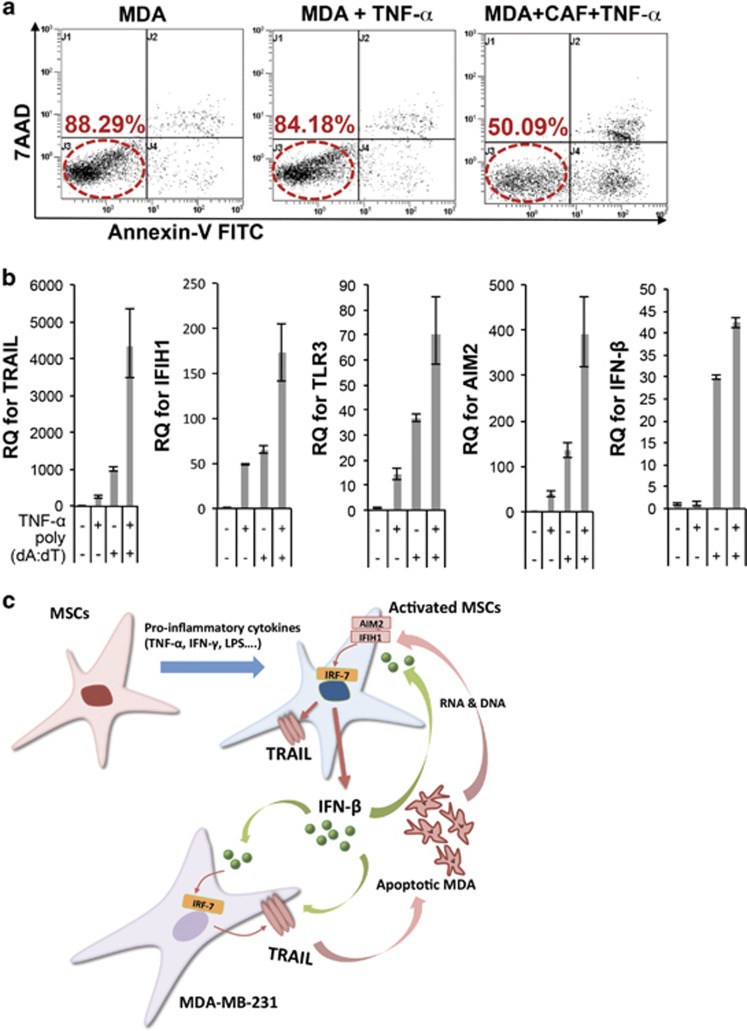
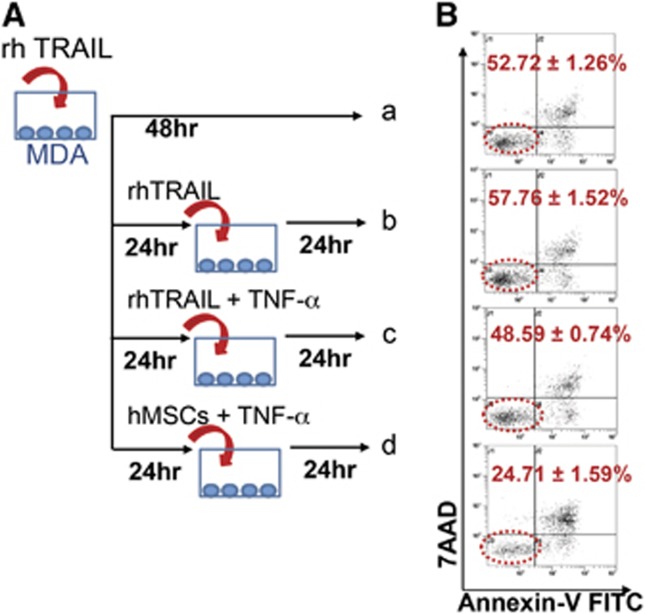
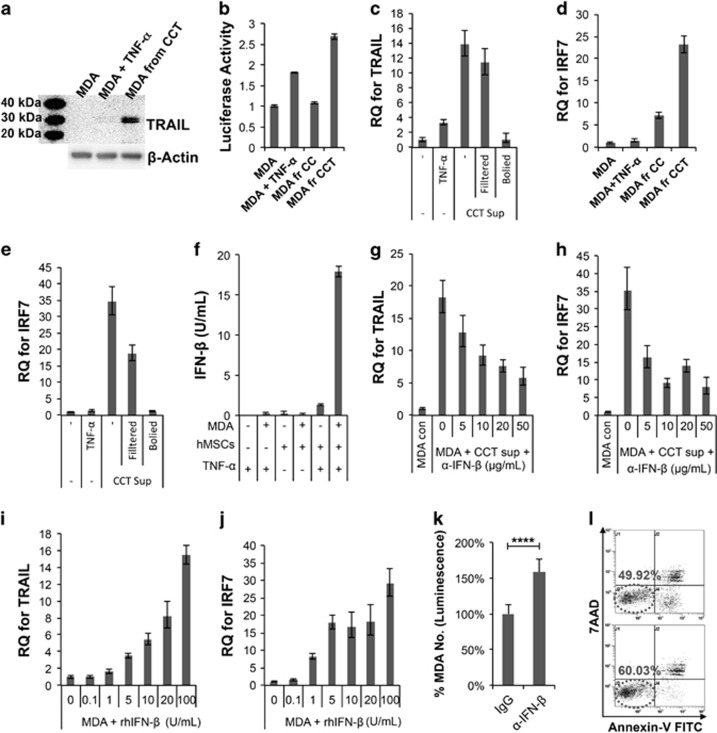
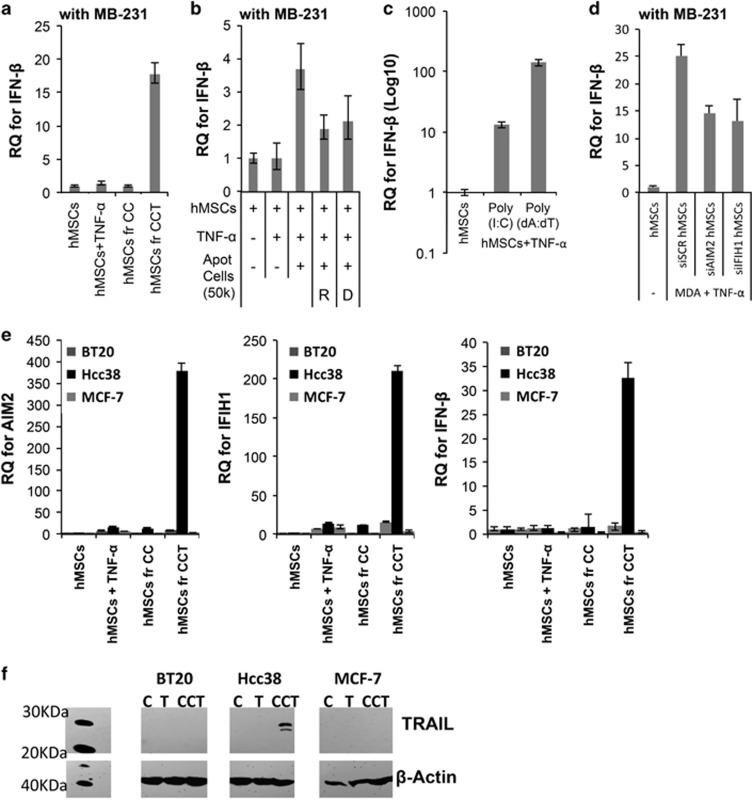
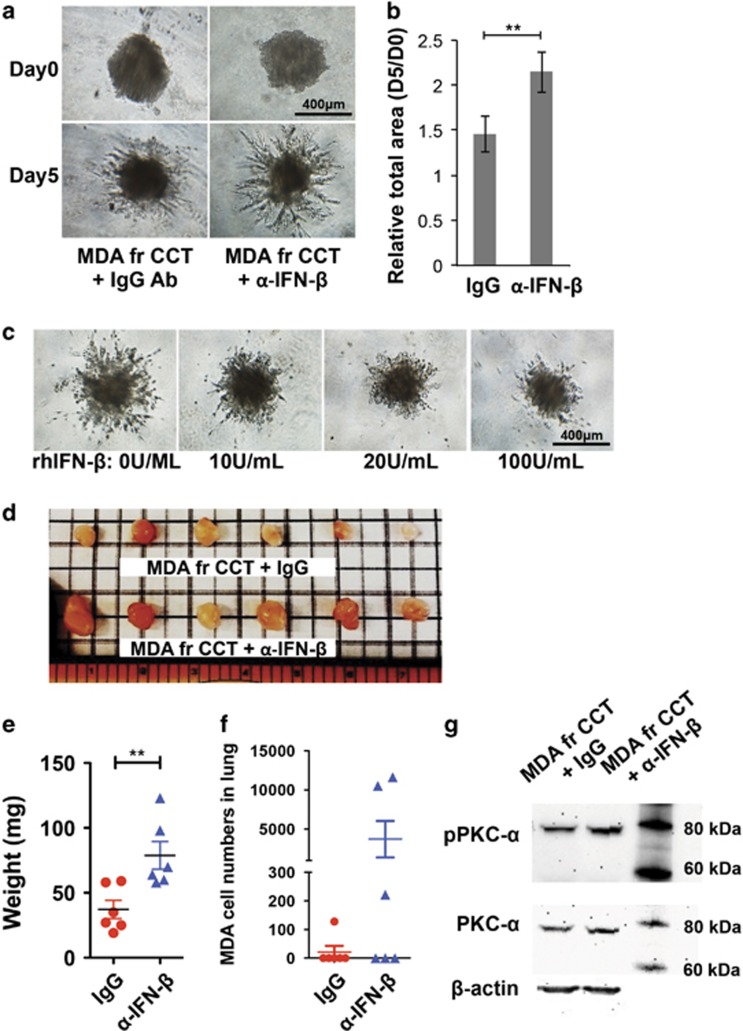
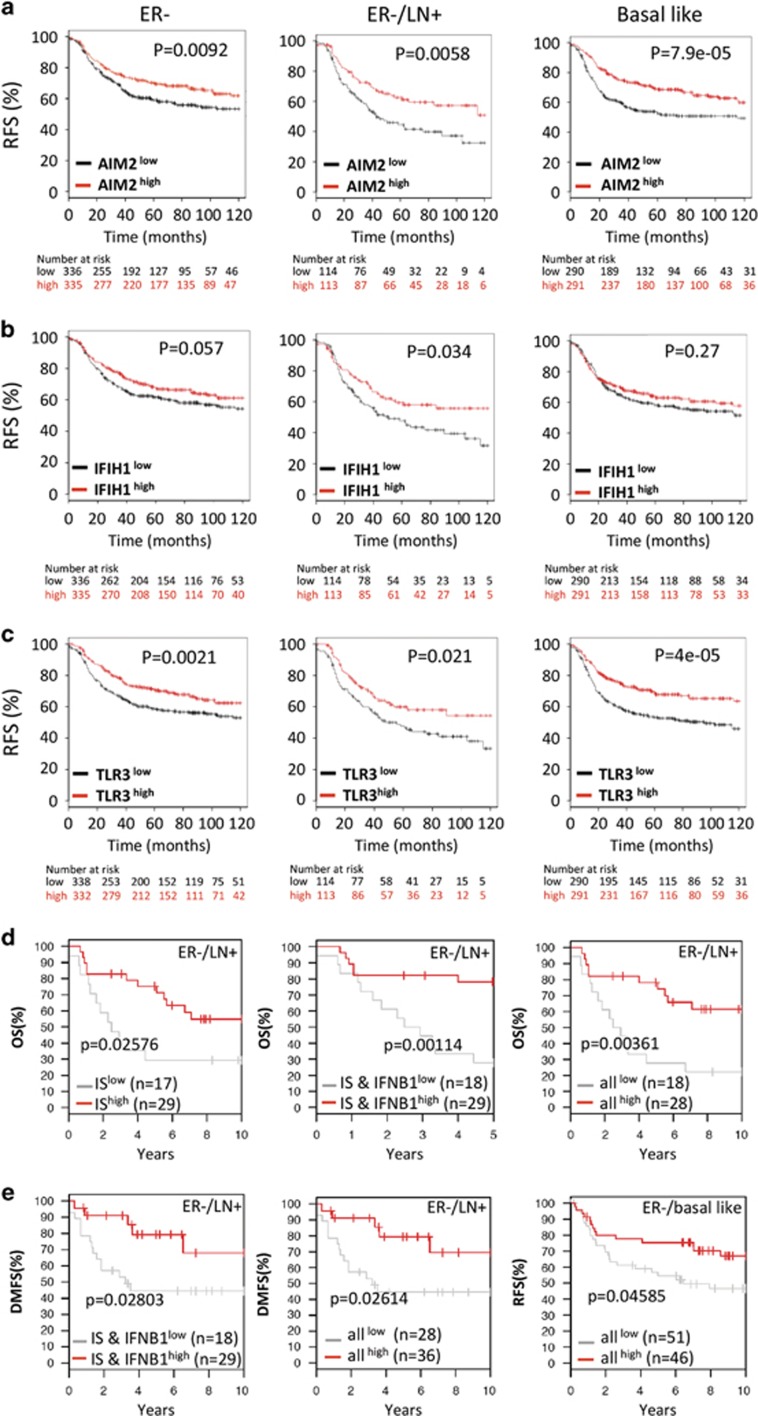
Our recent study showed that human mesenchymal stem/stromal cells (hMSCs) are activated to express tumor necrosis factor (TNF)-α-related apoptosis-inducing ligand (TRAIL) by exposure to TNF-α and these activated hMSCs effectively induce apoptosis in triple-negative breast cancer MDA-MB-231 (MDA) cells in vitro and in vivo. Here, we further demonstrated that activated hMSCs not only induced apoptosis of MDA cells but also reduced metastatic features in MDA cells. These activated hMSC-exposed MDA cells showed reduced tumorigenicity and suppressed formation of lung metastasis when implanted in the mammary fat pad. Surprisingly, the activated hMSC-exposed MDA cells increased TRAIL expression, resulting in apoptosis in MDA cells. Interestingly, upregulation of TRAIL in MDA cells was mediated by interferon-beta (IFN-β) secreted from activated hMSCs. Furthermore, IFN-β in activated hMSCs was induced by RNA and DNA released from apoptotic MDA cells in absent in melanoma 2 (AIM2) and IFN induced with helicase C domain 1 (IFIH1)-dependent manners. These observations were only seen in the TRAIL-sensitive breast cancer cell lines but not in the TRAIL-resistant breast cancer cell lines. Consistent with these results, Kaplan-Meier survival analysis also showed that lack of innate sensors detecting DNA or RNA is strongly associated with poor survival in estrogen receptor-negative breast cancer patients. In addition, cancer-associated fibroblasts (CAF) isolated from a breast cancer patient were also able to express TRAIL and IFN-β upon DNA and RNA stimulation. Therefore, our results suggest that the crosstalk between TRAIL-sensitive cancer cells and stromal cells creates a tumor-suppressive microenvironment and further provide a novel therapeutic approach to target stromal cells within cancer microenvironment for TRAIL sensitive cancer treatment.
我们最近的研究表明,人骨髓间充质干细胞(hMSCs)在暴露于肿瘤坏死因子(TNF)-α时被激活,从而表达肿瘤坏死因子-α相关凋亡诱导配体(TRAIL),并且这些活化的hMSCs在体外和体内均能有效诱导三阴性乳腺癌MDA-MB-231(MDA)细胞凋亡。在此,我们进一步证明,活化的hMSCs不仅诱导MDA细胞凋亡,还降低了MDA细胞的转移特性。当植入乳腺脂肪垫时,这些暴露于活化hMSCs的MDA细胞显示出致瘤性降低和肺转移形成受到抑制。令人惊讶的是,暴露于活化hMSCs的MDA细胞中TRAIL表达增加,导致MDA细胞凋亡。有趣的是,MDA细胞中TRAIL的上调是由活化的hMSCs分泌的干扰素-β(IFN-β)介导的。此外,活化的hMSCs中的IFN-β是以黑色素瘤2(AIM2)缺失和依赖解旋酶C结构域1(IFIH1)的方式由凋亡MDA细胞释放的RNA和DNA诱导产生的。这些观察结果仅在对TRAIL敏感的乳腺癌细胞系中出现,而在对TRAIL耐药的乳腺癌细胞系中未出现。与这些结果一致,Kaplan-Meier生存分析还表明,缺乏检测DNA或RNA的先天传感器与雌激素受体阴性乳腺癌患者的不良生存密切相关。此外,从乳腺癌患者分离的癌症相关成纤维细胞(CAF)在DNA和RNA刺激下也能够表达TRAIL和IFN-β。因此,我们的结果表明,对TRAIL敏感的癌细胞与基质细胞之间的相互作用创造了一个肿瘤抑制微环境,并进一步提供了一种针对癌症微环境中的基质细胞进行TRAIL敏感癌症治疗的新方法。