Wong Chun-Kwok, Chu Ida Miu-Ting, Hon Kam-Lun, Tsang Miranda Sin-Man, Lam Christopher Wai-Kei
Department of Chemical Pathology, Prince of Wales Hospital, The Chinese University of Hong Kong, Shatin, NT, Hong Kong, China.
Institute of Chinese Medicine and State Key Laboratory of Phytochemistry and Plant Resources in West China, The Chinese University of Hong Kong, Hong Kong, China.
Molecules. 2016 Apr 11;21(4):471. doi: 10.3390/molecules21040471.
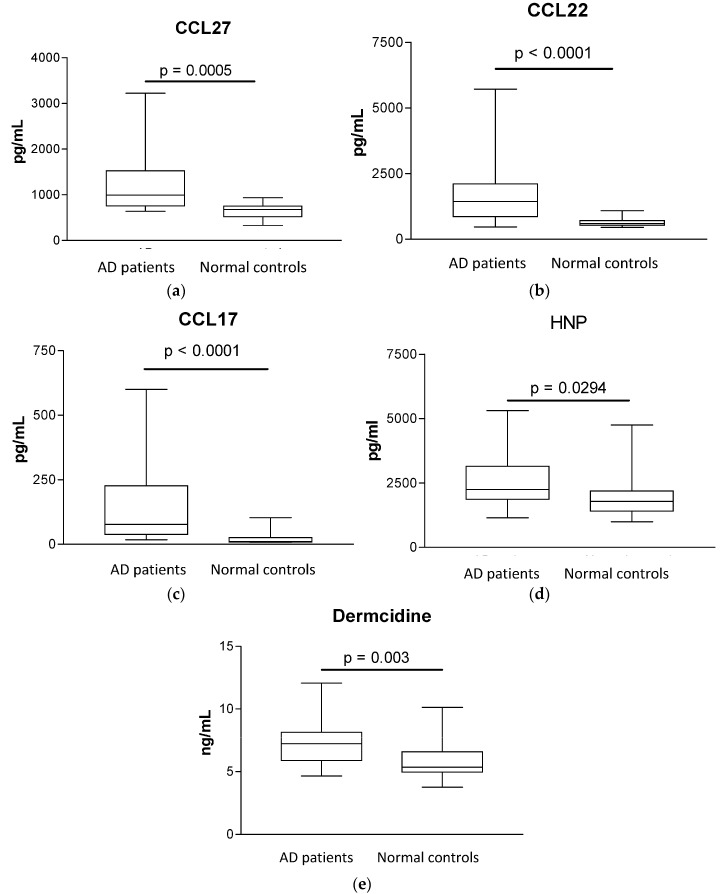
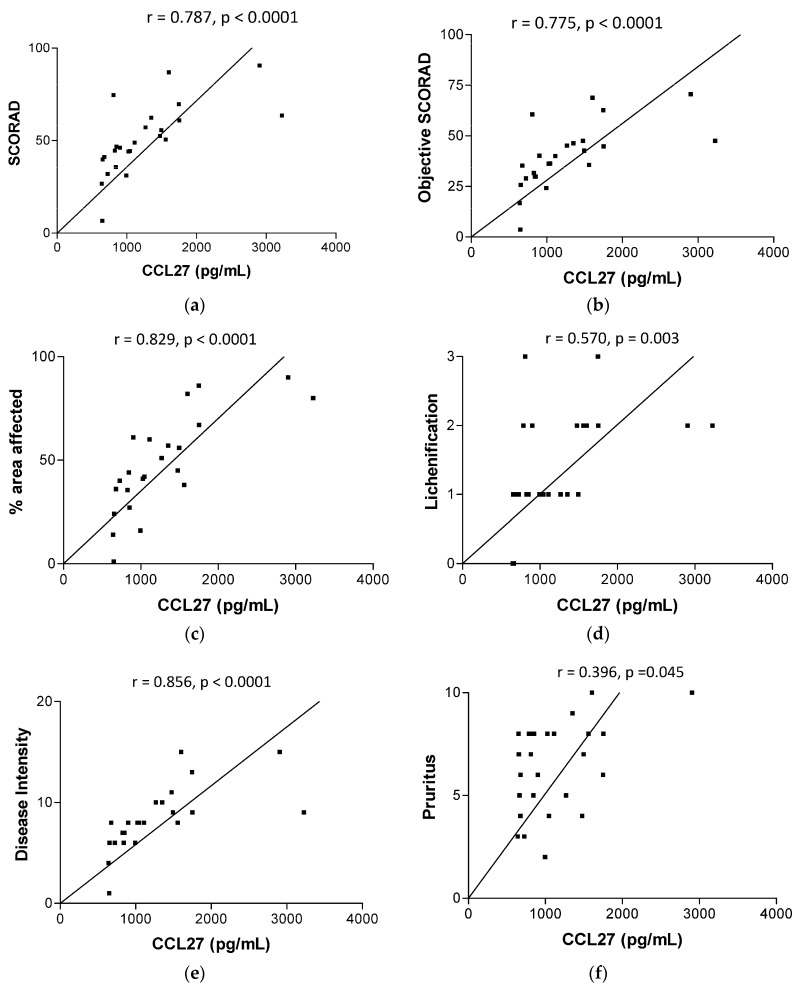
Atopic dermatitis (AD) is a chronically relapsing inflammatory skin disease, associated with basophil infiltration into skin lesions and Staphylococcus aureus (S. aureus)-induced inflammation. Pattern recognition receptors (PRRs), including microbicidal peptide human neutrophil α-defensins (HNP) and dermcidin, can exert immunomodulating activity in innate immunity and skin inflammation. We investigated the plasma concentration of HNP and dermcidin, the expression of bacterial toll-like receptor (TLR) and nucleotide-binding oligomerization domain (NOD)-like receptors of basophils and plasma concentration and ex vivo induction of AD-related inflammatory cytokines and chemokines using ELISA and flow cytometry, in AD patients and control subjects. Plasma concentrations of HNP, dermcidin and AD-related Th2 chemokines CCL17, CCL22 and CCL27 were significantly elevated in AD patients compared with controls (all p < 0.05). Plasma concentrations of CCL27 and CCL22 were found to correlate positively with SCORing atopic dermatitis (SCORAD), objective SCORAD, % area affected, lichenification and disease intensity, and CCL27 also correlated positively with pruritus in AD patients (all p < 0.05). Protein expressions of NOD2 but not TLR2 of basophils were significantly down-regulated in AD patients compared with controls (p = 0.001). Correspondingly, there were lower ex vivo % inductions of allergic inflammatory tumor necrosis factor-α, IL-6 and CXCL8 from peripheral blood mononuclear cells upon NOD2 ligand S. aureus derived muramyl dipeptide stimulation in AD patients comparing with controls. The aberrant activation of bacterial PRRs of basophils and anti-bacterial innate immune response should be related with the allergic inflammation of AD.
特应性皮炎(AD)是一种慢性复发性炎症性皮肤病,与嗜碱性粒细胞浸润至皮肤病变以及金黄色葡萄球菌(S. aureus)诱导的炎症相关。模式识别受体(PRRs),包括杀菌肽人中性粒细胞α-防御素(HNP)和皮肤杀菌素,可在固有免疫和皮肤炎症中发挥免疫调节活性。我们使用酶联免疫吸附测定(ELISA)和流式细胞术,研究了AD患者和对照受试者中HNP和皮肤杀菌素的血浆浓度、嗜碱性粒细胞的细菌 toll 样受体(TLR)和核苷酸结合寡聚化结构域(NOD)样受体的表达,以及AD相关炎性细胞因子和趋化因子的血浆浓度和体外诱导情况。与对照组相比,AD患者中HNP、皮肤杀菌素和AD相关的Th2趋化因子CCL17、CCL22和CCL27的血浆浓度显著升高(所有p < 0.05)。发现CCL27和CCL22的血浆浓度与特应性皮炎评分(SCORAD)、客观SCORAD、受累面积百分比、苔藓化和疾病严重程度呈正相关,并且CCL27在AD患者中也与瘙痒呈正相关(所有p < 0.05)。与对照组相比,AD患者中嗜碱性粒细胞的NOD2而非TLR2的蛋白表达显著下调(p = 0.001)。相应地,与对照组相比,AD患者在NOD2配体金黄色葡萄球菌来源的胞壁酰二肽刺激后,外周血单个核细胞的过敏性炎症肿瘤坏死因子-α、IL-6和CXCL8的体外诱导率较低。嗜碱性粒细胞细菌PRRs的异常激活和抗菌固有免疫反应应与AD的过敏性炎症相关。