Proietti Silvia, Dragos Laurian, Molina Wilson, Doizi Steeve, Giusti Guido, Traxer Olivier
1 Department of Urology, Ville Turro Division, IRCCS San Raffaele Scientific Institute , Milan, Italy .
2 Department of Urology, Tenon Hospital , Paris, France .
J Endourol. 2016 Jun;30(6):655-9. doi: 10.1089/end.2016.0051. Epub 2016 May 2.
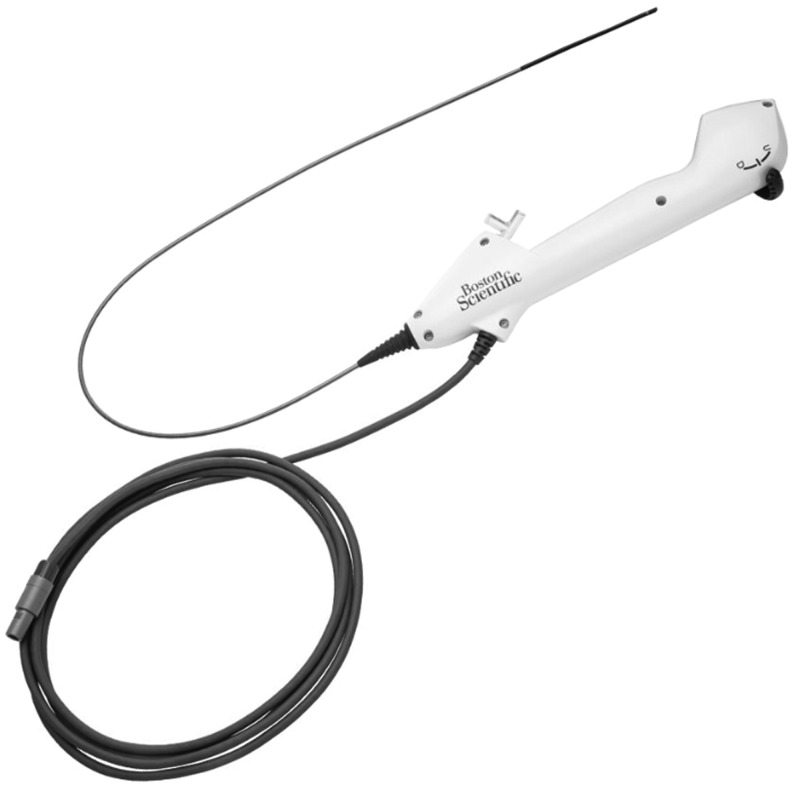
To evaluate LithoVue, the new single-use digital flexible ureteroscope, in a human cadaveric model and compare it with a nondisposable fiber optic and digital flexible ureteroscopes.
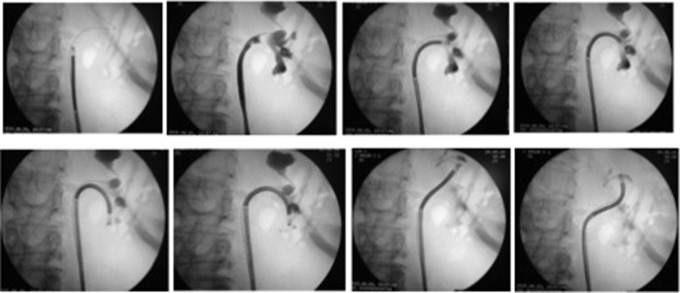
LithoVue, a conventional fiber optic, and digital flexible ureteroscopes were each tested in four renal units of recently deceased female cadavers by three surgeons. The following parameters were analyzed: accessibility to the kidney and navigation of the entire collecting system with and without ureteral access sheath (UAS), lower pole access measuring the deflection of the ureteroscope with the working channel empty, and with inside two different baskets and laser fibers. A subjective evaluation of maneuverability and visibility was assessed by each surgeon at the end of every procedure.
Kidney access into the Renal unit 1 was not possible without UAS for all ureteroscopes because of noncompliant ureter at the level of sacroiliac joint. The reusable digital ureteroscope was unable to reach one calix of the lower pole and one calix of the upper pole (Renal units 2 and 3) without UAS placement. Lower pole access with baskets and laser fibers was possible for each ureteroscope after UAS placement. No statistically significant differences were detected in angle deflection between ureteroscopes. The digital ureteroscope was preferred for visibility in all procedures: LithoVue for maneuverability in six procedures, fiber optic in five procedures, and the digital ureteroscope in one procedure.
LithoVue seems to be comparable with conventional ureteroscopes in terms of visibility and manipulation into the collecting system in fresh human cadavers. Further studies in humans are needed to determine the clinical value of this new instrument.
在人体尸体模型中评估新型一次性使用的数字柔性输尿管镜LithoVue,并将其与非一次性使用的纤维光学输尿管镜和数字柔性输尿管镜进行比较。
LithoVue、传统纤维光学输尿管镜和数字柔性输尿管镜分别由三位外科医生在近期死亡的女性尸体的四个肾单元中进行测试。分析了以下参数:有无输尿管接入鞘(UAS)时进入肾脏的可达性以及整个集合系统的导航情况、在工作通道为空时以及插入两种不同的篮子和激光纤维时测量输尿管镜向下极的偏转以评估下极可达性。每位外科医生在每个手术结束时对可操作性和可视性进行主观评估。
由于骶髂关节水平输尿管顺应性差,对于所有输尿管镜而言,在没有UAS的情况下无法进入肾单元1的肾脏。在未放置UAS的情况下,可重复使用的数字输尿管镜无法到达下极的一个肾盏和上极的一个肾盏(肾单元2和3)。放置UAS后,每种输尿管镜使用篮子和激光纤维都能够进入下极。输尿管镜之间在角度偏转方面未检测到统计学上的显著差异。在所有手术中,数字输尿管镜在可视性方面更受青睐:LithoVue在6例手术中的可操作性方面更优,纤维光学输尿管镜在5例手术中更优,数字输尿管镜在1例手术中更优。
在新鲜人体尸体中,LithoVue在可视性和进入集合系统的操作方面似乎与传统输尿管镜相当。需要在人体中进行进一步研究以确定这种新器械的临床价值。